Is a dental implant right for your missing tooth?
If you have lost a tooth, or have one that cannot be saved, an implant is one of several ways to fill the gap. At 4 Great Stuart Street Dental Practice in Edinburgh's West End, a single implant fully restored costs from £3,000. Below is what an implant is, what treatment involves and how it compares with a bridge or denture.
- From £3,000Single implant fully restored
- Three optionsOne tooth, several teeth or a full arch
- First stepAn examination with one of our dentists
- EH3 6AW4 Great Stuart Street, Edinburgh
What is a dental implant?
A dental implant is a small titanium post that is placed in the jawbone where the root of the missing tooth used to be. Once it has bonded with the bone, it is a stable base for a replacement tooth that does not need support from the teeth either side of the gap.
Your implant options
Single tooth implant
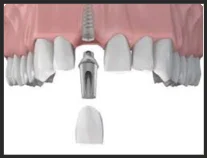
A single tooth implant is the most popular type of implant restoration at our practice. We attach a porcelain crown to the titanium implant post, giving a long-term solution that looks and functions much like a natural tooth.
Several missing teeth: implant-supported bridges
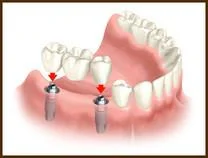
When several teeth are missing, an implant-supported bridge may be the best option. Unlike a traditional bridge, it does not rely on the surrounding natural teeth for support. This helps preserve your remaining natural teeth.
Implant-supported dentures and All-on-4
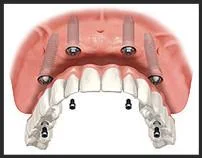
If you are missing most or all of your teeth, a partial or full denture can be attached to dental implants so it stays firmly in place. With the All-on-4 technique, a full arch of teeth is supported by just four carefully positioned implants.
How much does a dental implant cost?
Our price list shows a single implant fully restored from £3,000. The final cost depends on the treatment you need, and your dentist will go through it with you before anything starts, including for bridges or dentures on implants. You can see every treatment price on our dental price list.
What happens during implant treatment?
Every case is different, but treatment typically follows these stages:
- Assessment. Your dentist examines your teeth and gums, usually with X-rays, and talks you through your options.
- Placing the implant. The implant is placed in the jawbone, usually under local anaesthetic.
- Healing. The bone typically takes several weeks to a few months to bond with the implant. Your dentist will advise whether a temporary tooth is suitable in the meantime.
- Fitting the new tooth. The crown, bridge or denture is made and fitted.
- Reviews. Regular check-ups keep an eye on the implant and gum.
Other ways to replace a missing tooth
An implant is not the only choice. We also offer:
- Bridges, which replace missing teeth by anchoring to the teeth next to the gap. A 2 tooth adhesive bridge is from £650.00, a 2 tooth fixed bridge from £1,100.00 and a 3 tooth fixed bridge from £1,650.00. Read more about crowns and bridges.
- Dentures, full or partial, custom-made for your mouth. A partial acrylic denture is from £550.00, a partial chrome denture from £1,600.00 and a full denture for one arch from £550.00. Read more about dentures at our practice.
Looking after your implant
The gum and bone around an implant can become inflamed if plaque builds up, so:
- Brush twice a day and clean between the teeth with interdental brushes or floss.
- Keep up regular check-ups and hygiene appointments.
- Avoid smoking, which can slow healing.
- Contact us if the gum around the implant bleeds, feels sore or swollen, or the tooth feels loose.


