Braces Treatment Options for Your Smile
Considering braces treatment options in Edinburgh? Learn how fixed braces, clear aligners and retainers work, and what to discuss before choosing treatment.
A tooth that has slowly shifted, a gap that has become more noticeable in photographs, or a bite that makes cleaning difficult can all prompt the same question: which braces treatment options are right for me? The answer is rarely simply about choosing the least visible appliance. Your bite, tooth position, gum health, daily routine and treatment priorities all matter.
Orthodontic treatment is a considered process, not a cosmetic quick fix. Done well, it can improve the way teeth meet, make them easier to clean and give you greater confidence in your smile. The most suitable approach begins with a proper assessment and a frank conversation about what is achievable, how long it may take and the commitment involved.
Braces treatment options at a glance
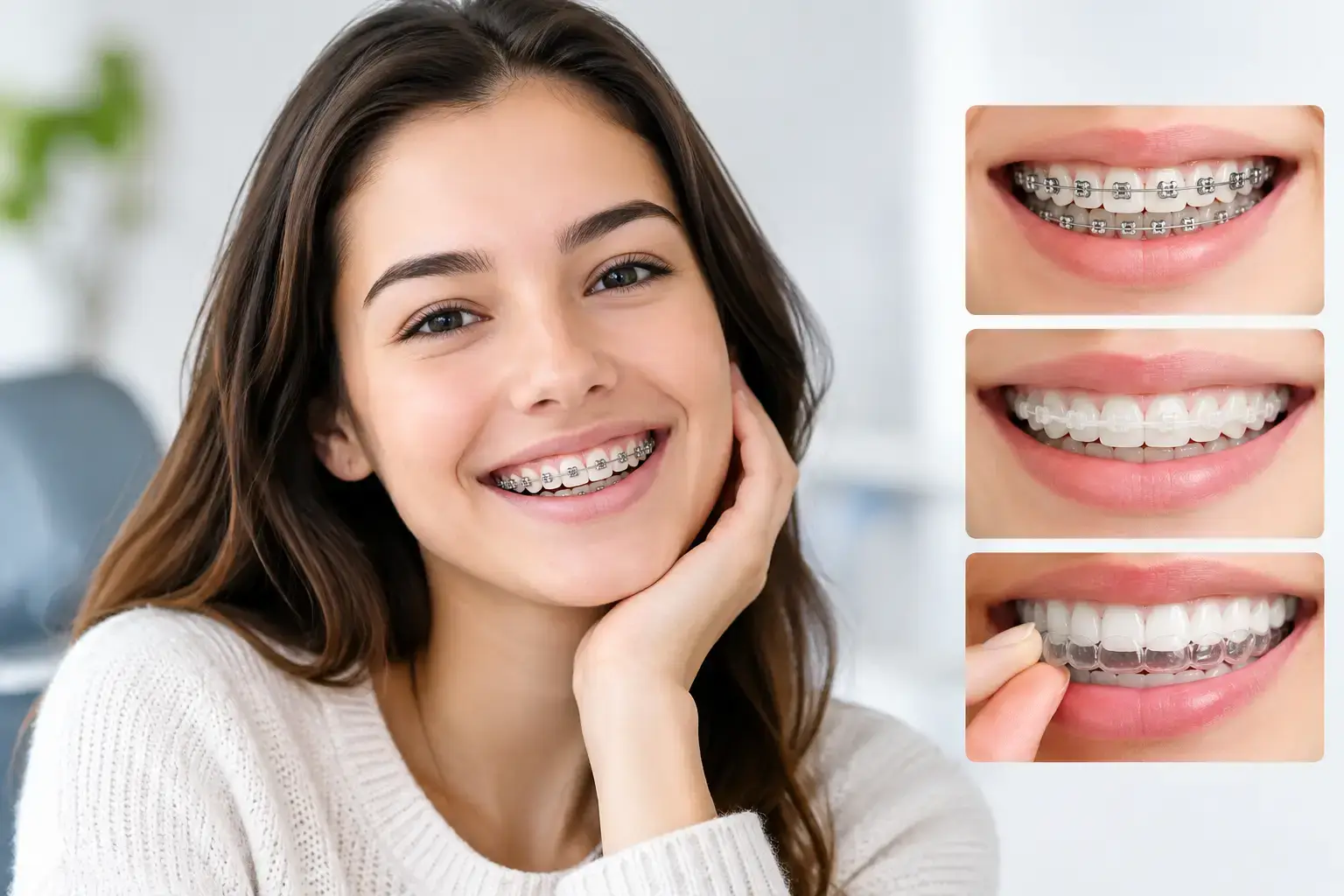
Most adult orthodontic treatment falls into two broad categories: fixed braces and removable clear aligners. Both move teeth gradually by applying carefully planned, gentle pressure. Neither is automatically better than the other. The right choice depends on the complexity of the movement required and how well the treatment will fit into your life.
Fixed metal braces
Conventional fixed braces use small brackets attached to the front of the teeth, joined by a fine wire. They remain in place throughout treatment, with adjustments at planned appointments. This means the brace is working all the time, without relying on you remembering to wear it.
Metal braces are a dependable option for a wide range of alignment and bite concerns, including more significant crowding, rotations and changes to the way the upper and lower teeth meet. They can look more noticeable than other systems, but they remain one of the most effective and predictable choices for many patients.
For children and teenagers, fixed braces are often particularly practical because compliance is less of an issue. Adults may also prefer them when they want an option that does not need to be removed and replaced around meals.
Tooth-coloured fixed braces
Ceramic or tooth-coloured brackets work in much the same way as metal braces but are designed to blend more discreetly with the natural shade of the teeth. They can be a good middle ground for people who need the control of fixed treatment but would prefer a less conspicuous appearance.
They do require the same careful cleaning as metal braces, and the brackets can be more delicate. They may also cost more than conventional fixed appliances. A clinician will explain whether they are appropriate for the movements your teeth need.
Lingual braces
Lingual braces are fixed to the back surfaces of the teeth, so they are largely hidden when you smile. They can appeal to adults whose work or personal circumstances make visible braces feel difficult.
However, they are not suitable for every case and can take time to get used to. Some patients notice a temporary effect on speech or find cleaning more challenging. They are also usually a more specialised and higher-cost option. Discretion is valuable, but it should be balanced against comfort, practicality and the clinical result needed.
Clear aligners
Clear aligners are removable, custom-made trays that fit closely over the teeth. You wear each set for a prescribed period before moving to the next, creating gradual changes in tooth position. They are removed for eating, drinking anything other than water, and brushing and flossing.
For adults with mild to moderate crowding, spacing or relapse after earlier orthodontic treatment, clear aligners can be an appealing choice. They are discreet, and being able to remove them makes day-to-day cleaning straightforward. At 4 Great Stuart Street, clear aligner treatment may be considered as part of a personalised plan where it is clinically suitable.
The key trade-off is consistency. Aligners generally need to be worn for around 20 to 22 hours each day to work as planned. Leaving them out regularly can delay treatment or compromise the result. They may not be the best solution for every complex bite correction, although modern systems can treat a broader range of cases than many people realise.
How to choose between braces treatment options
It helps to start with the problem you want to address, rather than the appliance you have seen online. Is your main concern crowding, a gap, front teeth that have moved since childhood treatment, or discomfort when biting? Each concern can involve different tooth movements and may call for a different level of control.
Your clinician will assess more than what is visible in the mirror. They may look at the health of your gums, the position of your jaws, how your teeth contact when you bite, existing fillings or crowns, and whether there is sufficient space to move teeth safely. Photographs, digital scans or X-rays may be needed to plan treatment carefully.
For some patients, the decision is influenced by visibility. For others, it is convenience. A person who travels frequently and is comfortable wearing aligners diligently may find clear aligners suit their routine. Someone who would rather not think about removing and reinserting trays may feel more confident with fixed braces. There is no virtue in choosing an appliance that looks ideal but does not suit your habits.
Treatment time also varies. Straightforward alignment may take months, while more involved cases can take longer. Be cautious of promises of a perfectly straight smile in an unusually short period. Moving teeth safely requires a pace that respects the surrounding bone and gum tissues.
What treatment involves from consultation to retention
A consultation is an opportunity to discuss your aims without pressure. You should be able to ask what treatment can realistically achieve, what alternatives exist, the expected duration, likely fees and what happens if treatment does not progress as anticipated. Clear information makes it easier to give informed consent and plan with confidence.
Once treatment starts, regular reviews allow the teeth to be monitored and the appliance adjusted or changed as needed. Some tenderness is normal after fitting a brace, changing an aligner or having an adjustment. This usually settles within a few days. A wax can help protect areas that rub, while a softer diet may be more comfortable initially.
Good oral hygiene is essential throughout. Fixed braces create more surfaces around which plaque can collect, so brushing carefully around brackets and using interdental cleaning aids takes extra time. With aligners, teeth should be brushed before trays are put back in, and the aligners themselves should be cleaned as directed. Gum inflammation or decay can interrupt treatment, which is why routine dental care and hygiene appointments remain important.
When active treatment ends, retainers help hold teeth in their new positions. This stage is often underestimated. Teeth can drift throughout life, particularly where they were crowded before treatment. You may be advised to wear a removable retainer at night, use a fixed retainer behind the front teeth, or have a combination of both. Retention is not an optional afterthought - it protects the time, care and investment that went into your result.
Questions worth asking before you decide
Before committing to treatment, ask which appliance is recommended and why, whether any preparatory dental work is required, and what level of wear or attendance is expected from you. It is also sensible to ask about total costs, including records, retainers, replacement aligners or repairs where relevant.
If you are considering treatment for a child, ask whether growth and tooth development affect the timing. If you have crowns, implants, missing teeth or a history of gum disease, ask how these factors may shape the plan. Orthodontic treatment can often still be possible, but it may need coordination with wider restorative care.
A well-planned smile should feel like your own, only more comfortable, healthy and easy to care for. The best next step is a calm consultation with a dental professional who will listen to your concerns, explain the options clearly and help you choose at a pace that feels right.