7 Signs You Need a Dental Crown and What to Do
Learn the signs you need a dental crown, when a damaged tooth may need protection, and what to expect from treatment at your Edinburgh dentist for advice.
A tooth does not have to be painful to need attention. A small crack, a repeatedly breaking filling or discomfort when chewing can all be early signs you need a dental crown. A crown is designed to protect the remaining natural tooth, restore comfortable function and help prevent a manageable problem from becoming a more complex one.
For many patients, the idea of a crown can sound daunting. In practice, it is a familiar restorative treatment planned around the condition of your tooth, your bite and your longer-term oral health. Your dentist will only recommend one where it offers a clear benefit over simpler options, such as a filling.
7 signs you need a dental crown
1. A tooth is cracked, chipped or broken
Teeth can crack after biting something hard, following an injury, or simply through years of chewing forces. A small chip may be repaired with a filling or bonding, but a larger break can leave the tooth vulnerable. This is particularly true when a corner of a back tooth has fractured or a crack runs into the chewing surface.
A crown covers and supports the tooth above the gum line, helping to hold weakened sections together. It cannot always be assumed that every crack needs a crown, however. Fine surface lines may be harmless, while a deeper crack can require prompt assessment. Pain on biting, especially when releasing your bite, is a reason to arrange an appointment soon.
2. You have a large or failing filling
Fillings are an excellent conservative treatment, but they do have limits. When a filling takes up a large proportion of a tooth, there may not be enough strong natural enamel left to support it reliably. The remaining walls of the tooth can flex or fracture over time.
You might notice a rough edge, food catching around the filling, sensitivity, or a filling that has chipped away. Sometimes there are no symptoms at all and the issue is seen during a routine examination or X-ray. A crown may provide better long-term protection where replacing the filling alone would leave the tooth structurally weak.
3. A tooth has had root canal treatment
After root canal treatment, a tooth can often be retained rather than removed. This is a valuable outcome, but the tooth may be more brittle than before, particularly if a significant amount of tooth tissue was lost through decay, an old filling or the access needed for treatment.
Back teeth usually take the greatest chewing pressure, so a crown is often advised after root canal treatment to reduce the risk of a later fracture. Front teeth do not always need a full crown. The right approach depends on how much healthy tooth remains, its position in the mouth and how your teeth meet when you bite.
4. You feel pain or sensitivity when chewing
A sharp twinge on biting can be associated with a crack, a loose filling, decay beneath an existing restoration or strain on a weakened tooth. Hot and cold sensitivity can also occur, although it does not automatically mean a crown is needed.
The useful detail is the pattern. Is one tooth involved? Does it hurt only with hard foods? Has the sensation become more frequent? These observations help your dentist identify the cause. Avoid repeatedly testing a painful tooth by biting hard foods on it, as this may worsen a crack. A crown can protect a tooth once the underlying cause has been diagnosed and treated.
5. A tooth is severely worn down
Grinding, clenching, acid erosion and everyday wear can gradually shorten or flatten teeth. Worn teeth may begin to feel sensitive, look uneven or make your bite feel different. In more advanced cases, restoring the tooth shape can improve both comfort and function.
Crowns are one possible solution, but they are not always the first choice. Where appropriate, your dentist may suggest a more conservative restoration, a protective night guard, or a combination of treatments. If grinding is continuing, protecting the new restoration matters just as much as repairing the existing damage.
6. A tooth is badly discoloured or misshapen
Some teeth are darkened after trauma or previous root canal treatment. Others may be unusually small, worn or irregular in shape. Where the concern is mainly cosmetic, a crown may be considered if the tooth also needs substantial strengthening or coverage.
For a healthy tooth with a minor colour or shape concern, whitening, composite bonding or a veneer may preserve more natural tooth structure. This is why a careful consultation matters. The aim is not to choose the most extensive treatment, but the treatment that is safe, ethical and proportionate to your needs.
7. An old crown is loose, damaged or no longer fitting well
Crowns are durable, but they are not expected to last indefinitely. Over time, the cement seal can weaken, the crown can chip, or decay can develop at its edge. A crown that feels loose, catches food, causes an unpleasant taste or has a visible gap should be checked.
Do not try to glue a crown back with household adhesive. If it comes off, keep it safe and contact your dental practice. In some cases it can be re-cemented; in others, the tooth or crown needs further treatment. Acting early may help protect the tooth underneath.
What happens when a crown is recommended?
Your dentist will first examine the tooth and may take an X-ray to assess the roots, surrounding bone and any decay beneath old restorations. They will explain why a crown is being considered, whether there are suitable alternatives and what is involved in each option. If the tooth has an infection or active decay, this must be addressed before a final crown is fitted.
The tooth is carefully shaped so the crown can sit securely and look natural alongside neighbouring teeth. An impression or digital scan is taken, and a temporary crown may be placed while the final restoration is made. At a later appointment, the final crown is checked for fit, bite and appearance before being bonded in place.
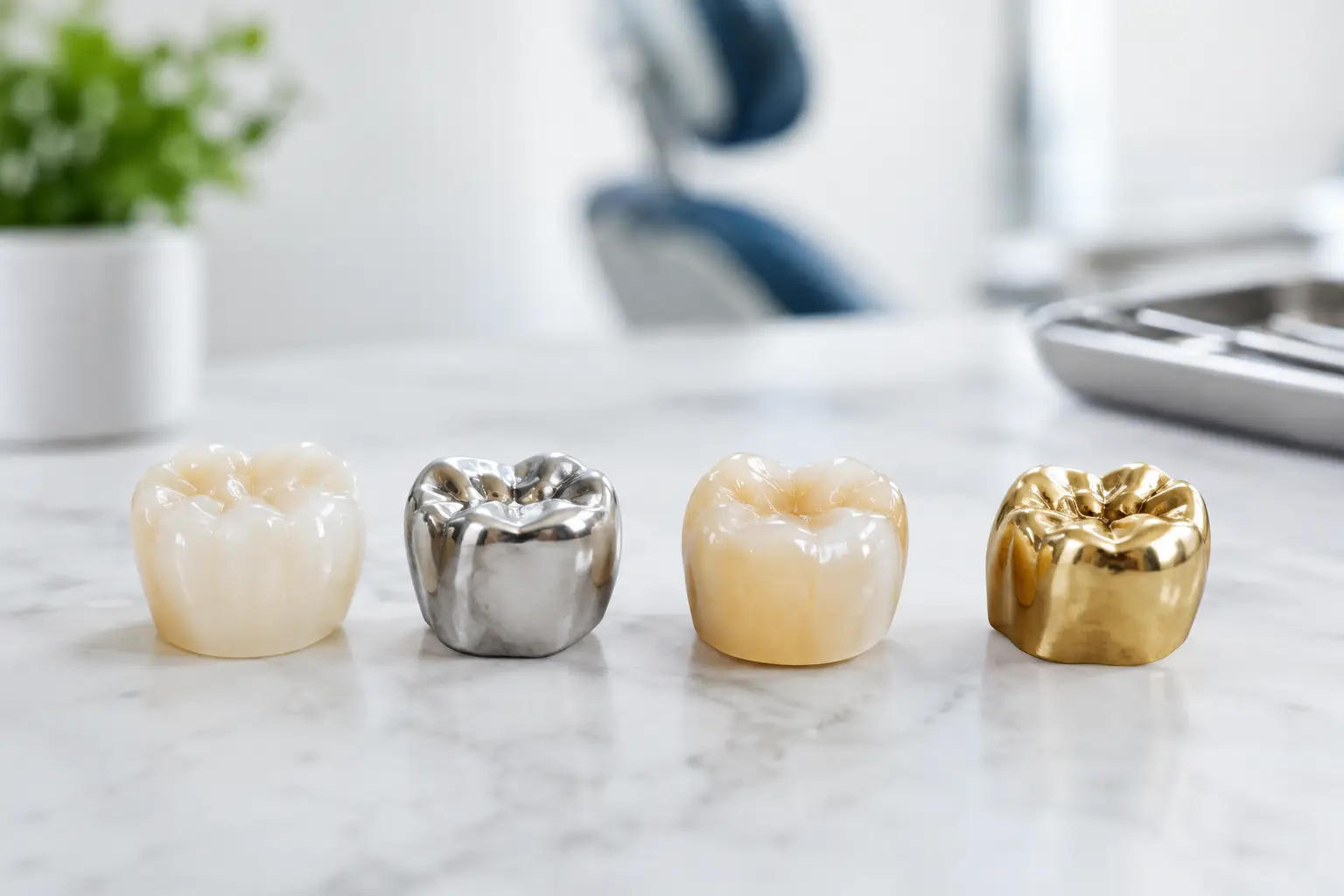
Crowns can be made from several materials, including ceramic, porcelain fused to metal and metal alloys. The best material depends on the tooth's location, the amount of space available, your bite and the appearance you want. A back tooth may benefit from a material chosen for strength, while a visible front tooth may call for greater attention to shade and translucency.
When should you book an appointment?
Book a routine appointment if you have noticed a chip, a recurring sensitivity, a worn filling or a crown that no longer feels right. These are often easier to manage before they become painful. If you have severe toothache, facial swelling, trauma, a broken tooth with sharp edges, or a crown that has come away and leaves the tooth very sensitive, seek urgent dental advice.
A crown is not a replacement for daily care. Brushing twice a day with fluoride toothpaste, cleaning between the teeth and attending regular examinations all help protect the tooth and the crown margins. With good care and regular review, a well-made crown can serve you comfortably for many years.
At 4 Great Stuart Street, the focus is on helping you understand your options without pressure. If a tooth feels different, looks damaged or is making chewing less comfortable, arranging a calm assessment now can give you clarity and help preserve your natural tooth for the future.