How to Care for Dentures and Keep Them Comfortable
Learn how to care for dentures with a daily routine that keeps them clean, comfortable and secure, and advice on storage, stains and when to call us.
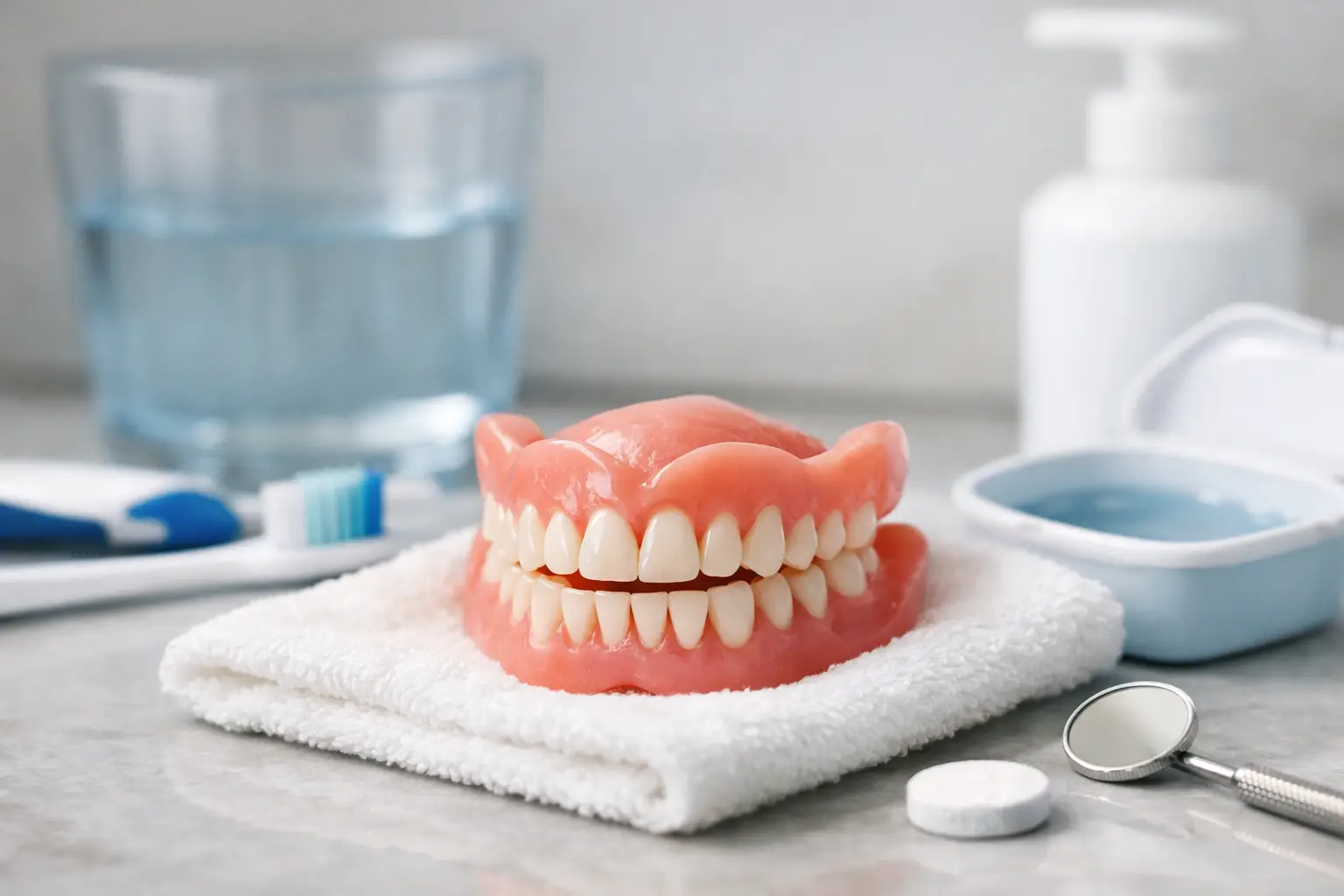
A denture that felt comfortable when it was first fitted can soon become irritating if plaque, food debris or dried deposits are allowed to build up. Knowing how to care for dentures protects not only the denture itself, but also the gums, tongue and any remaining natural teeth that support your oral health.
Dentures are designed to help you eat, speak and smile with confidence. They do, however, need a different routine from natural teeth. A little consistent care is usually more effective than occasional intensive cleaning, and it can help your denture stay fresher, more comfortable and in good condition for longer.
How to care for dentures every day
Remove your dentures after meals where practical and rinse them under cool or lukewarm running water. This helps remove loose food particles before they become trapped around the fitting surface or clasps of a partial denture. Take care when handling them: dentures can crack if dropped, so it is sensible to clean them over a folded towel or a basin partly filled with water.
Clean your dentures at least once a day using a soft denture brush or a soft toothbrush reserved for this purpose. Use a denture-cleaning product recommended by your dentist, or a mild liquid soap if appropriate. Brush all surfaces gently, including the side that rests against your gums. This is where plaque and bacteria can collect, even though it is out of sight.
Ordinary toothpaste is usually too abrasive for dentures. Over time, it can create tiny scratches in the acrylic surface. Those scratches make it easier for plaque and stains to cling on, leaving the denture looking dull and making it harder to keep clean. Household cleaners, bleach and very hot water should also be avoided. They can damage the material, affect the colour or alter the fit.
If you use a denture-cleaning tablet or soaking solution, follow the instructions on the packaging and do not assume that soaking replaces brushing. A cleanser can help lift deposits and freshen the denture, but gentle brushing is still needed to remove the daily film that builds up on its surface.
Clean your mouth as well
Taking dentures out does not mean oral hygiene is finished. Brush your natural teeth twice a day with fluoride toothpaste if you have any remaining teeth, taking particular care around clasps and along the gumline. Clean between natural teeth as advised by your dentist or hygienist.
For a full denture, gently brush your gums, tongue and palate with a soft toothbrush or a clean, damp flannel. This removes bacteria and stimulates the tissues. A clean mouth gives your denture a healthier surface to sit against and can reduce unpleasant taste or odour.
Should dentures be worn at night?
In most cases, dentures should be removed before going to bed. Your gums and supporting tissues benefit from a period without constant pressure, and leaving dentures in overnight can increase the risk of irritation, inflammation and fungal infection such as denture stomatitis.
There are exceptions. After extractions or certain treatment plans, your dentist may advise wearing an immediate denture overnight for a short period. Follow the specific advice you have been given rather than changing your routine too soon.
When dentures are out, keep them in fresh water or a denture-soaking solution if recommended. Acrylic can dry out and change shape, while metal components on partial dentures may need particular care depending on the product used. Never use hot water, even if the denture feels heavily stained or needs a thorough clean.
Eating with dentures without causing damage
A new denture, or a denture that has recently been adjusted, takes time to get used to. Begin with softer foods cut into small pieces and chew slowly using both sides of your mouth. This helps keep the denture more stable and reduces uneven pressure.
Very hard foods, sticky sweets and foods with small hard particles can be challenging. They may dislodge a denture, bend a clasp or become trapped beneath the fitting surface. You do not necessarily need to avoid favourite foods forever, but it is sensible to be cautious and learn what feels manageable for your particular denture.
If your denture repeatedly lifts when you eat, clicks while you speak or causes sore spots, do not try to reshape it yourself. A minor professional adjustment can make a significant difference. Trying to bend a metal clasp or smooth acrylic at home can permanently damage the fit.
Be careful with denture adhesive
Denture adhesive can provide added confidence for some people, particularly where a lower denture is less stable. It should be used sparingly and exactly as directed. Adhesive is not a cure for a loose or poorly fitting denture, and needing increasing amounts is a good reason to arrange a dental review.
Remove adhesive from both the denture and your gums each day. A denture that is clean and correctly fitted should not depend on large quantities of adhesive to stay in place.
Keeping stains, odour and plaque under control
Tea, coffee, red wine and tobacco can stain dentures, just as they stain natural teeth. Daily cleaning helps, but stubborn staining may need professional attention. Do not use whitening toothpaste or whitening products intended for natural teeth. They will not whiten denture teeth in the same way and may damage the surface.
Persistent odour is often a sign that bacteria or food deposits are being left on the denture or in the mouth. Review your cleaning routine, including the underside of the denture, your tongue and any remaining teeth. If the smell continues despite good care, a dental team can check for infection, tartar deposits or a fit issue that is making cleaning difficult.
Dentures can also collect calculus, sometimes called tartar, particularly where saliva flow is reduced. This cannot safely be scraped away at home. Professional cleaning is the safer option and protects the polished surface of the denture.
When a denture needs professional attention
Your mouth changes over time. Gums and jawbone can gradually shrink after tooth loss, which means a denture that once fitted well may become loose. This is normal, but it should not be ignored. A reline, adjustment, repair or replacement may be needed depending on the condition of the denture and the changes in your mouth.
Arrange an appointment if you notice persistent soreness, ulcers that do not settle, cracks, sharp edges, a broken tooth, difficulty chewing, slipping, clicking or a change in your bite. Do not wear a cracked denture if it is rubbing or unstable, and never use household glue to repair it. Many glues are not safe for use in the mouth and can make a proper repair more difficult.
Regular dental check-ups remain valuable whether you wear full or partial dentures. Your dentist can examine your gums, soft tissues, tongue and any remaining teeth, as well as assessing the condition and fit of the denture. This is particularly reassuring if you have had your denture for several years or have noticed gradual changes rather than a sudden problem.
A simple routine that is easy to maintain
The most reliable routine is straightforward: rinse after meals when you can, brush the denture daily with a suitable product, clean your mouth thoroughly, remove the denture at night unless advised otherwise, and store it safely in water. Keep your denture away from pets and small children too - they are easily damaged when left on a bedside table or wrapped in tissue.
At 4 Great Stuart Street, we see denture care as part of long-term oral health, not simply a matter of keeping an appliance clean. If your dentures no longer feel as secure or comfortable as they should, a calm review can identify the cause and help you return to eating and smiling with greater ease.