How to Clean Dental Bridges Without Damaging Them
Learn how to clean dental bridges with a gentle daily routine, the right interdental tools and practical advice on when to see your dentist in Edinburgh.
A dental bridge can restore the appearance and function of a missing tooth, but it needs more than a quick brush across the visible surface. Knowing how to clean dental bridges properly helps protect the supporting teeth, gums and the bridge itself - and can prevent small problems becoming uncomfortable or costly to treat.
Food debris and plaque can collect around the edges of a bridge and beneath the replacement tooth, where a standard toothbrush cannot always reach. A careful daily routine, combined with regular check-ups and hygiene appointments, gives your bridge the best chance of serving you comfortably for many years.
Why cleaning beneath a dental bridge matters
A fixed bridge is attached to one or more natural teeth, or sometimes supported by implants. While the bridge is not itself vulnerable to decay, the teeth and gum tissue around it still are. If plaque is left along the bridge margins, it may contribute to tooth decay in the supporting teeth, gum inflammation, bleeding and unpleasant breath.
The area beneath the false tooth, known as the pontic, also deserves attention. It can trap food, particularly after meals, and may irritate the gum if it is not cleaned regularly. This does not mean a bridge is difficult to look after. It simply means that brushing alone is usually not enough.
How to clean dental bridges each day
Most people do best with cleaning twice daily and cleaning between the teeth once a day. Your dentist or hygienist can tailor this to the shape and position of your bridge, as access differs from person to person.
Brush carefully around the bridge
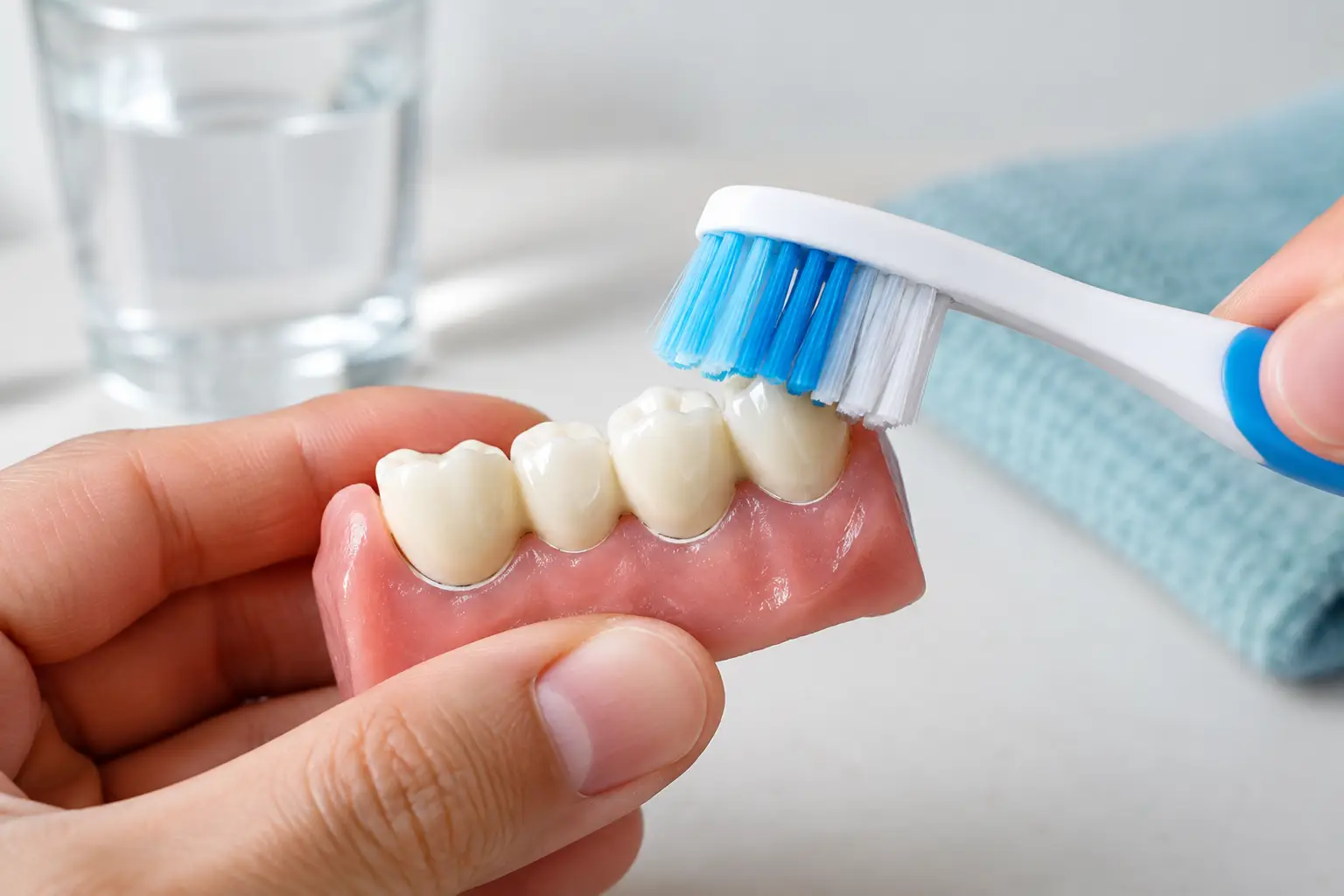
Use a soft-bristled manual toothbrush or an electric toothbrush with a small head. Brush for two minutes using fluoride toothpaste, taking time around the gumline and the points where the bridge meets your natural teeth.
Hold the bristles at a gentle angle towards the gum. Small circular movements are more effective and kinder to the gums than firm scrubbing. Clean the outer, inner and biting surfaces of the bridge, just as you would your other teeth.
Do not use a hard toothbrush or abrasive whitening toothpaste unless your dental team has specifically recommended it. Aggressive brushing can wear the gumline and may scratch some bridge materials over time.
Clean underneath with bridge floss or a floss threader
The most useful tool for many fixed bridges is super floss, sometimes called bridge floss. It has a firm end that can be guided underneath the bridge, a thicker section to remove plaque and debris, and a regular floss section for the supporting teeth.
If you use ordinary floss, a floss threader can help you pass it beneath the pontic. Gently guide the floss under the bridge, then move it back and forth along the underside of the replacement tooth and against the neighbouring teeth. Avoid snapping the floss down onto the gums.
It may take a few attempts to become comfortable with this technique. If your bridge is at the back of the mouth or you have limited dexterity, a hygienist can demonstrate a method that feels manageable at home.
Add interdental brushes where they fit
Small interdental brushes can clean the spaces beside a bridge where the teeth meet. They are available in several sizes, and choosing the right size matters. A brush that is too small may not clean effectively, while one that is forced into a tight space can injure the gum or bend the wire.
Insert the brush gently between the teeth or around the edge of the bridge, moving it in and out a few times. Never force it. Your dentist or hygienist can advise which sizes are suitable for your mouth and show you exactly where to use them.
Consider a water flosser as an extra aid
A water flosser can be helpful for washing loose food particles from around and beneath a bridge, especially for people who find flossing difficult. It can leave the mouth feeling particularly fresh after meals.
However, it should usually support rather than replace mechanical cleaning with floss or interdental brushes. Water pressure can rinse debris away, but it may not disrupt sticky plaque as thoroughly as a brush or floss against the tooth surface.
A simple routine after meals
You do not need to carry out a full cleaning routine every time you eat. Rinsing your mouth with water after meals can help dislodge food from beneath the bridge, particularly if you are away from home. It is also sensible to limit frequent sugary snacks and drinks, as the supporting teeth remain at risk of decay.
If something repeatedly catches under your bridge, do not try to remove it using sharp objects, pins or toothpicks. These can damage the gums, scratch the bridge or loosen the cement. A soft interdental brush, bridge floss or a gentle rinse is a safer approach.
Fixed bridges and removable bridges need different care
The guidance above is mainly for fixed bridges, which are cemented into place and should not be removed at home. A removable bridge, sometimes called a partial denture, needs a different routine.
Remove a removable bridge after eating where practical and rinse it under cool or lukewarm water. Brush it with a denture brush or soft toothbrush and a product designed for dentures. Ordinary toothpaste may be too abrasive for some removable appliances. Clean your natural teeth, gums and tongue separately before reinserting it.
Many removable bridges should be taken out overnight to allow the gums to rest, but follow the advice given for your individual appliance. If you are unsure which type of bridge you have, your dental team can explain the best care routine.
Signs your bridge needs professional attention
A well-made bridge should feel stable and comfortable. Contact your dentist if you notice persistent bleeding when cleaning, soreness around the bridge, a bad taste or smell that does not improve with cleaning, sensitivity in a supporting tooth, or food trapping that has suddenly become worse.
You should also arrange an appointment promptly if the bridge feels loose, moves when you bite, chips, cracks or causes pain. Do not attempt to glue a loose bridge back yourself. Household adhesives are not safe for use in the mouth and can make professional repair more difficult.
Sometimes bleeding simply reflects plaque build-up and improves once cleaning becomes more effective. It can also be a sign of gum disease or an issue around the edge of the bridge, so it is worth having checked rather than waiting for discomfort.
Regular reviews protect the teeth supporting your bridge
A bridge can look perfectly fine while a problem develops at an edge that is difficult to see at home. At routine examinations, your dentist checks the bridge, the supporting teeth, the bite and the surrounding gums. X-rays may occasionally be recommended to assess areas hidden from view.
Hygiene visits are equally valuable if plaque builds up easily around your bridge or if you have a history of gum problems. Professional cleaning reaches deposits that cannot be removed with home care alone, while practical advice can make your daily routine more effective and comfortable.
At 4 Great Stuart Street, we take time to explain preventive care in clear, practical terms. Whether your bridge is new or has been part of your smile for years, a review can provide reassurance and help preserve the natural teeth that support it.
A bridge should make everyday life easier, not give you something to worry about. With gentle brushing, the right interdental cleaning method and timely professional care, you can keep both your bridge and the tissues around it healthy for the long term.