A Guide to Treating Gum Recession Safely
Our guide to treating gum recession explains the causes, treatment options and daily care that can protect your teeth and gums for the long term at home.
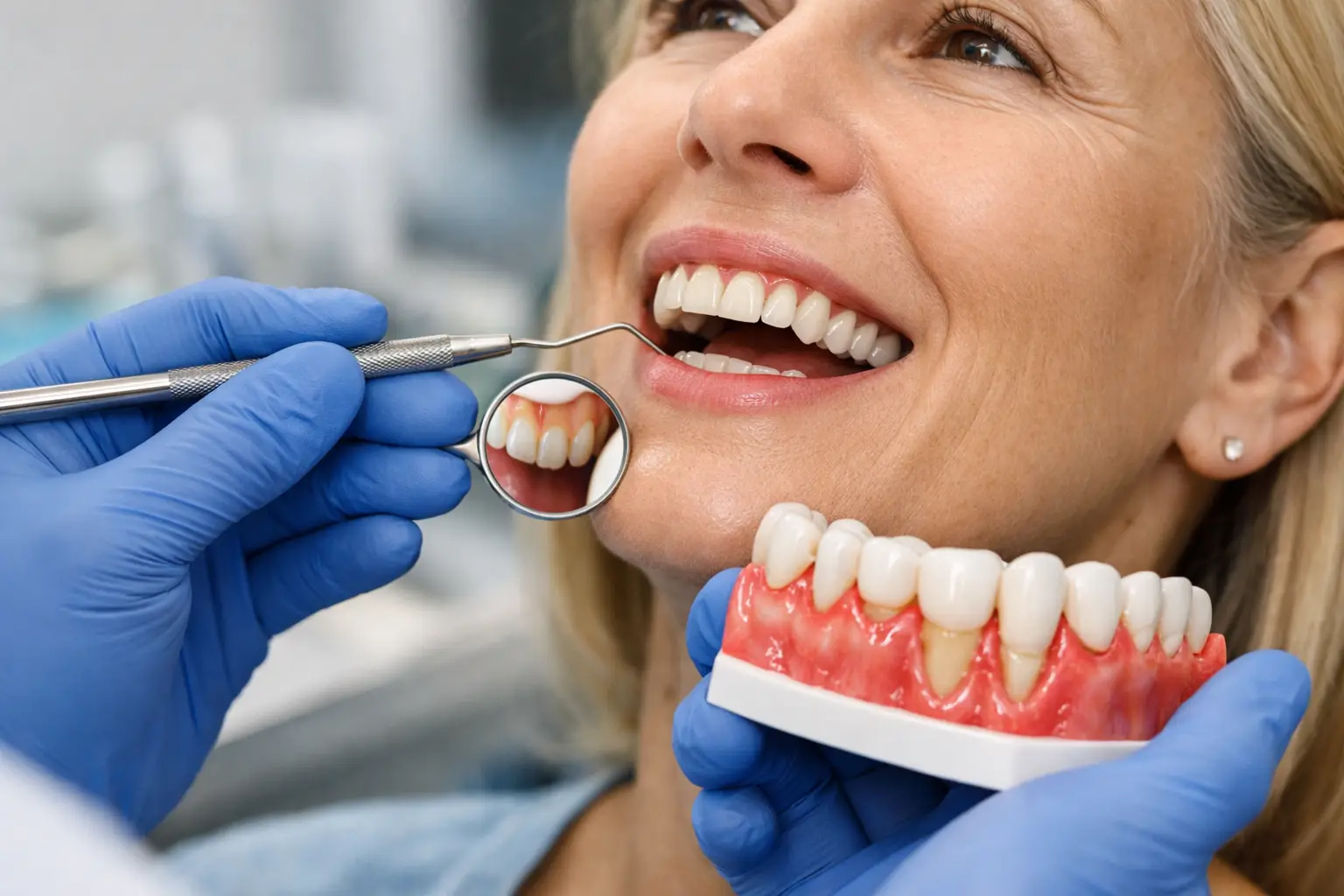
A tooth that suddenly appears longer than its neighbours can be unsettling. Often, the tooth has not moved at all - the gum around it has receded. This guide to treating gum recession explains what can cause this change, what professional care can achieve, and how gentler daily habits can help protect your gums from further damage.
Gum recession is common, particularly as we get older, but it is not something to ignore. As the gum margin moves away from the tooth, more of the root surface is exposed. This can lead to sensitivity, make the tooth look longer and, in some cases, increase the risk of root decay or gum disease progressing unnoticed.
What gum recession can look and feel like
Recession does not always cause pain. You may first notice a small notch at the gumline, a change in the shape of your smile, or a tooth that reacts sharply to cold water, sweet foods or brushing. The exposed root is softer than enamel, so it can wear more easily and may be more vulnerable to decay.
Gums may recede around one tooth or across several teeth. If you also have bleeding, swollen gums, persistent bad breath, loose teeth or changes in the way your teeth meet, arrange a dental assessment promptly. These signs can point to active gum disease, which needs treatment rather than simply a change in toothpaste.
Why do gums recede?
There is rarely one single cause. Gum recession can result from a combination of brushing technique, the natural thickness of your gum tissue, tooth position and inflammation caused by plaque. Some people are simply more prone to recession where the gum is naturally thin or where a tooth sits slightly outside the supporting bone.
Brushing too firmly, especially with a hard brush or abrasive toothpaste, can gradually wear the gum margin and root surface. This is not a reason to brush less thoroughly. It is a reason to brush more carefully, using a soft toothbrush and light pressure.
Gum disease is another significant cause. Plaque that is not fully removed can harden into tartar and trigger inflammation. Over time, this can damage the supporting tissues around the teeth, including bone. Smoking or vaping, poorly controlled diabetes, teeth grinding, oral piercings and certain orthodontic or bite-related factors may also contribute.
A recession line can remain stable for years, or it can progress. That is why an examination matters: treatment should be based on the cause, the health of the surrounding gums and how much supporting tissue remains.
A guide to treating gum recession: start with the cause
Gum tissue does not usually grow back by itself. However, many cases can be stabilised, and symptoms can often be managed successfully. The right approach depends on whether recession is linked to inflammation, trauma from brushing, tooth position, sensitivity, decay or a more complex gum problem.
Your dentist will examine the gums, measure the spaces around the teeth and assess for plaque, tartar, bleeding, tooth wear and mobility. X-rays may be recommended where there is concern about bone loss or decay beneath the gumline. This careful assessment allows treatment to focus on protecting your long-term oral health, rather than addressing appearance alone.
Professional cleaning and gum treatment
Where plaque and tartar are contributing to gum inflammation, professional cleaning is usually the first step. A dentist or hygienist can remove deposits that brushing cannot shift and show you how to clean effectively around the gumline.
If gum disease has created deeper spaces around the teeth, more detailed cleaning below the gumline may be needed. This is sometimes carried out over more than one appointment. Ongoing reviews are particularly valuable, because gum disease can be controlled but requires consistent home care and monitoring.
Managing sensitivity and root wear
For mild recession with sensitivity, a desensitising toothpaste and fluoride treatment may be enough to make eating and drinking more comfortable. Your dentist may apply a protective varnish during an appointment.
If the root surface has worn away or developed a cavity, a small tooth-coloured filling can protect it. This will not replace lost gum, but it can seal the exposed area, reduce sensitivity and make cleaning easier. Whether a filling is suitable depends on the shape and depth of the defect, as well as your bite.
Gum grafting for selected cases
Where recession is more pronounced, progressing, or particularly noticeable at the front of the mouth, gum graft surgery may be considered. This specialist treatment uses tissue, often taken from the roof of the mouth or a donor material, to thicken the gum and cover part or all of the exposed root where possible.
Grafting is not necessary for every patient with recession. It may be recommended to improve comfort, protect a vulnerable root, support a tooth before or after orthodontic treatment, or improve the appearance of the gumline. Results depend on the tooth position, the amount of bone support, gum thickness and your ability to keep the area clean while it heals.
Daily care that is kind to your gums
Small changes to your routine can make a meaningful difference, especially once professional treatment has addressed any active disease. Use a soft manual brush or an electric toothbrush with a pressure sensor. Angle the bristles gently towards the gumline and use small, controlled movements rather than vigorous horizontal scrubbing.
Brush twice daily with fluoride toothpaste. After brushing, spit out excess toothpaste but avoid rinsing straight away, as this allows fluoride to remain on the teeth longer. If sensitivity is troublesome, ask your dentist which toothpaste is suitable and whether applying a small amount directly to the sensitive area before bed may help.
Cleaning between the teeth is just as important. Interdental brushes are often effective where there is enough space, while floss may be better in tighter contacts. The correct size and method are individual, so a hygienist can help you find an approach that is effective without causing trauma.
If you grind or clench your teeth, particularly at night, discuss this at your appointment. A custom-made night guard may help protect teeth from excessive force, although it will not treat gum disease. Stopping smoking and keeping medical conditions such as diabetes well managed can also support gum healing and overall periodontal health.
When to book an appointment
Book a check-up if you have noticed a changing gumline, new sensitivity, bleeding when brushing or a tooth that feels different. Early assessment is usually simpler and more comfortable than waiting until recession or gum disease has advanced.
At 4 Great Stuart Street, we take a calm, practical approach to concerns such as gum recession. Your appointment should give you a clear explanation of what is happening, whether treatment is needed now and how to care for your gums with confidence between visits.
A healthy gumline is not about perfection. It is about keeping your teeth comfortable, clean and well supported for years to come - and seeking advice early when something changes.