How Clear Aligners Straighten Teeth
Learn how clear aligners straighten teeth, what to expect from treatment, and why careful planning matters for safe, predictable results.
A lot of adults look at clear aligners and wonder the same thing: if the trays are so thin and discreet, how clear aligners straighten teeth at all. It is a fair question. Teeth feel solid and fixed in place, yet they can be guided into better positions with gentle, controlled pressure over time.
That is the key idea behind aligner treatment. Clear aligners do not force teeth into place overnight. They move them gradually, in small planned stages, with each tray designed to make a very specific adjustment. When treatment is properly assessed and monitored, this can be an effective and comfortable way to improve crowding, spacing and certain bite concerns.
How clear aligners straighten teeth in simple terms
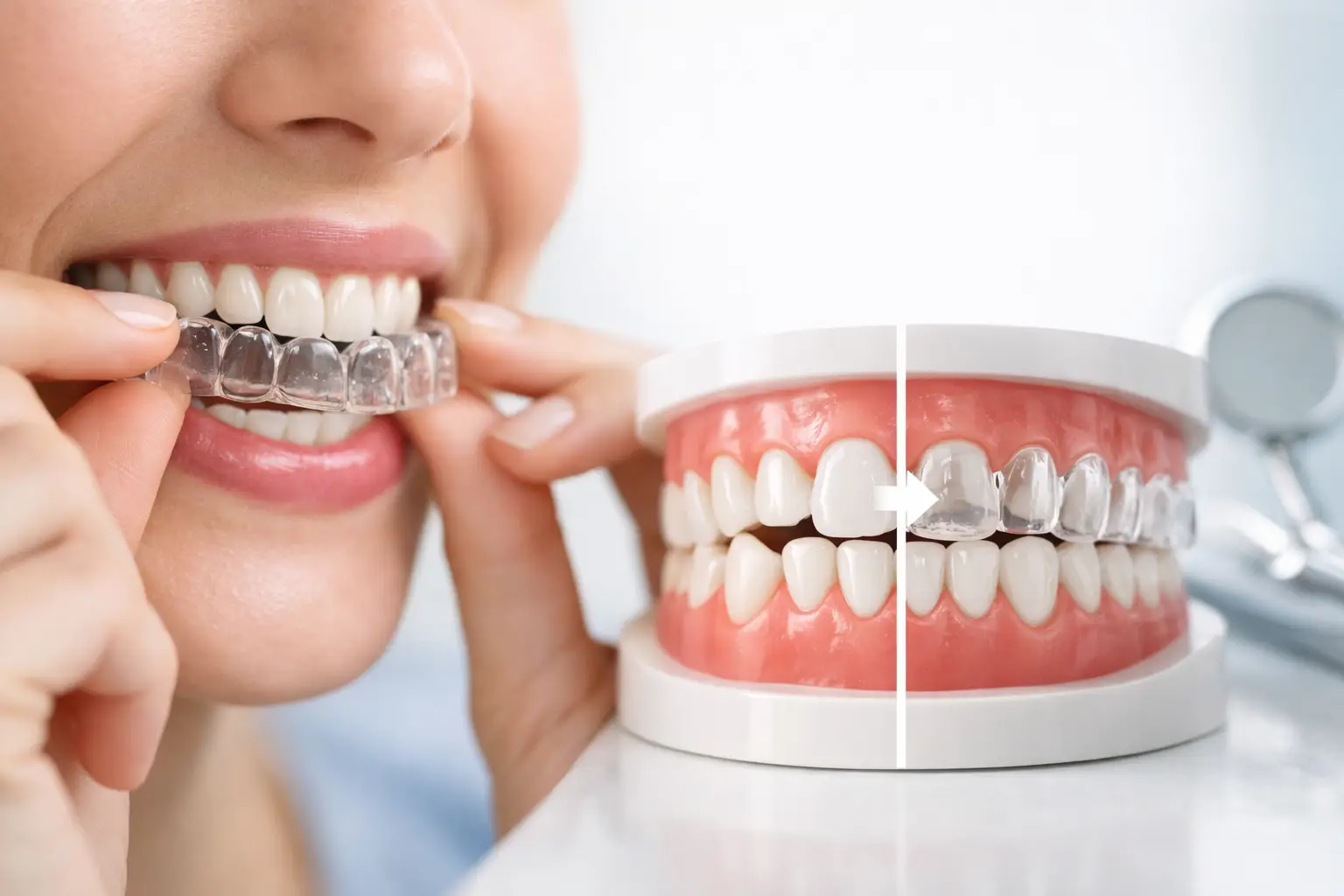
Each aligner is made to fit your teeth at a particular stage of treatment. The first tray fits your current position. The next tray is slightly different, and so is the one after that. As you move through the series, your teeth are encouraged to follow that planned path.
The movement happens because the aligner applies light pressure to selected teeth. That pressure stimulates a natural biological process in the tissues around the roots. Bone remodels slowly around the moving tooth, allowing it to shift position safely. This is the same basic principle used in other orthodontic treatments, including fixed braces, but the way the force is delivered is different.
With clear aligners, the pressure is spread through a close-fitting removable tray rather than brackets and wires. For many adults, that feels less intrusive in day-to-day life. The trays are also custom-made, which allows treatment to be tailored to the individual rather than treated as one-size-fits-all.
What actually moves the teeth
Although the aligners look simple, there is a good deal of planning behind them. Successful treatment depends on more than wearing a set of trays. It starts with a clinical examination, photos, and usually a digital scan or impressions so the dentist can assess your teeth, bite and oral health properly.
From there, each tooth movement is mapped out. Some teeth may need to rotate. Others may need to be tipped, lifted slightly, or moved bodily through the bone. These are not all equally easy. Small spacing can often be straightforward, while more complex crowding or bite correction may need additional features or a different type of orthodontic treatment.
In many cases, tiny tooth-coloured attachments are placed on certain teeth. These give the aligners extra grip so they can apply force more precisely. Without them, some movements would be much less predictable. Patients are sometimes surprised by this, as marketing images often show completely smooth trays, but attachments are a normal and useful part of many cases.
A dentist may also recommend very slight reshaping between particular teeth. This creates the space needed for safe movement and can improve the final alignment. Done carefully, it is conservative and controlled, but it is one reason aligner treatment should always be properly supervised.
Why wearing time matters so much
Clear aligners only work when they are worn consistently. In most cases, that means around 20 to 22 hours a day, removing them only for eating, drinking anything other than water, and cleaning your teeth.
This matters because tooth movement relies on steady pressure over time. If trays are left out too often, the force becomes inconsistent. Teeth may not track properly, meaning they stop matching the planned position for the next aligner. When that happens, treatment can slow down, become less accurate, or need refinement later.
For people with busy working lives, school runs, meetings or social events, removable aligners can be very convenient. You can take them out to eat and brush normally. But that flexibility comes with responsibility. Fixed braces keep working whether you remember them or not. Aligners depend much more on patient compliance.
Are clear aligners as effective as braces?
Sometimes yes, sometimes no - it depends on the case.
Clear aligners can be very effective for mild to moderate crowding, small gaps, and many cosmetic alignment concerns. They are often a good option for adults who want a discreet treatment that fits around work and family life. For the right patient, they can offer excellent results.
That said, not every orthodontic problem is best treated with aligners alone. More complex bite issues, significant rotations, larger tooth movements or certain jaw relationships may be better managed with fixed braces, or with a combination of approaches. A responsible dentist will explain that clearly rather than promise that aligners suit everyone.
This is one of the most important parts of the process. The quality of the assessment matters as much as the appliance itself. A treatment is only as good as the diagnosis and planning behind it.
What treatment usually feels like
Most patients do not describe aligners as painful, but they can feel tight, especially when switching to a new tray. That pressure is a sign the aligner is active and working. It tends to settle after a day or two.
Because there are no metal brackets or wires, aligners often feel gentler on the cheeks and lips. They can still take some getting used to, and speech may sound slightly different at first, but most people adapt quickly. Good cleaning habits also become more important, as the trays sit closely over the teeth for long periods.
If you are already prone to clenching, have gum problems, or have untreated decay, these issues need attention before cosmetic tooth movement begins. Straightening teeth is not just about appearance. It should sit within a wider plan for healthy, stable teeth and gums.
The stages of clear aligner treatment
Treatment usually begins with a consultation to discuss what is bothering you, what result you hope for, and whether aligners are a suitable option. That may sound obvious, but it matters. Some patients want a small cosmetic improvement, while others are hoping to correct a bite problem they have had for years.
After records are taken, your dentist reviews the case and plans the movements. Once the aligners are ready, they are fitted and you are shown how to wear and care for them. If attachments are needed, these are usually placed early in treatment.
You then change to new trays at intervals advised by your dentist, often every one to two weeks. Review appointments are arranged to check that the teeth are moving as expected. This supervision is important. Even well-planned cases sometimes need small adjustments along the way.
At the end, most patients need retainers. This is not an optional extra if you want to keep the result. Teeth have a natural tendency to drift, and without retention they can move back surprisingly quickly. Straightening your teeth is one part of treatment. Keeping them straight is the long-term commitment.
Benefits, limits and realistic expectations
The main appeal of clear aligners is easy to understand. They are discreet, removable, and generally comfortable. For many adults in Edinburgh, that makes them a more acceptable option than fixed braces, particularly in professional settings.
They also allow you to eat normally and clean your teeth more easily than you can with brackets and wires. That can make treatment feel less disruptive.
Still, aligners are not invisible in every situation, not entirely maintenance-free, and not always the fastest route. If you lose trays, skip wear time or expect difficult movements to happen without attachments or refinements, you may be disappointed. Good aligner treatment is careful dentistry, not a shortcut.
A calm, well-supervised approach is usually the right one. At an established practice such as 4 Great Stuart Street, that means looking not only at whether your teeth can be straightened, but whether treatment is appropriate for your oral health, your goals and your long-term stability.
Who tends to be a good candidate?
Adults with mild to moderate alignment concerns are often well suited, especially if they are motivated and likely to wear the aligners properly. People who want a discreet option for work, social confidence or an upcoming event often ask about them.
They can also suit older teenagers, depending on the case and the level of responsibility involved. On the other hand, patients with active gum disease, extensive untreated dental problems, or very complex orthodontic issues may need other care first, or a different form of tooth straightening altogether.
That is why a proper consultation matters more than online promises or at-home impressions. Teeth do not move in isolation. The gums, bone, bite and existing dental work all need to be considered.
If you are thinking about aligners, the best starting point is not whether the trays look convenient. It is whether the treatment plan is sound, realistic and centred on your long-term dental health as well as the final smile.