A Guide to Replacing Missing Teeth
A practical guide to replacing missing teeth, including implants, bridges and dentures, with clear advice on costs, comfort and suitability.
A missing tooth can affect far more than your smile. You may notice changes in how you chew, how clearly you speak, or even how confident you feel in meetings, photographs or everyday conversation. This guide to replacing missing teeth is designed to help you understand the main options, what each one involves, and how to decide what is right for you.
For some people, the concern is mainly cosmetic. For others, it is about comfort, bite stability or stopping neighbouring teeth from shifting over time. There is no single answer that suits everyone, which is why good treatment planning starts with listening carefully, examining your mouth properly and talking through the trade-offs in a calm, practical way.
Why replacing missing teeth matters
When a tooth is lost, the effect is not always immediate. If the gap is at the back, you might manage perfectly well at first. Over time, though, the surrounding teeth can begin to tilt or drift. The opposing tooth may over-erupt slightly, and chewing can become less balanced. In some cases, this can place extra strain on certain teeth or make cleaning more difficult.
There is also the question of bone support. After a tooth is removed, the jawbone in that area naturally begins to shrink. This does not always create a visible problem straight away, but it can influence your future treatment choices, especially if you are thinking about dental implants later on.
Just as importantly, missing teeth can change the way people feel about themselves. Many patients are not looking for anything dramatic. They simply want to eat comfortably, smile without thinking about it, and feel that their mouth is working as it should.
A guide to replacing missing teeth: your main options
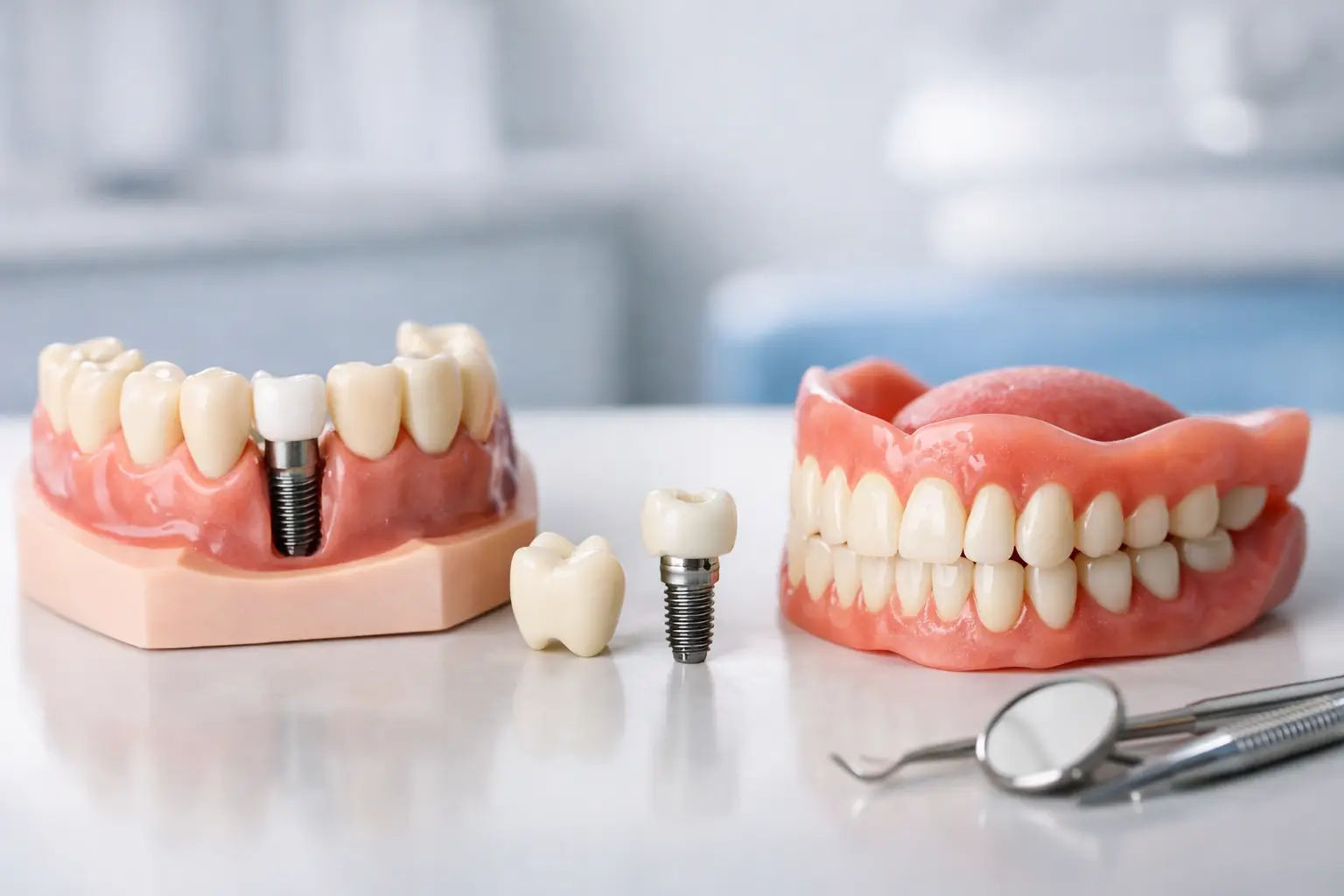
Most tooth replacement treatment falls into three broad categories: dentures, bridges and dental implants. The best choice depends on the number of missing teeth, the health of the surrounding teeth and gums, your budget, your preferences and your long-term plans.
Dentures
Dentures are removable replacements for missing teeth. They can replace one tooth, several teeth or a full arch. Modern dentures can look natural and, when made well, offer a practical and affordable solution.
A denture is often a sensible option when several teeth are missing, when the supporting teeth are not suitable for a bridge, or when a patient would prefer not to have implant surgery. They can also be useful as an interim solution while longer-term treatment is being planned.
That said, dentures do have limitations. Because they are removable, they may feel less secure than fixed options. Some patients adapt quickly, while others need time to become comfortable with speaking and eating. Lower dentures in particular can be more difficult to stabilise because they have less surface area to grip.
The advantage is that dentures are usually the least invasive route and can often be provided at a lower cost than other restorations. For many patients, that balance of practicality and affordability makes them a very reasonable choice.
Bridges
A bridge is a fixed replacement tooth supported by the teeth next to the gap. It is cemented in place, so it does not come out in the way a denture does. For a single missing tooth, or occasionally a small number of teeth, a bridge can provide a stable and natural-looking result.
Bridges tend to suit patients who want something fixed but may not be ideal candidates for implants. They can work particularly well when the neighbouring teeth already need crowns or restorations, as those teeth are being treated anyway.
The main consideration is that a traditional bridge often involves preparing the supporting teeth. If those teeth are healthy and untouched, some patients prefer to preserve them rather than reduce them. Good planning is important here, because a bridge can be an excellent option in one mouth and less ideal in another.
Cleaning around a bridge also takes a little more effort than cleaning a natural tooth, so home care matters. With good maintenance and regular reviews, bridges can serve patients well for many years.
Dental implants
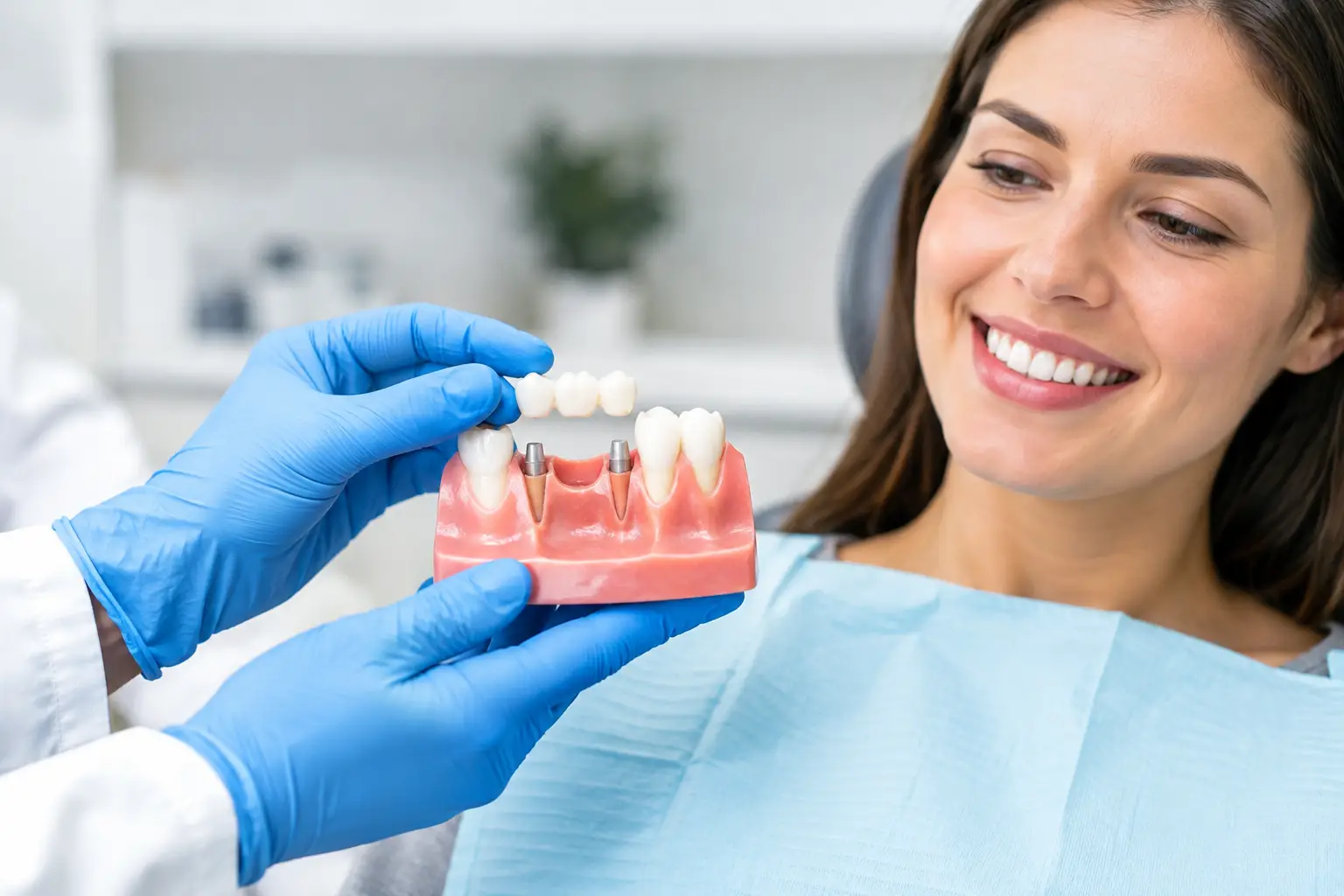
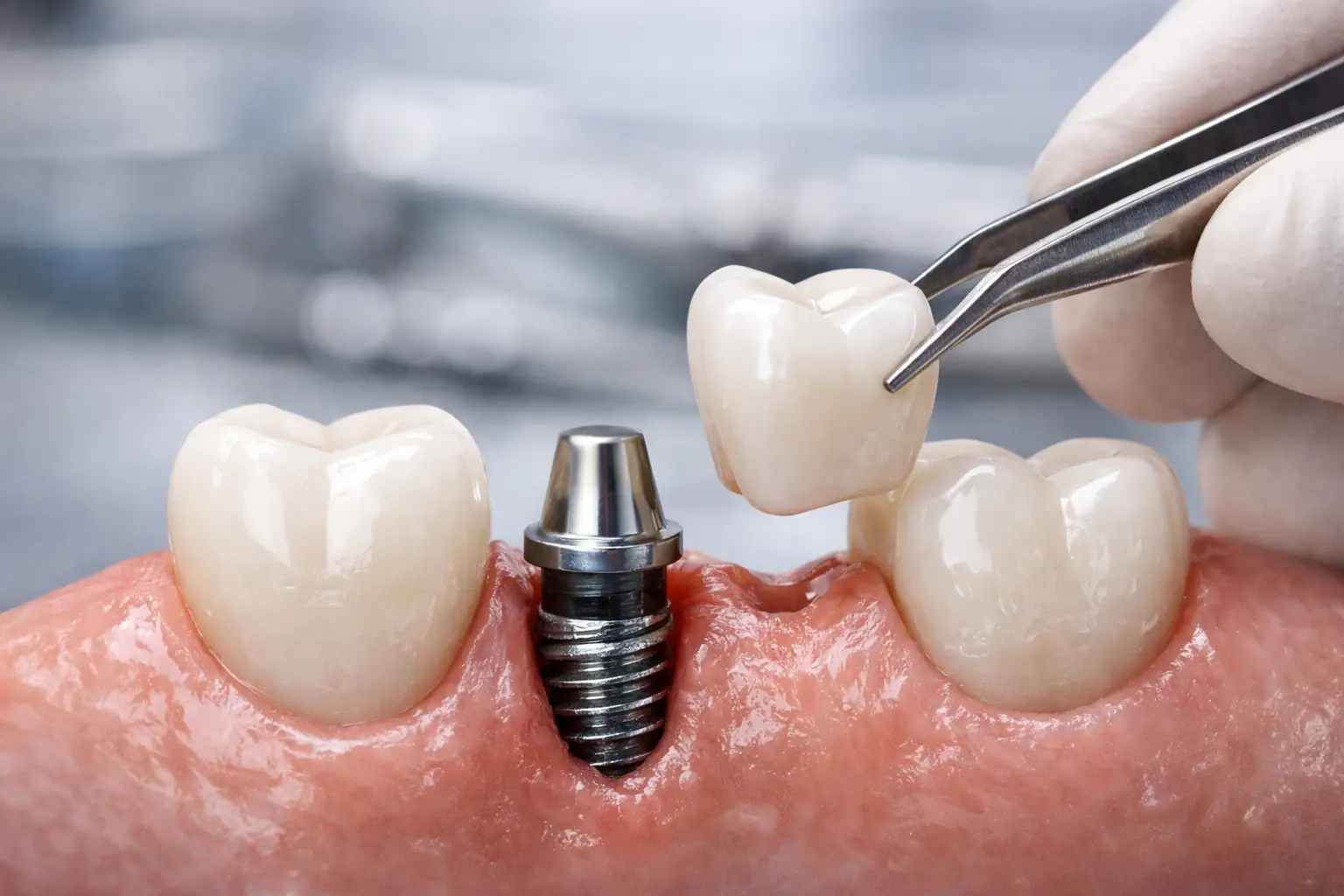
Dental implants are designed to replace the root of a missing tooth as well as the visible crown. A small titanium implant is placed in the jawbone, and once it has healed, a custom-made crown, bridge or denture attachment is fitted on top.
For many people, implants are the closest option to replacing a natural tooth. They are fixed, do not rely on neighbouring teeth for support, and can help preserve the bone in the area. They are often chosen by patients who want a long-term solution that feels secure and looks very natural.
However, implants are not automatically the right answer for every case. They require enough healthy bone and gum support, and they involve a surgical procedure. Some medical conditions, smoking habits or oral health issues may affect suitability or healing. Cost is also a factor, as implants are usually the highest initial investment.
Even so, when implants are appropriate, they can be a very strong option for both function and confidence. In an established practice built on trust, the aim should never be to push implants where a simpler treatment would do just as well.
How to choose the right replacement
The right treatment is not always the most advanced one. It is the one that fits your mouth, your priorities and your circumstances.
If you are missing one front tooth, appearance may be the deciding factor. If you are missing several back teeth, chewing comfort and stability might matter more. If you have had dentures for years and are frustrated by movement, implant-retained options may be worth exploring. If your budget is tight, a well-made denture or bridge may restore function very effectively without overcomplicating matters.
Age on its own is rarely the key issue. We see younger adults who want a durable fixed solution and older patients who are excellent implant candidates. What matters more is overall dental health, bone support, medical history and how committed you feel to looking after the replacement over time.
What a dentist will assess first
A proper consultation should cover more than the gap itself. Your dentist will usually assess the teeth beside and opposite the space, your gum health, your bite, the condition of any existing restorations and the amount of bone available. X-rays are often needed, and in some implant cases more detailed imaging may be recommended.
This stage is important because replacing a missing tooth is not simply about filling a space. It is about making sure the new restoration works comfortably with the rest of your mouth. A treatment that looks straightforward at first glance can become less suitable if, for example, the supporting teeth are weak or the bite is putting too much pressure on one area.
A thoughtful plan should also account for timing. Sometimes it is best to replace a tooth soon after extraction. In other cases, a short healing period gives a more predictable result.
Costs, comfort and long-term value
Patients often ask which option is best value. The honest answer is that it depends on what you mean by value.
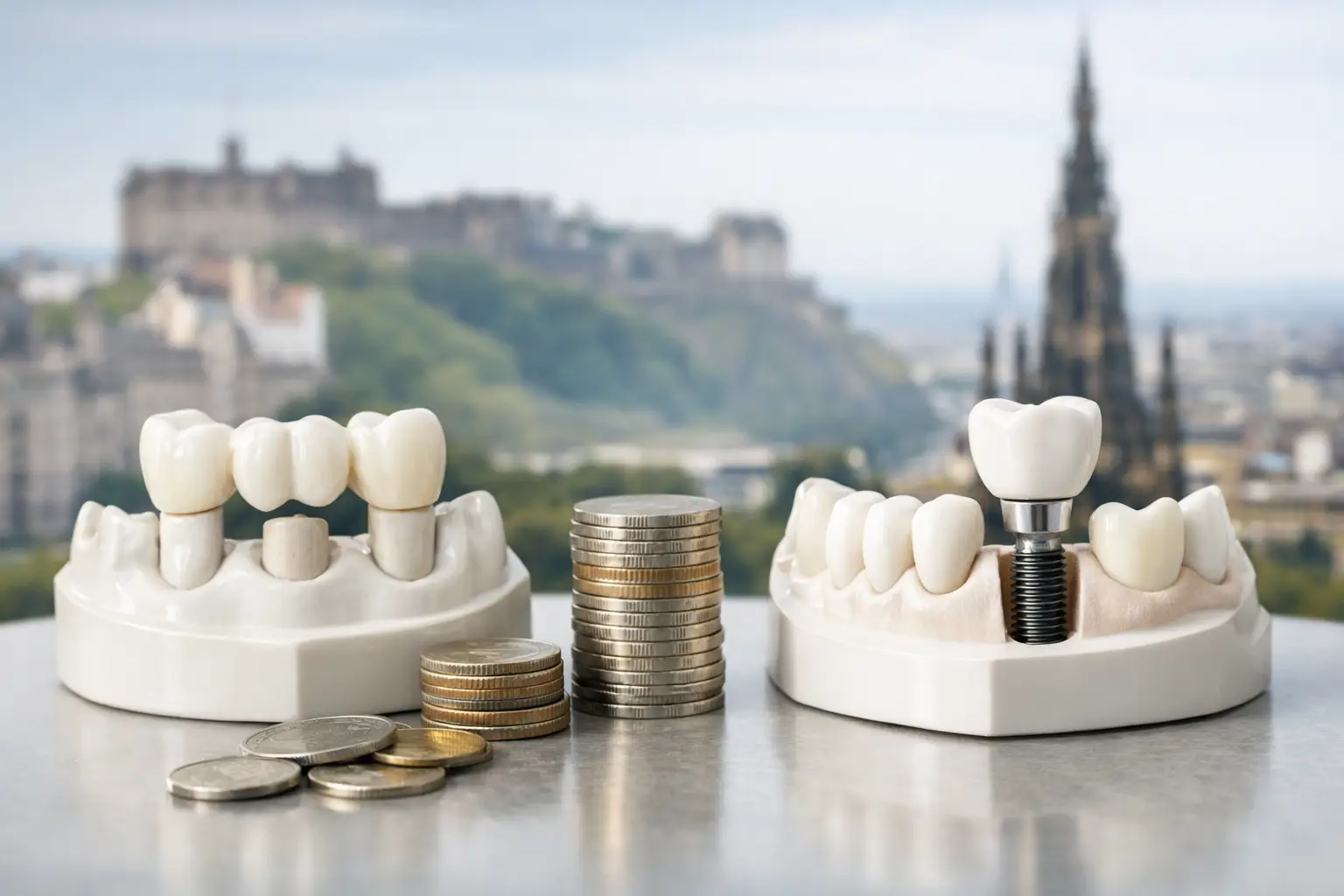
Dentures usually have the lowest upfront cost, but they may need more adjustment, relining or replacement over time. Bridges sit somewhere in the middle and can be very cost-effective, particularly when neighbouring teeth already require treatment. Implants typically cost more initially, but they may offer excellent long-term value because they are fixed, independent and often highly durable.
Comfort matters just as much as cost. Some people dislike the idea of a removable appliance and are willing to invest more in a fixed alternative. Others prefer to avoid surgery and are perfectly happy with a denture. Neither approach is more sensible by default. It comes down to what feels manageable and worthwhile for you.
Living well with your new tooth replacement
Whatever option you choose, maintenance makes a real difference. Bridges and implants still need excellent brushing and cleaning around the gumline. Dentures need regular cleaning and occasional review to check their fit. Gum disease, tooth decay and clenching habits can all affect the lifespan of your treatment.
At 4 Great Stuart Street, these conversations are part of a broader approach to long-term care. Replacing missing teeth should not feel rushed or overly technical. Done properly, it is a collaborative process that balances clinical standards with comfort, clarity and realistic expectations.
If you are considering treatment, the most useful first step is not choosing an appliance online or comparing options in isolation. It is having your mouth assessed properly so you can understand what is possible now, what may need attention first, and which solution is likely to serve you best over the years ahead. A calm, well-planned decision is usually the one patients feel happiest with later.