Missing Tooth Treatment Guide for Adults
A missing tooth treatment guide for Edinburgh adults, covering bridges, dentures and implants, with clear advice on cost, comfort and timing.

A gap in your smile is rarely just a cosmetic issue. A missing tooth can change how you chew, how clearly you speak, and how confident you feel when you laugh or meet someone for the first time. This missing tooth treatment guide is designed to help you understand your options calmly and clearly, so you can make a decision that suits your health, budget and long-term comfort.
For some people, the concern starts at the front of the mouth, where appearance matters most. For others, it is a back tooth that no one can see but everyone can feel when eating becomes awkward. In both cases, replacing a missing tooth is often about function as much as appearance.
Why replacing a missing tooth matters
When a tooth is lost and left untreated, the effects can spread beyond the gap itself. Nearby teeth may begin to drift into the space. The opposing tooth can over-erupt, which means it starts to move out of position because it no longer has anything to bite against. Over time, this can affect your bite, make cleaning more difficult and increase wear on other teeth.
There is also the question of bone support. The jawbone in the area of a missing tooth can gradually shrink when it is no longer stimulated by a tooth root. This does not happen overnight, but it can influence your treatment choices later, particularly if you are considering an implant.
That said, treatment is not exactly the same for everyone. The right option depends on where the tooth is missing, the condition of the surrounding teeth and gums, your general health, and what feels realistic for you financially and practically.
Missing tooth treatment guide: the main options
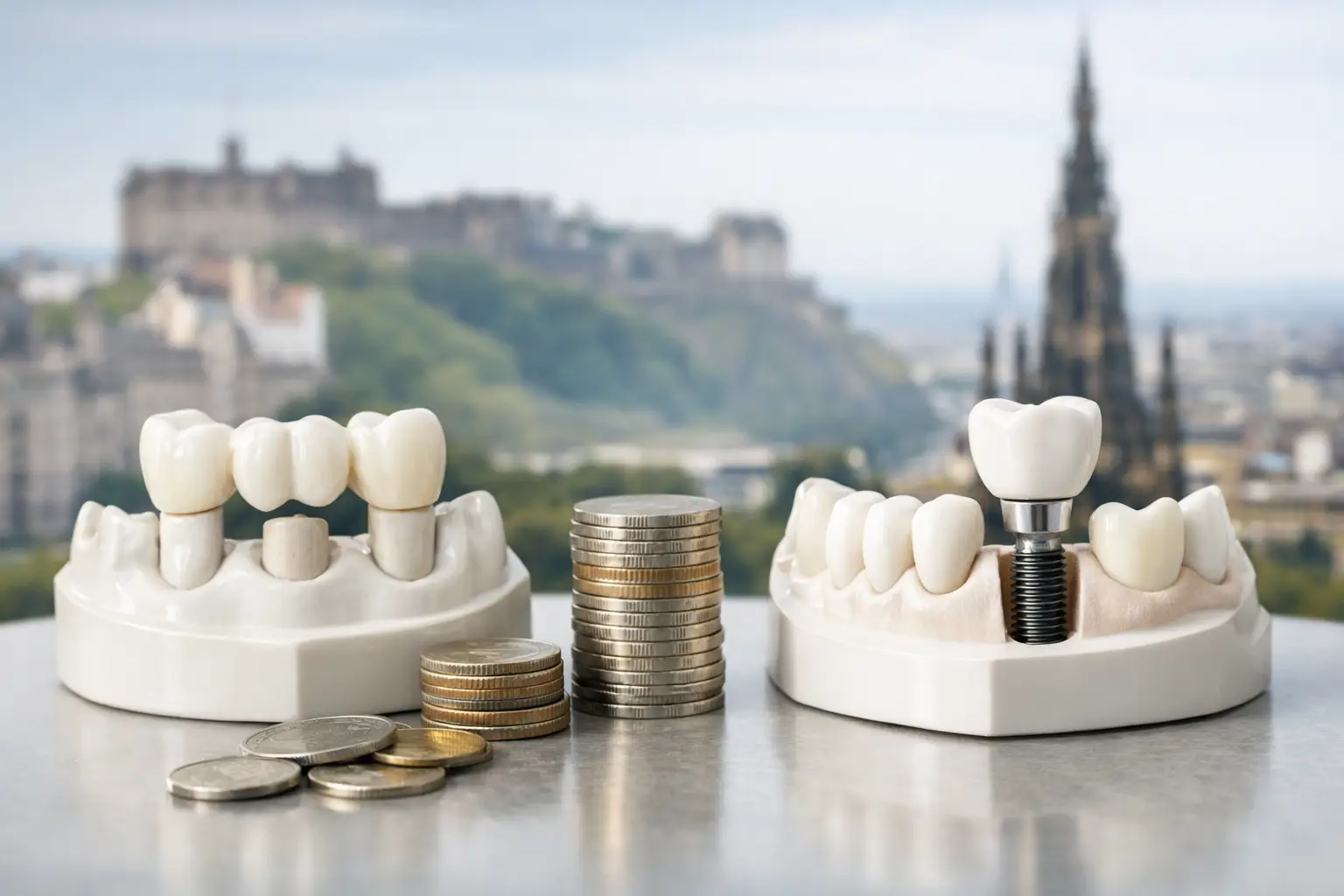
Most patients will be choosing between a bridge, a denture or a dental implant. Each can be an excellent solution in the right circumstances. The key is to balance longevity, comfort, maintenance and cost.
Dental bridges
A bridge replaces a missing tooth by attaching an artificial tooth to the natural teeth on either side, or in some cases to one neighbouring tooth. Bridges are fixed in place, so they do not come out for cleaning, and many patients like the fact that they feel secure and natural once fitted.
A bridge can be a very good option if the teeth next to the gap already need crowns or restorations. In that situation, using them as support may make practical sense. Treatment is usually quicker than implant treatment, and it avoids surgery.
The trade-off is that a traditional bridge often relies on preparing adjacent teeth. If those teeth are healthy and untouched, some patients prefer not to alter them. Bridges also require careful cleaning underneath and around the supporting teeth to reduce the risk of decay or gum problems.
Dentures
Dentures remain a reliable and cost-effective way to replace one or more missing teeth. A partial denture can fill a gap and restore appearance and function without invasive treatment. Modern dentures can look far more natural than many people expect, especially when they are carefully designed and properly fitted.
For some patients, dentures are the most sensible starting point. They are often suitable when several teeth are missing, when the surrounding teeth are not ideal for a bridge, or when an implant is not appropriate for health or budget reasons.
They do, however, take some getting used to. A removable appliance can feel unfamiliar at first, and lower dentures in particular may be less stable than fixed options. Dentures also need regular maintenance, and as the mouth changes over time they may need adjustment, relining or replacement.
Dental implants
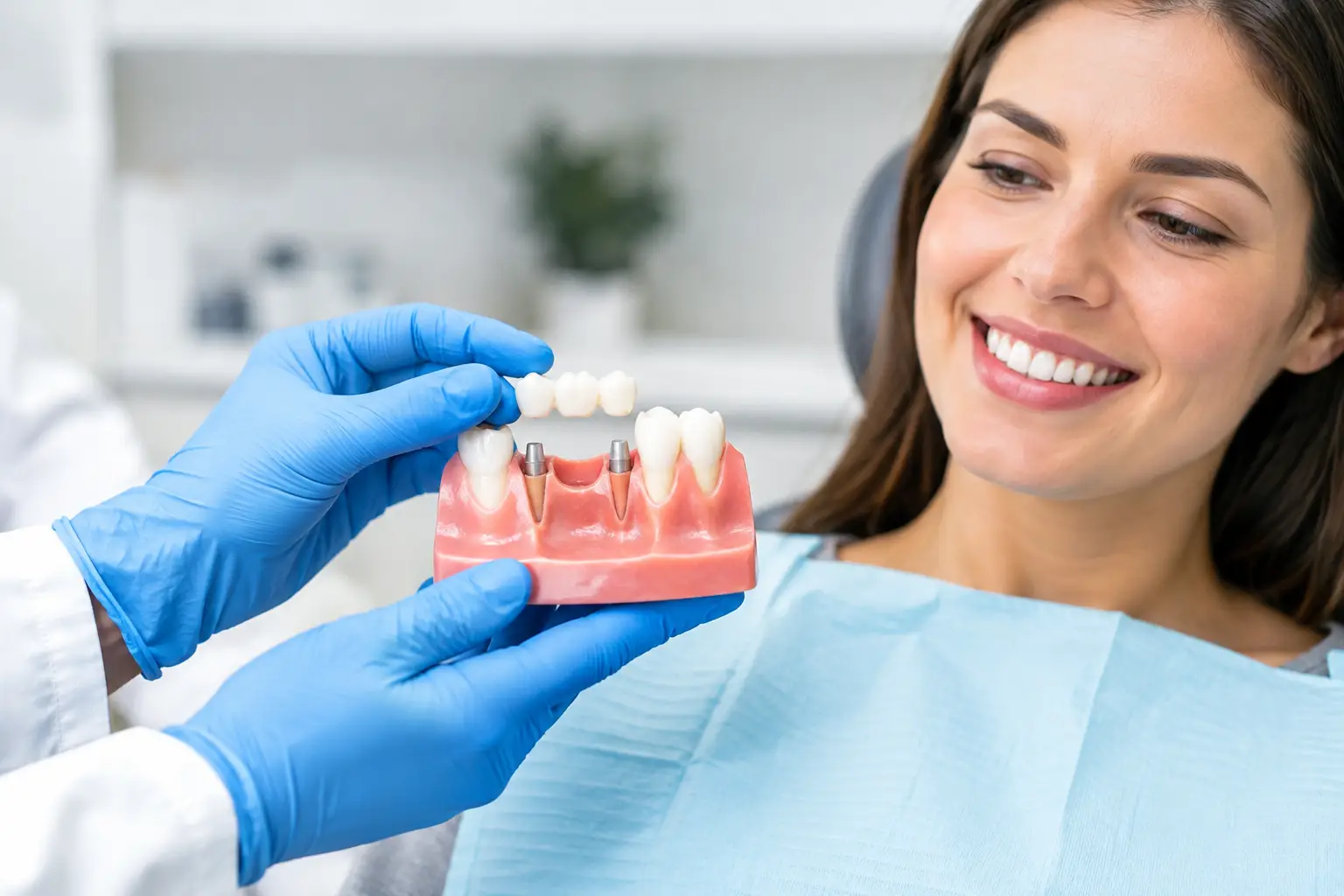
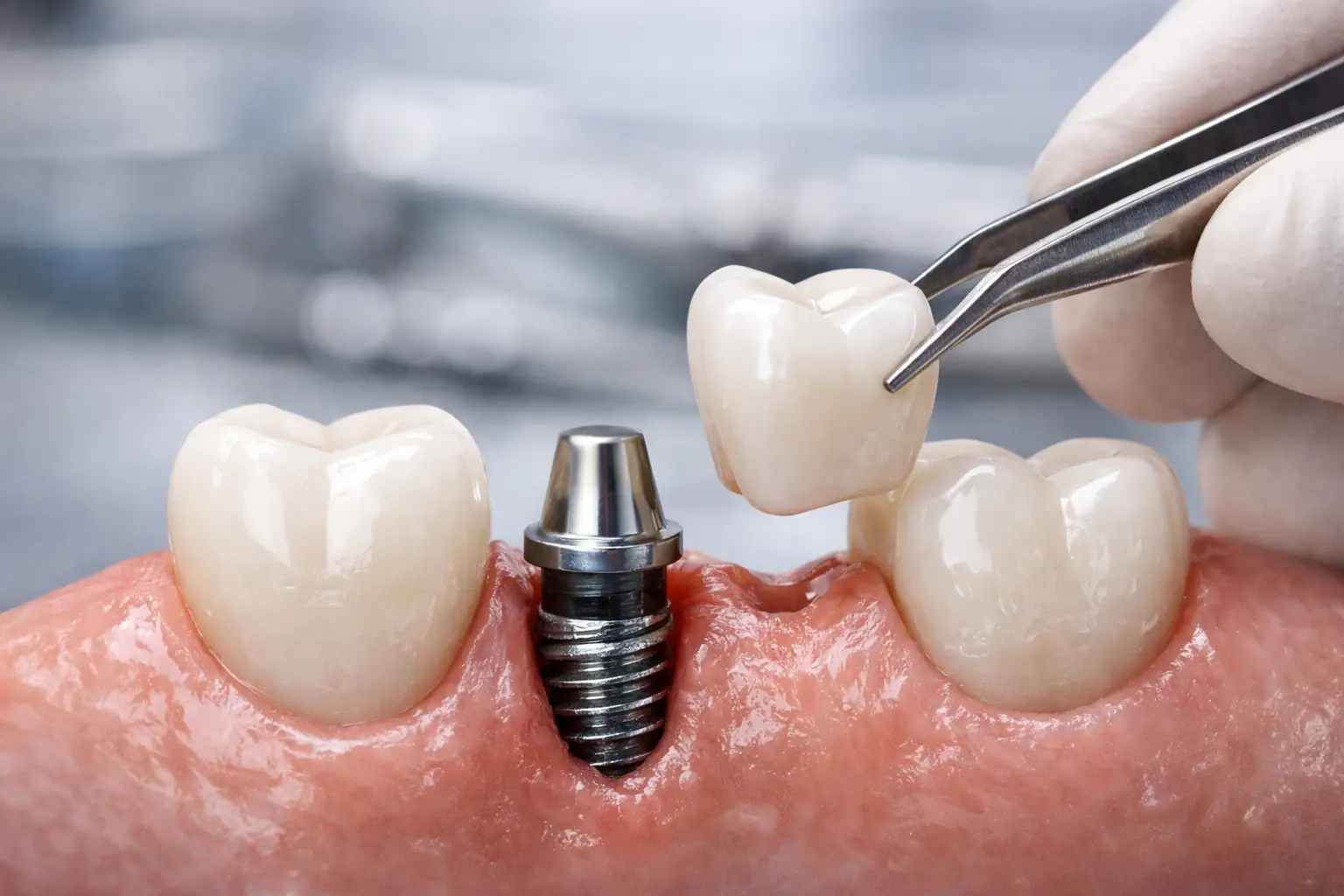
Implants are often considered the closest replacement to a natural tooth. A small titanium post is placed in the jawbone to act as an artificial root, and a crown is then fitted on top. Because the implant stands independently, it usually does not require the neighbouring teeth to be drilled.
For many adults, this is the most comfortable and long-lasting option. Implants can look very natural, feel secure when chewing, and help preserve bone in the area. They can be used for a single missing tooth, multiple teeth or even to help support dentures.
The main considerations are time, cost and suitability. Implant treatment usually takes longer than a bridge or denture because healing is part of the process. Not everyone is an immediate candidate either. Gum health, smoking, certain medical conditions and the amount of available bone all play a part in planning.
How to choose the right treatment
The best choice is rarely about which treatment is most advanced. It is about which treatment is most appropriate for you.
If you want a fixed solution and the neighbouring teeth are already heavily restored, a bridge may be a sensible and efficient option. If you need to replace several teeth and want to keep costs more manageable, a denture may offer very good value and restore everyday function well. If preserving surrounding teeth and achieving a highly natural feel are top priorities, an implant may be worth considering.
Lifestyle matters too. Some patients want the shortest route back to a complete smile. Others are happy to invest more time if the long-term benefits are stronger. Some people strongly prefer not to wear a removable appliance, while others are perfectly comfortable with that idea.
A careful examination is what turns these general points into a real treatment plan. X-rays, gum health checks and a discussion about your priorities all help shape the recommendation.
What this missing tooth treatment guide means in practice
In practice, dentists look at a combination of clinical and personal factors. The position of the gap is one of the first. A missing front tooth may place more emphasis on appearance, while a missing molar may be more about chewing efficiency and bite stability.
The condition of neighbouring teeth is equally important. If those teeth are healthy, preserving them becomes a priority. If they already have large fillings or crowns, using them as part of a bridge may be entirely reasonable. Gum condition also matters because any replacement tooth will only perform well if the surrounding tissues are healthy and stable.
There is also the question of timing. Sometimes a tooth has only just been removed, and the mouth needs a short period to heal before the final choice is made. In other cases, a gap may have been present for years, which can affect spacing and bone levels. Neither situation rules out treatment, but it can change the planning.
Cost, value and long-term thinking
It is understandable to think first about the upfront fee, but value is broader than that. A lower-cost option may still be the right one if it restores function comfortably and fits your needs well. Equally, a higher initial investment can make sense if it offers greater stability and longevity.
Maintenance should be part of the calculation. Bridges and implants both need excellent home care and regular reviews. Dentures may need replacement sooner than a well-maintained implant crown, but they can still serve patients very well for years. The honest answer is that there is no universal best buy, only the option that best matches your mouth and your circumstances.
For many patients, transparent discussion about pricing helps remove a good deal of anxiety. You should feel able to ask not only what each treatment costs, but also what future maintenance may involve.
If you feel nervous about treatment
Losing a tooth can be upsetting, and deciding what to do next is not always straightforward. Some patients worry they have left it too long. Others feel embarrassed about the gap or anxious about the treatment itself. These concerns are common, and they deserve to be handled with patience rather than pressure.
A calm consultation can make all the difference. In an established practice such as 4 Great Stuart Street, the aim should be to explain your options clearly, answer questions honestly and recommend treatment at a pace that feels manageable. Good dentistry is not about pushing the most expensive option. It is about helping you choose safely and confidently.
When to seek advice
If you have recently lost a tooth, it is worth arranging an assessment sooner rather than later. Early advice can help preserve more options, especially if an implant is something you may want to consider. If the tooth has been missing for some time, it is still worth being seen. Treatment may remain very straightforward, even if the gap has been there for years.
Some people assume that if they can still eat, the problem can wait indefinitely. Sometimes it can wait a little while, but the mouth does adapt in ways that are not always helpful. Small shifts in bite or tooth position can become more noticeable over time.
Choosing how to replace a tooth is a personal decision, but it should never feel like guesswork. With thoughtful advice and a clear understanding of the options, most people find there is a solution that feels both comfortable and realistic - and taking that first step often brings more relief than they expected.