A Guide to Dental Crown Treatment in Edinburgh
A clear guide to dental crown treatment: learn when crowns are needed, how they are fitted, material choices, aftercare and what to expect at your visit.
A tooth can look largely intact yet still be too weak to rely on. This is often the point at which a dentist may discuss a crown: not as a cosmetic extra, but as a way of protecting what remains of the natural tooth. This guide to dental crown treatment explains what crowns do, how the process usually works and the decisions that help create a result that feels comfortable, natural and dependable.
What is a dental crown?
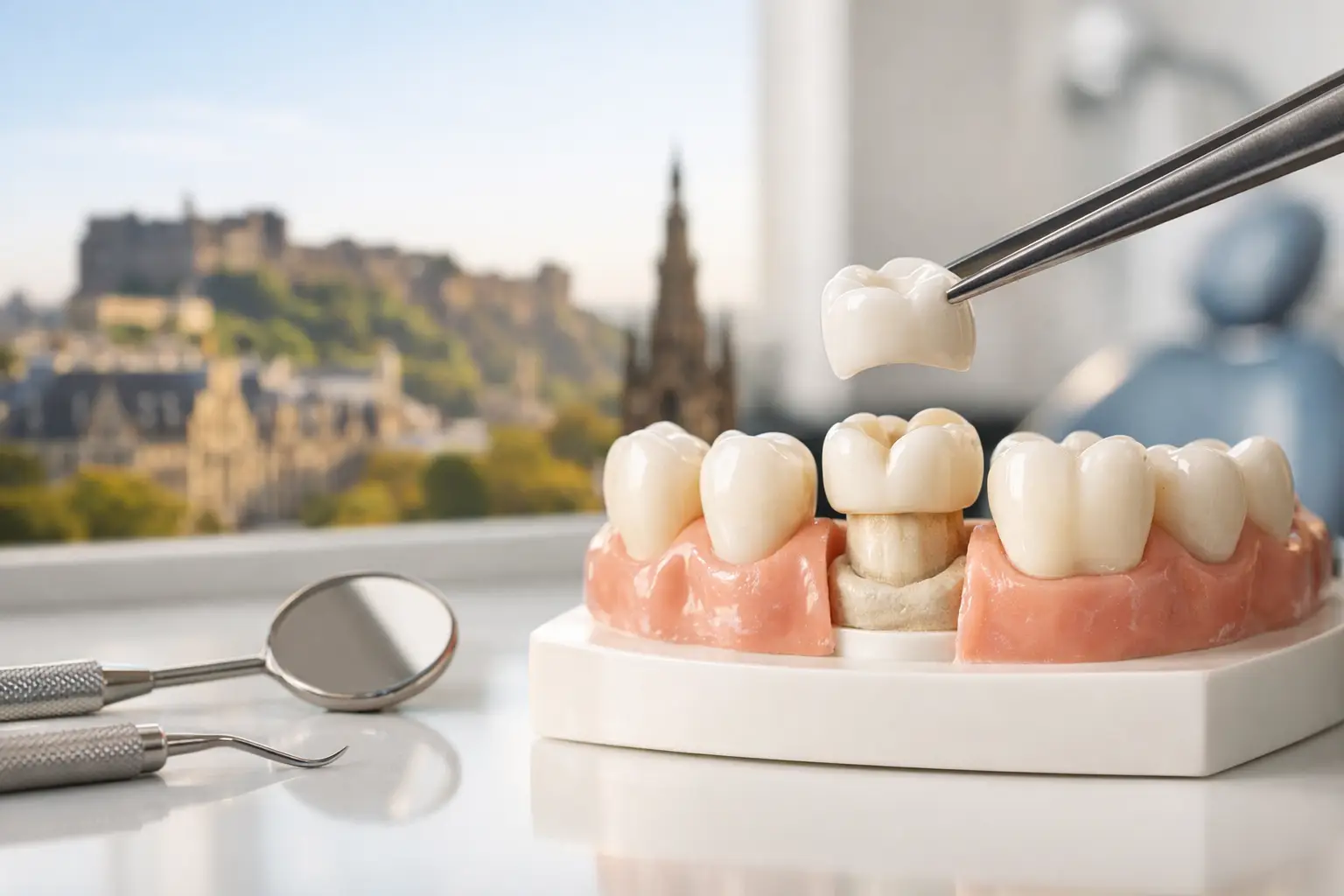
A dental crown is a carefully made cover that fits over a prepared tooth. It restores the tooth’s shape, strength and function, and can improve its appearance where that is also a concern. The crown is fixed in place, so it is not removed for cleaning like a denture.
Crowns are commonly recommended when a tooth has been weakened by a large filling, crack, decay or injury. They can also protect a tooth after root canal treatment, where the remaining structure may be more vulnerable to fracture. In some cases, a crown supports a bridge or is attached to a dental implant to replace a missing tooth.
The aim is always to preserve a healthy natural tooth where possible. A crown requires preparation of the tooth, so it is not automatically the right answer for every filling or chipped edge. A smaller repair, such as a filling, bonding or an inlay, may be the more conservative option when enough strong tooth structure remains.
When might you need a crown?
A dentist will assess more than the visible damage. They will consider how much sound tooth is left, the health of the gum and root, your bite, whether you grind your teeth, and the position of the tooth. A back tooth that takes heavy chewing pressure presents a different challenge from a front tooth where appearance is especially significant.
You may benefit from a crown if a filling is repeatedly breaking down, a tooth has a substantial fracture, or decay has left too little tooth structure to support a conventional restoration. A crown may also be considered if a tooth is discoloured or misshapen and other cosmetic options are unlikely to give a predictable, lasting result.
Pain is not always present. Some damaged teeth feel completely normal until a crack spreads or a large filling fails. Equally, toothache does not necessarily mean a crown is required. The cause needs to be identified first, and treatment may involve a filling, root canal treatment, gum care or another approach.
Your guide to dental crown treatment: the usual stages
The first stage is a thorough examination. This may include X-rays to check beneath old fillings, around the root and in the supporting bone. Your dentist will talk through the reason for treatment, suitable alternatives, likely longevity and the fees before you decide how to proceed.
Preparing the tooth
At the treatment appointment, the tooth and surrounding area are numbed with local anaesthetic. The dentist gently reshapes the tooth to create enough space for the crown while retaining as much healthy structure as possible. If there is not enough tooth above the gum to hold a crown securely, additional restorative work may be needed first.
An impression or digital scan is then taken. This records the prepared tooth, neighbouring teeth and bite, allowing the dental laboratory to make a crown that fits accurately. The shade is chosen with care for visible teeth, taking account of the surrounding enamel rather than simply selecting the brightest colour available.
A temporary crown is normally fitted while the final crown is being made. It protects the prepared tooth but is not intended to withstand the same forces as the final restoration. It is sensible to avoid very sticky foods and biting hard items directly with the temporary crown.
Fitting the final crown
At a later appointment, the temporary crown is removed and the final crown is tried in. Your dentist checks the fit at the edges, contact with neighbouring teeth, colour and bite. Small adjustments can be made before the crown is permanently cemented.
A newly fitted crown should feel like part of your bite, not noticeably high or awkward. Mild sensitivity for a short period can occur, particularly if the tooth was already sensitive, but persistent discomfort, pain on biting or a feeling that the tooth meets first should be reviewed promptly. A simple bite adjustment may prevent further strain.
Some practices can offer same-day crowns in selected situations using digital technology. Whether this is appropriate depends on the tooth, the planned material and the level of detail required. A laboratory-made crown remains an excellent and often preferable choice for many cases.
Choosing the right crown material
There is no single best material for every tooth. The choice balances strength, appearance, space available, your bite and budget. Your dentist should explain the recommendation in relation to your own mouth, rather than treating material choice as a purely cosmetic decision.
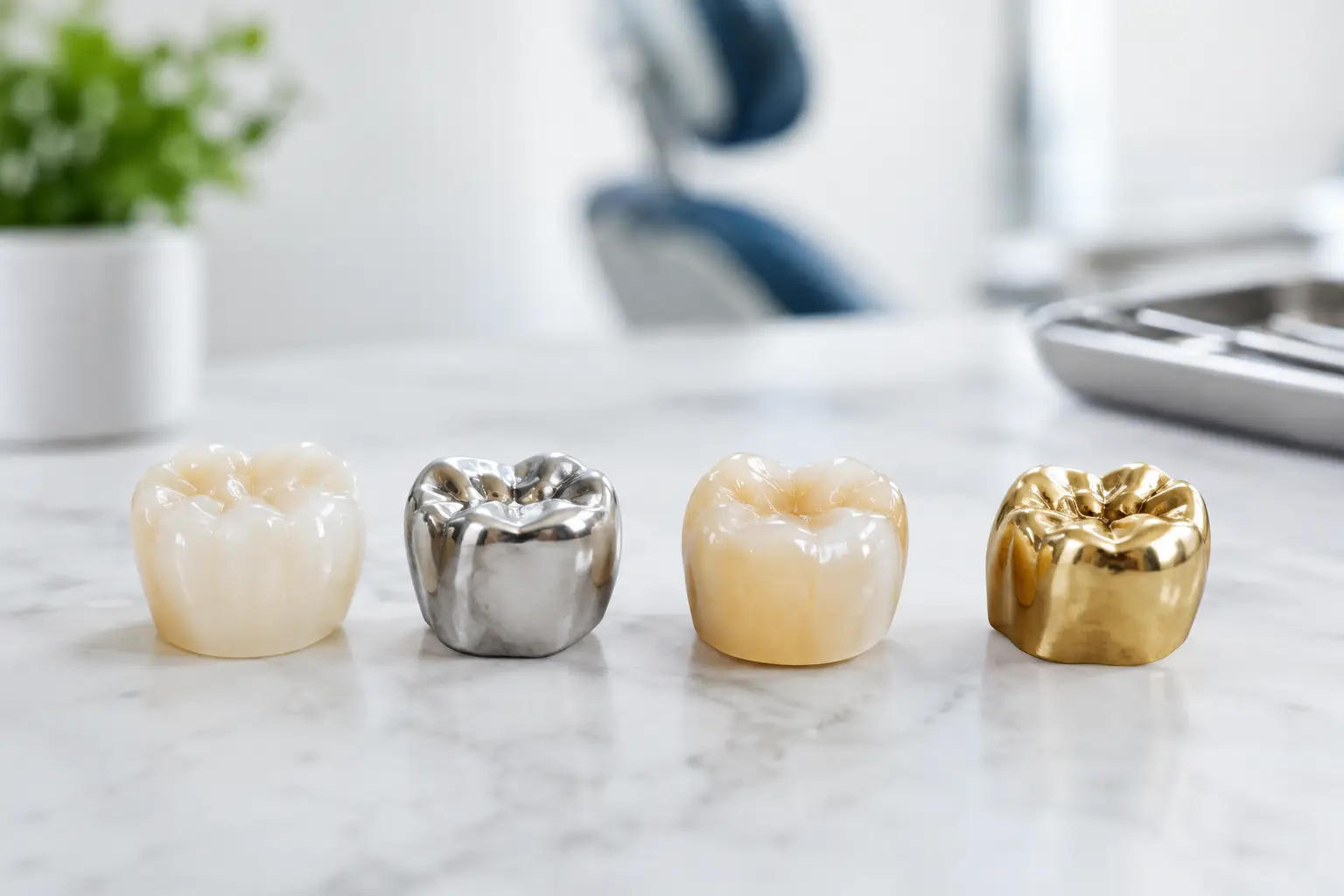
Porcelain or ceramic crowns are popular because they can be colour matched and shaped to resemble natural enamel. They are often a good option for front teeth and can also be suitable for many back teeth. Modern ceramics can be very strong, although the exact type matters where biting forces are high.
Porcelain fused to metal crowns have a metal framework beneath a porcelain outer layer. They have a long clinical history and can be a practical choice in certain situations. Over time, however, a darker line can occasionally become visible near the gum if the gum recedes.
Gold and other metal crowns are particularly durable and can be kind to the opposing tooth when properly designed. Their visible appearance means they are usually chosen for less noticeable back teeth, although some patients value their longevity over a tooth-coloured finish.
A well-designed crown is not simply about the material. Accurate fit, healthy gums, careful bite adjustment and good daily cleaning all play a meaningful part in its success.
Does crown treatment hurt?
Crown preparation is usually carried out under local anaesthetic, so you should not feel pain during treatment. You may notice pressure, vibration and water from the dental instruments, but the team can explain what is happening and pause if you need a break.
Afterwards, the tooth or gum may feel tender for a few days. If a tooth has a very deep filling, extensive decay or a crack close to the nerve, it may remain sensitive despite careful treatment. In a small number of cases, the nerve can later become inflamed and root canal treatment may be needed. This is a recognised risk of restoring a heavily compromised tooth, not necessarily a problem with the crown itself.
If you feel anxious about dental treatment, say so before the appointment. A calm, unhurried approach, clear explanations and agreed signals for taking a pause can make treatment far more manageable. At 4 Great Stuart Street, patients are encouraged to discuss any worries openly so care can be planned around them.
Looking after a crowned tooth
A crown cannot decay, but the natural tooth underneath and the gum around it still can. Cleaning along the gumline is therefore essential. Brush twice daily with fluoride toothpaste and clean between the teeth every day using interdental brushes or floss, depending on the spaces and your dentist’s advice.
Avoid using a crowned tooth to open packaging, bite nails or crack hard foods. If you clench or grind your teeth, a night guard may be recommended to protect both the crown and your other teeth. Regular examinations and hygiene visits help identify early changes around crown margins before they become more complex to treat.
Crowns can last many years, but no restoration lasts indefinitely. Their lifespan varies with the original condition of the tooth, material, bite forces, oral hygiene and habits. A crown that feels loose, has chipped, causes a bad taste or is associated with bleeding gums should be checked rather than ignored.
NHS and private crown options
Crown availability and material options can differ between NHS and private treatment. NHS dentistry is provided according to clinical need, while private treatment may offer a wider choice of materials and laboratory options, particularly where appearance is a priority. The appropriate route depends on your clinical needs, eligibility and personal preferences.
Before treatment begins, ask what is included in the proposed fee, what material is being recommended and whether there are alternatives worth considering. Clear information gives you time to make a decision that feels right for your health, expectations and budget.
A crown is often a considered investment in a tooth that is worth saving. The most reassuring next step is a proper assessment, where you can understand the condition of the tooth and choose a treatment plan with confidence.