Aligners Versus Braces for Adults: Which Fits?
Considering aligners versus braces adults often ask about comfort, cost and results. Learn which orthodontic option may suit your smile and daily routine.
A crowded diary, client meetings, family photographs or simply the wish to feel more at ease when smiling can all prompt the same question: for adults, aligners versus braces, which is the better choice? There is no single right answer. Both can move teeth safely and predictably when planned well, but they ask different things of you and suit different types of correction.
For many adults, the decision is less about choosing the least noticeable treatment and more about finding an approach that works for their teeth, oral health and everyday routine. A careful assessment should always come before a decision.
Aligners versus braces for adults: the central difference
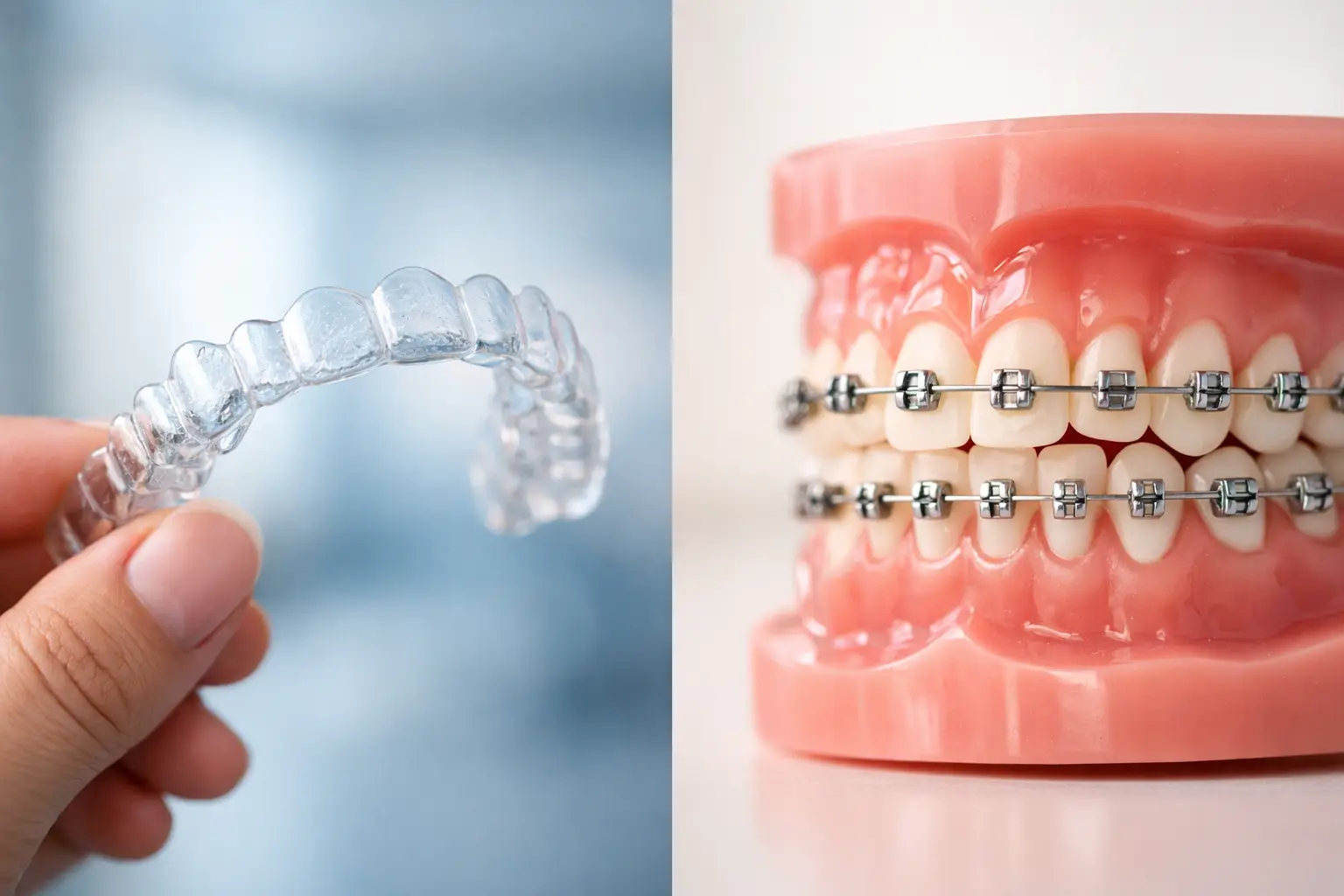
Clear aligners are a series of close-fitting, removable trays. Each set is worn in sequence to apply gentle pressure and guide teeth into their planned positions. They are made from transparent plastic and are usually removed for meals, drinks other than water, and brushing.
Fixed braces use brackets attached to the teeth and a wire that is adjusted over time. Modern braces can be smaller and more discreet than many people expect, but they remain visible. Because they stay in place throughout treatment, they are working continuously without relying on the patient to put them back in after eating.
Both treatments can address concerns such as mild crowding, spacing and certain bite problems. The key difference is control and commitment. Aligners place more responsibility in the hands of the wearer. Braces provide a fixed system that may be preferable where more complex movements are needed or where regular aligner wear would be difficult.
When clear aligners may suit adult patients
The appeal of aligners is understandable, particularly for professionals who spend much of the day speaking with colleagues or meeting clients. They are subtle in photographs and conversation, and their smooth edges generally feel gentler against the lips and cheeks than brackets and wires.
Their removability also makes daily cleaning more straightforward. You can brush and clean between your teeth in your usual way, without working around fixed components. Meals are simpler too, as there are no food restrictions while the aligners are out. This can be helpful if you would rather not avoid foods such as crusty bread, nuts or apples for several months.
However, removable does not mean occasional. Aligners normally need to be worn for around 20 to 22 hours each day, following your dentist's individual advice. Taking them out regularly for long lunches, frequent coffees or evenings away can slow progress and affect the result. They also need to be stored carefully. A surprising number of aligners are lost after being wrapped in a napkin at a restaurant.
Clear aligners can be an excellent option for adults with straightforward to moderately complex alignment concerns who are happy to follow the wear schedule. They may also suit people who value being able to remove their appliance briefly for an important occasion, provided this remains the exception rather than the routine.
Aligners are not always completely invisible
It is worth having realistic expectations. Some aligner plans use small tooth-coloured attachments to give the trays better grip for particular movements. These are discreet but may be visible close up. In some cases, tiny spaces are carefully created between teeth to make room for movement. This is a controlled procedure, not a shortcut, and should be fully explained before treatment starts.
When fixed braces may be the better route
Braces are often associated with teenage orthodontics, but they remain a very effective treatment for adults. Their strength is consistency. Since brackets and wires are fixed to the teeth, your treatment does not depend on remembering to wear trays for the right number of hours.
They can give a dentist detailed control over tooth position and may be recommended for more significant rotations, vertical movements or complex bite corrections. This does not mean aligners cannot treat complex cases, but it does mean that a fixed brace may offer the most reliable route in some situations.
The trade-off is visibility and cleaning. Food can collect around brackets and wires, so careful brushing and interdental cleaning are essential. You may need to adjust your diet to protect the brace from damage, particularly avoiding very hard, sticky or chewy foods. Wires can occasionally rub as the mouth adjusts, although orthodontic wax and prompt advice from the dental team can make this manageable.
For adults who prefer a treatment that stays in place and keeps working without daily decisions, braces can offer welcome reassurance. They are not the less sophisticated option. They are simply a different tool, chosen for the clinical job at hand.
Comfort, appointments and day-to-day life
Both aligners and braces create pressure as teeth move. This is usually most noticeable when a new aligner is started or a brace is adjusted. It tends to settle after a few days, and most patients find it manageable with simple measures recommended by their dentist.
Aligners are generally easier to clean around, but they require a disciplined routine. Braces require more detailed cleaning, but there is no risk of leaving them on the bedside table when rushing out in the morning. Neither treatment should stop you from working, socialising or travelling, although it helps to plan ahead. Aligners should travel in their case, while brace wearers may wish to carry a small interdental brush and wax.
Appointment patterns vary by treatment plan. Braces usually need regular adjustment appointments. Aligner treatment may involve fewer in-practice visits in some cases, but reviews are still important. Your dentist needs to confirm that teeth are moving as planned, that your gums remain healthy and that any refinements are identified at the right time.
Cost is part of the conversation, but not the whole one
Adults understandably ask whether aligners cost more than braces. The answer depends on the complexity of the case, the expected treatment time, the type of appliance and whether additional stages or refinements are likely. A simple comparison of advertised starting prices rarely tells the full story.
Ask what the quoted fee includes: consultations, records, retainers, planned reviews and any refinement aligners or repairs. Clear information helps you compare options fairly and avoid making a decision based on a headline figure alone. The most suitable treatment is the one that can achieve a healthy, stable result within a plan you feel able to follow.
Your gums and teeth need to be ready first
Orthodontic treatment moves teeth, so it should begin with a sound foundation. Gum disease, untreated decay, leaking fillings or persistent plaque build-up should be addressed before alignment begins. Adults may also have crowns, bridges, implants or previous dental work that affects what is possible and how treatment is planned.
This is one reason a face-to-face assessment matters. A dentist will examine your bite, discuss your concerns, take suitable records and consider the condition of your teeth and gums. If a tooth is already compromised, moving it may not be appropriate until the underlying issue is stabilised. Good orthodontic care is not about making a smile look straighter at any cost. It is about protecting long-term oral health while improving alignment.
Retainers are essential after either treatment
Whether you choose aligners or braces, teeth can move after active treatment ends. Retainers help hold the new positions while the surrounding tissues adapt, and many adults benefit from continued long-term retainer wear. This may involve a removable retainer, a fine fixed retainer behind the front teeth, or both.
Retainers are not an optional finishing touch. They are part of maintaining the investment of time, care and cost that went into treatment. Your dentist can advise on the type of retainer and the wear routine most appropriate for your smile.
Choosing with confidence
If discretion and removability are your priorities, and you can wear trays consistently, clear aligners may be a very comfortable fit for adult life. If your correction is more complex, or you would rather have a treatment that works continuously without relying on wear time, fixed braces may be the wiser choice.
At 4 Great Stuart Street, treatment conversations begin with listening. The aim is not to steer every patient towards one appliance, but to understand what you would like to change, assess what is safe and achievable, and recommend a route that supports a healthy smile for the years ahead. A calm, informed consultation can turn an uncertain choice into one that feels right for you.