Should You Choose Crowns or Veneers for Your Smile?
Considering crowns or veneers? Learn how each treatment protects or improves teeth, what preparation involves, and how to choose with confidence calmly.
A chipped front tooth can affect far more than a photograph. You may find yourself covering your mouth when you laugh, avoiding certain foods, or wondering whether the tooth is becoming weaker. When considering crowns or veneers, the right choice is rarely about choosing the most cosmetic-looking option. It is about protecting your natural tooth while achieving a result that feels comfortable, believable and right for you.
Both treatments can improve the appearance of a tooth, particularly where there is discolouration, damage or an old restoration that no longer blends in. However, they solve different problems. A careful examination is essential because the amount of healthy tooth remaining, your bite, gum health and long-term aims all influence the safest recommendation.
What is the difference between crowns or veneers?
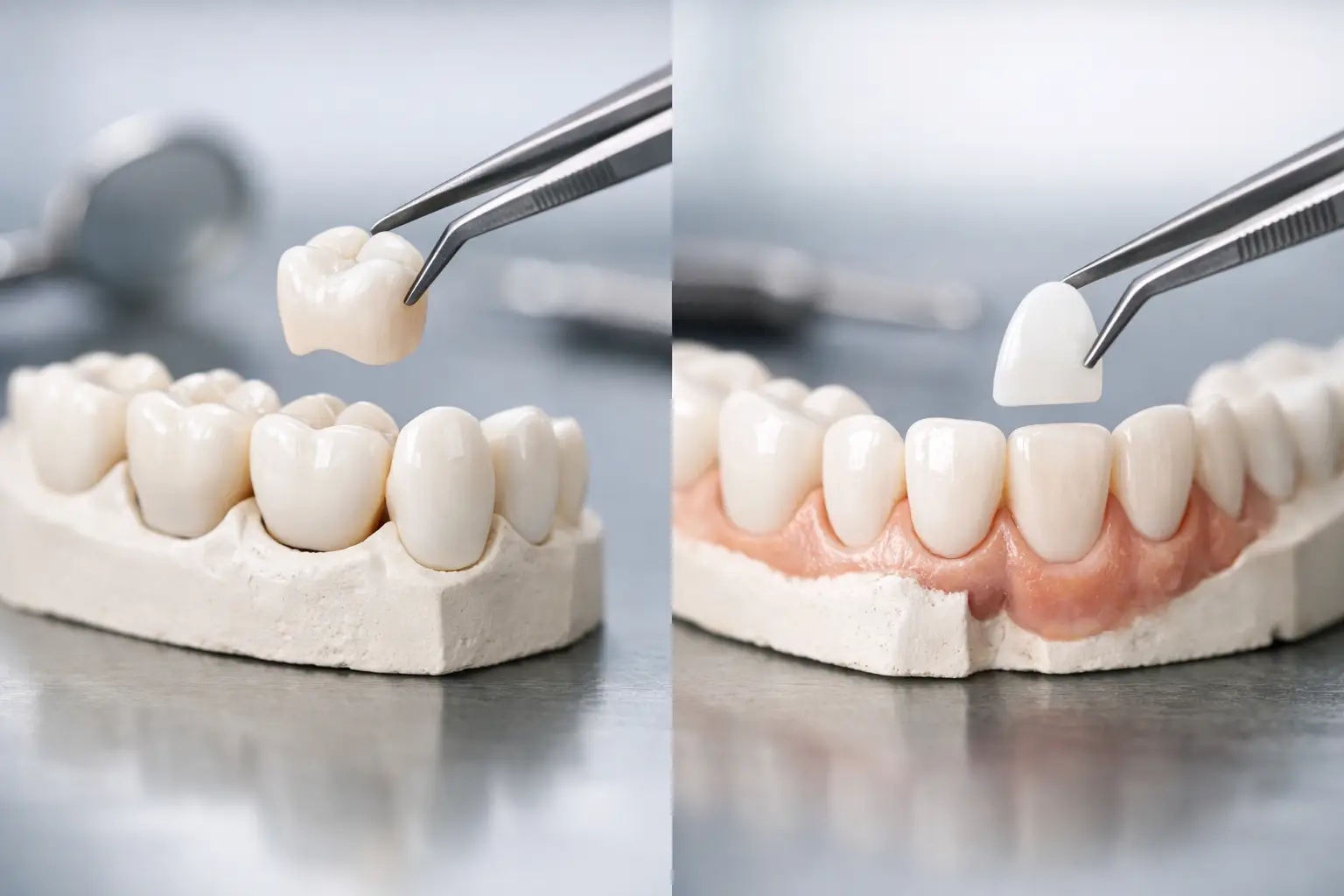
A veneer is a fine, custom-made facing that is bonded to the front surface of a tooth. It is usually used on teeth that are structurally sound but have concerns with shape, shade, small chips, minor gaps or surface appearance. Porcelain veneers are often chosen for their natural translucency and resistance to staining, while composite bonding may be suitable for more conservative cosmetic adjustments in some cases.
A crown, sometimes called a cap, covers the entire visible part of the tooth above the gum line. It is designed to restore strength as well as appearance. Crowns are commonly recommended when a tooth has a large filling, has fractured, is extensively worn, has had root canal treatment, or is weakened by decay. Modern crowns can be made to closely match neighbouring teeth, so a protective restoration does not need to look artificial.
The simplest distinction is this: a veneer mainly changes the visible front of a healthy tooth, while a crown rebuilds and protects a tooth that needs more comprehensive support. There are exceptions, but this principle helps explain why one treatment is not automatically interchangeable with the other.
When a veneer may be the more conservative choice
Veneers can be an excellent option where the concern is primarily cosmetic and the tooth underneath is healthy. For example, a single tooth may be darker following an old injury, slightly smaller than the neighbouring tooth, or have a persistent chip that affects the smile. Several veneers may also be considered where a patient wants to improve the shape and colour balance of visible front teeth.
Preparation for a porcelain veneer generally involves removing a small amount of enamel from the front of the tooth to create space for the restoration. This is much less extensive than preparing a tooth for a full crown, but it remains an irreversible treatment. That is why it should be planned carefully rather than viewed as a quick cosmetic fix.
Veneers are not always suitable for teeth with significant decay, large existing fillings or cracks. They can also be a less predictable choice if you heavily grind your teeth, bite your nails or regularly bite into hard foods with your front teeth. A protective night guard may be advised for patients who clench or grind during sleep.
It is also worth remembering that veneers improve the teeth they cover, not the health of the gums around them. Healthy gums and reliable daily cleaning are fundamental to a good, lasting result.
When a crown is the safer treatment
A crown is often the more appropriate option when a tooth is no longer strong enough to support a simple filling or veneer. A large filling can leave the remaining tooth walls thin and vulnerable. Similarly, a back tooth that has cracked may look acceptable at first glance but need protection before the crack worsens.
After root canal treatment, a tooth can become more brittle over time, especially if it is a premolar or molar that absorbs substantial chewing pressure. A crown may help distribute that pressure and reduce the risk of further fracture. In these situations, the priority is not simply making the tooth look better. It is preserving it for as long as possible.
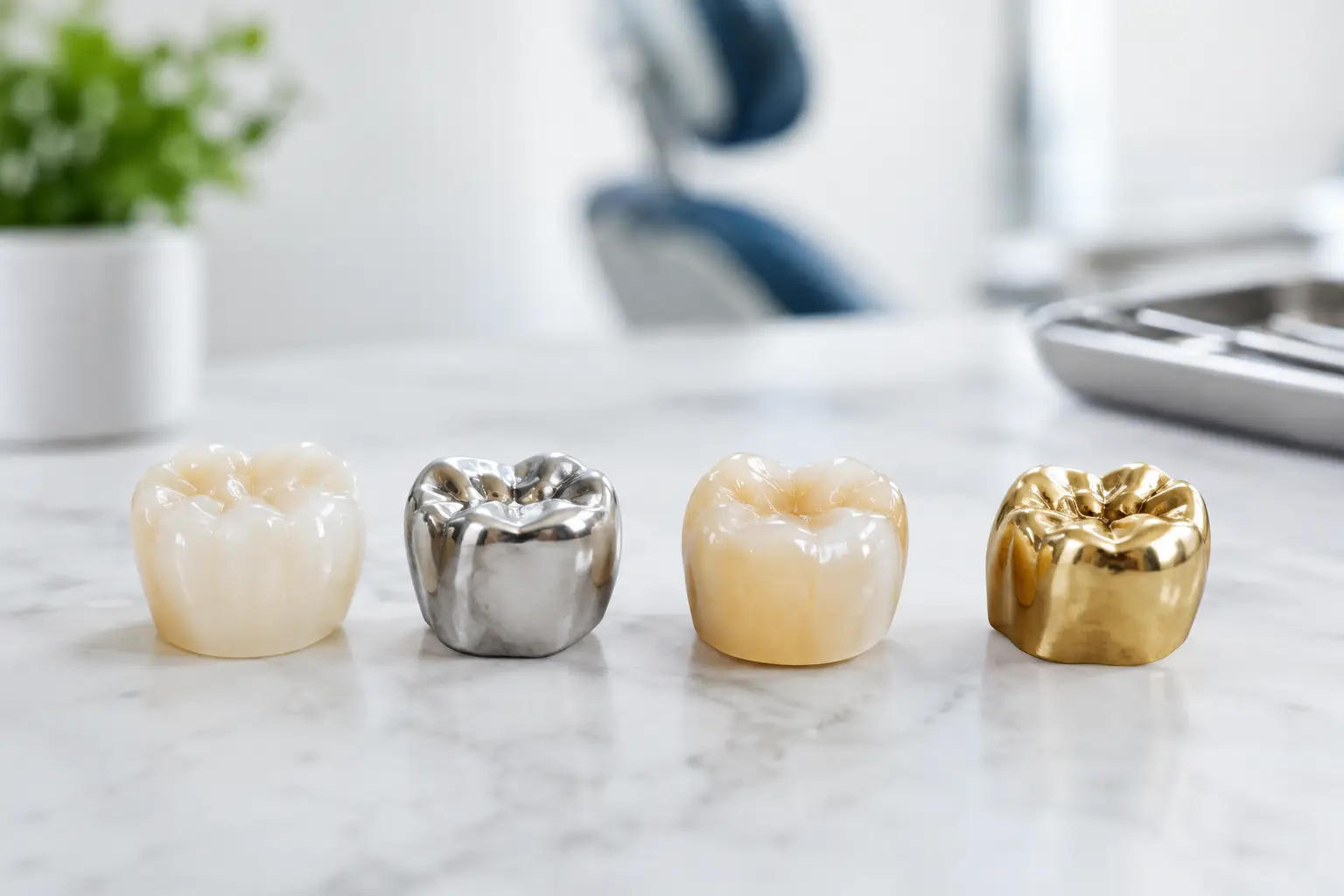
Crowns are used for front teeth too. If a front tooth has been badly broken, is heavily filled or has lost a considerable amount of its natural structure, a well-designed crown can restore both function and appearance. The material will be selected according to the tooth's position, the forces on it and the desired aesthetic outcome. All-ceramic crowns can offer a highly natural appearance, while other materials may be considered where additional strength is needed.
A crown does require more tooth preparation than a veneer because it fits over the whole tooth. For this reason, it would not normally be the first choice for a healthy tooth with a small cosmetic concern. Good dentistry is about using the least invasive treatment that will provide a dependable result.
Appearance matters, but so does your bite
It is understandable to focus on shade and shape, particularly for a tooth near the front of your smile. Yet the way your teeth meet is just as important. A restoration that looks excellent but is placed under excessive bite pressure can chip, loosen or cause discomfort.
Your dentist will assess how you bite together, whether you show signs of grinding and the condition of nearby teeth. They may also discuss whether whitening should take place before a crown or veneer is made. Whitening changes natural tooth colour, but it does not lighten existing crowns, veneers or fillings. Completing whitening first, where appropriate, can make it easier to match a new restoration to the shade you want to maintain.
For patients considering several cosmetic changes, it can be helpful to take a staged approach. Improving gum health, replacing failing fillings or addressing tooth movement may come before final veneers or crowns. This protects the investment in the treatment and helps create a result that remains comfortable over time.
What does treatment involve?
The exact process varies, but both crowns and porcelain veneers are usually planned over more than one appointment. At the first visit, the tooth and surrounding tissues are examined, and any necessary X-rays are discussed. Your dentist will talk through the benefits, limitations, alternatives and likely costs before treatment begins.
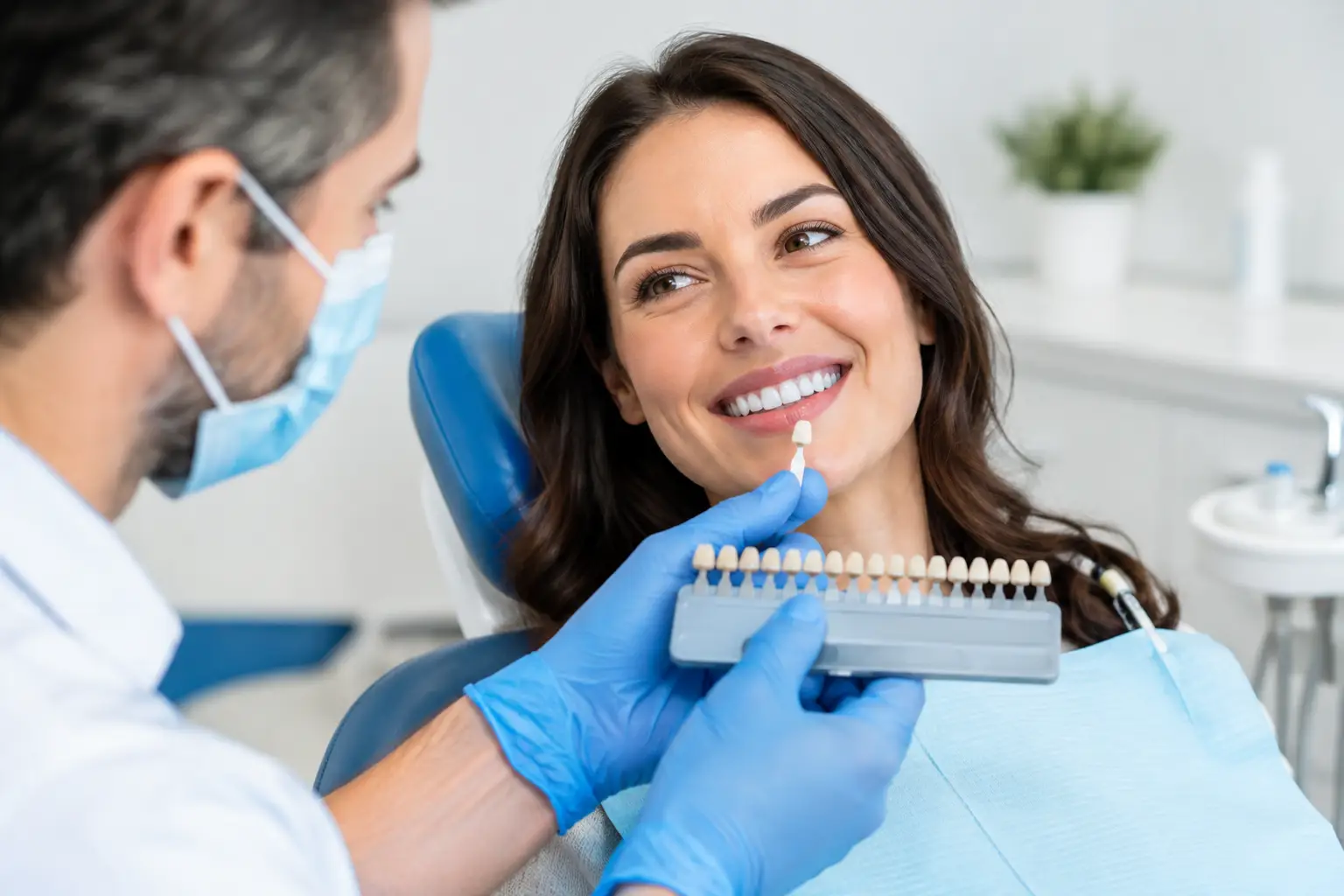
If a crown or veneer is appropriate, the tooth is gently prepared and a detailed impression or digital scan is taken. A temporary restoration may be fitted while the final crown or veneer is being made. At a later appointment, the final restoration is tried in, checked for fit and shade, then bonded or cemented into place.
There should be no pressure to make a decision on the day. Good treatment planning gives you the space to consider whether the proposed approach meets your priorities, whether that is preserving tooth structure, improving appearance, managing a weak tooth or working within a particular budget.
How long do crowns and veneers last?
Neither crowns nor veneers are lifetime restorations, but both can last many years with good care. Their longevity depends on the material used, how well the restoration fits, your bite, oral hygiene and everyday habits. Grinding, using teeth to open packaging, chewing ice and delaying treatment for decay or gum problems can all shorten their lifespan.
Caring for them is much like caring for natural teeth. Brush twice daily with fluoride toothpaste, clean between teeth every day and attend regular check-ups and hygiene appointments. The edge where a crown or veneer meets the tooth still needs careful cleaning, as decay can develop around a restoration if plaque is allowed to build up.
If a crown or veneer feels high when biting, becomes loose, chips or causes pain, arrange an appointment promptly. Early assessment can often prevent a smaller problem from becoming more complex.
Choosing the treatment that respects your tooth
For a healthy tooth with a cosmetic concern, a veneer or even a more conservative alternative may be appropriate. For a tooth that is cracked, heavily restored or weakened, a crown may offer the protection it needs. In some cases, neither is the right first step: a filling, whitening, orthodontic treatment or simply monitoring the tooth may be more suitable.
At 4 Great Stuart Street, treatment recommendations are made around your individual tooth, not a cosmetic template. A calm consultation can clarify what is possible, what is sensible and what can wait. The most reassuring choice is usually the one that protects your oral health while allowing you to smile, speak and eat with confidence.