Clear Aligners vs Braces: Which Suits You?
Clear aligners vs braces: compare comfort, cost, appearance and results to choose the right orthodontic treatment for your smile.
A lot of adults ask about teeth straightening only after years of putting it off. Often, the concern is not just how their teeth look, but how treatment will fit around work, family life, confidence and comfort. When comparing clear aligners vs braces, the right choice is rarely about which option is more modern. It is about which one suits your teeth, your routine and the kind of support you need along the way.
Both treatments are designed to move teeth into healthier, more balanced positions. Both can improve appearance, bite and ease of cleaning. Yet they work in different ways, and those differences matter more than many people expect.
Clear aligners vs braces: the main difference
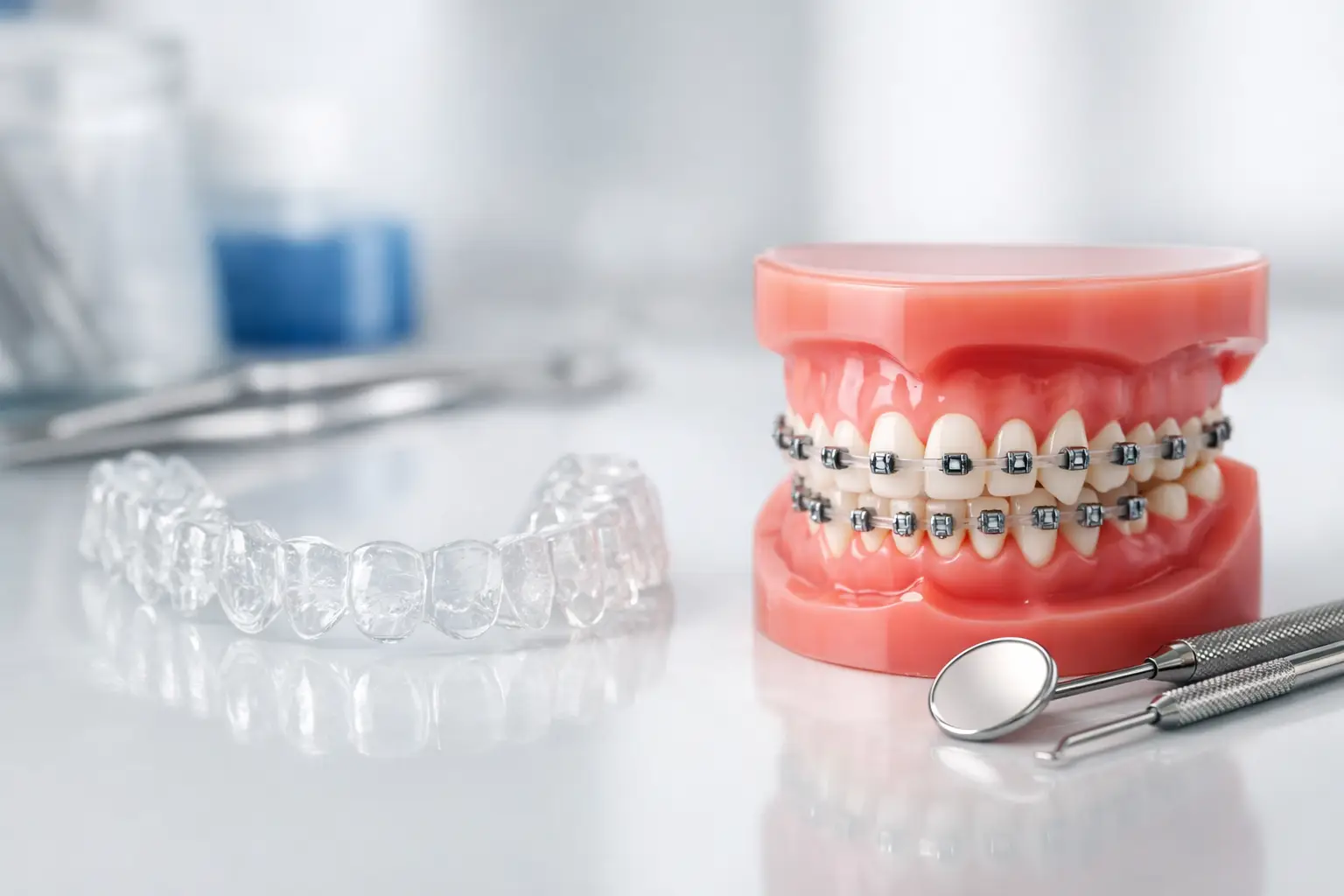
Clear aligners are a series of transparent, removable trays made to fit snugly over your teeth. Each set applies gentle pressure, gradually guiding the teeth into position over time. They are usually changed every one to two weeks, depending on your treatment plan.
Braces use fixed brackets attached to the teeth, joined by a wire that is adjusted at review appointments. Because they stay in place throughout treatment, they apply continuous force and do not rely on being taken in and out correctly.
That single difference - removable versus fixed - affects almost everything else, from appearance and cleaning to discipline and suitability.
Appearance and confidence in daily life
For many adults, appearance is the starting point. Clear aligners are popular because they are discreet. At a conversational distance, many people will not notice them at all. That can make a real difference if you spend a lot of time in meetings, on video calls or in public-facing work.
Braces are more visible, even when lower-profile options are used. Some patients are perfectly comfortable with that. Others feel self-conscious, especially in professional settings or at social events.
Still, discretion should not be the only deciding factor. A treatment that is less visible but less suitable for your teeth is unlikely to be the better option overall.
Comfort, irritation and getting used to treatment
Neither braces nor aligners are completely free of discomfort. Teeth need pressure to move, and that pressure can cause tenderness, especially after adjustments or when switching to a new aligner.
Clear aligners tend to feel smoother because there are no brackets or wires rubbing against the cheeks and lips. Many patients find them easier to tolerate day to day, particularly after the first week or two.
Braces can cause more irritation initially. It is common to develop sore spots where brackets catch the inside of the mouth. This usually improves as the tissues adjust, but some patience is needed.
On the other hand, aligners have their own demands. You may notice a slight lisp at first, and removing them before meals can feel inconvenient until it becomes routine.
Eating, drinking and oral hygiene
This is one area where clear aligners often feel simpler. Because they are removed for meals, you can eat normally without worrying about damaging brackets or trapping food around wires. You also brush and floss your teeth much as you usually would before putting the aligners back in.
Braces require more care. Certain foods, especially hard, sticky or chewy foods, may need to be avoided. Cleaning takes longer too, as you need to brush carefully around brackets and wires and use extra tools to clean between the teeth.
That said, aligners only work well if they are worn for the recommended number of hours each day, often around 20 to 22 hours. If you frequently leave them out, treatment can slow down or become less predictable. Braces remove that risk because they are always working.
Which works faster?
Patients often hope for a simple answer here, but treatment times depend on the complexity of the case. Minor crowding or spacing may be treated efficiently with clear aligners. More complex movements, especially those involving significant bite correction or tooth rotation, may be more predictable with braces.
In straightforward cases, aligners and braces can deliver similar treatment times. In more involved cases, fixed braces may offer greater control. This is one reason a proper assessment matters. What works well for one person may not be the best route for another, even if their teeth look similar at first glance.
Clear aligners vs braces for complex cases
If your teeth need only mild to moderate correction, clear aligners may be an excellent choice. They are often well suited to closing small gaps, improving mild crowding and refining the appearance of the smile.
Braces are often stronger in more complex situations. If there are larger bite issues, more severe crowding, significant rotations or teeth that need more precise movement, braces may provide better control. They can also be more reliable for younger patients or adults who know they may struggle to wear aligners consistently.
This is where honest advice matters. Ethical treatment planning means recommending the option that is most likely to achieve a healthy, stable result, not simply the one that sounds most appealing.
Cost and value over the course of treatment
Cost is understandably part of the decision. Fees vary depending on the length and complexity of treatment, as well as the system being used. In some cases, clear aligners can cost a little more than braces. In others, the difference is smaller than patients expect.
It is also worth thinking beyond the headline figure. Value includes review appointments, the predictability of the outcome, how manageable treatment will be in your daily life and whether you are likely to follow the plan properly.
A treatment that looks cheaper at the start can become frustrating if it does not suit your habits. Equally, paying more for discretion may feel worthwhile if it helps you feel comfortable throughout many months of treatment.
Lifestyle, routine and personality
A practical question is often more useful than asking which treatment is better. Ask which treatment is easier for you to live with.
If you are organised, motivated and happy to remove aligners before meals, clean your teeth regularly and wear them as instructed, clear aligners can fit neatly into adult life. Many people appreciate the flexibility and the more discreet look.
If you would rather not think about compliance, braces may feel more straightforward. Once fitted, they do their work without relying on you to remember them. For busy parents, teenagers or anyone with an unpredictable routine, that can be a real advantage.
There is no virtue in choosing the option that sounds ideal on paper if it does not match how you actually live.
What about reviews and check-ups?
Both treatments need regular supervision. Teeth do not simply move in a straight line from start to finish, and small refinements are sometimes needed.
With clear aligners, reviews are used to check tracking, make sure the trays still fit correctly and confirm that teeth are moving as planned. With braces, appointments usually involve adjustments to wires or elastics and checking oral hygiene and progress.
Whichever route you choose, good support makes a difference. Patients tend to feel more confident when they understand what is happening, what discomfort is normal and what to expect next.
Retainers matter just as much
One point that is sometimes overlooked in the clear aligners vs braces discussion is what happens after treatment. Teeth have a natural tendency to drift, so retainers are essential whichever system you choose.
If you invest time and money in straightening your teeth, retention is what protects that result. This is not an optional extra or a minor detail. It is part of treatment.
How to decide with confidence
The best decisions usually come from a mix of clinical suitability and personal preference. Appearance, cost and convenience matter, but they should sit alongside a proper assessment of your bite, tooth position and long-term oral health.
For some adults, clear aligners are the obvious fit - discreet, flexible and easier to manage around professional life. For others, braces offer the control and reliability needed to treat more complicated problems well.
At an established practice such as 4 Great Stuart Street, the conversation should feel calm and straightforward. You should be able to ask practical questions, understand the trade-offs and leave with a recommendation that puts health, comfort and realistic results first.
If you are weighing up treatment, it helps to think less about trends and more about what will genuinely work for you. The right option is the one you can commit to with confidence, because good orthodontic treatment is not just about straighter teeth. It is about choosing a plan you can see through comfortably, safely and with trust in the result.