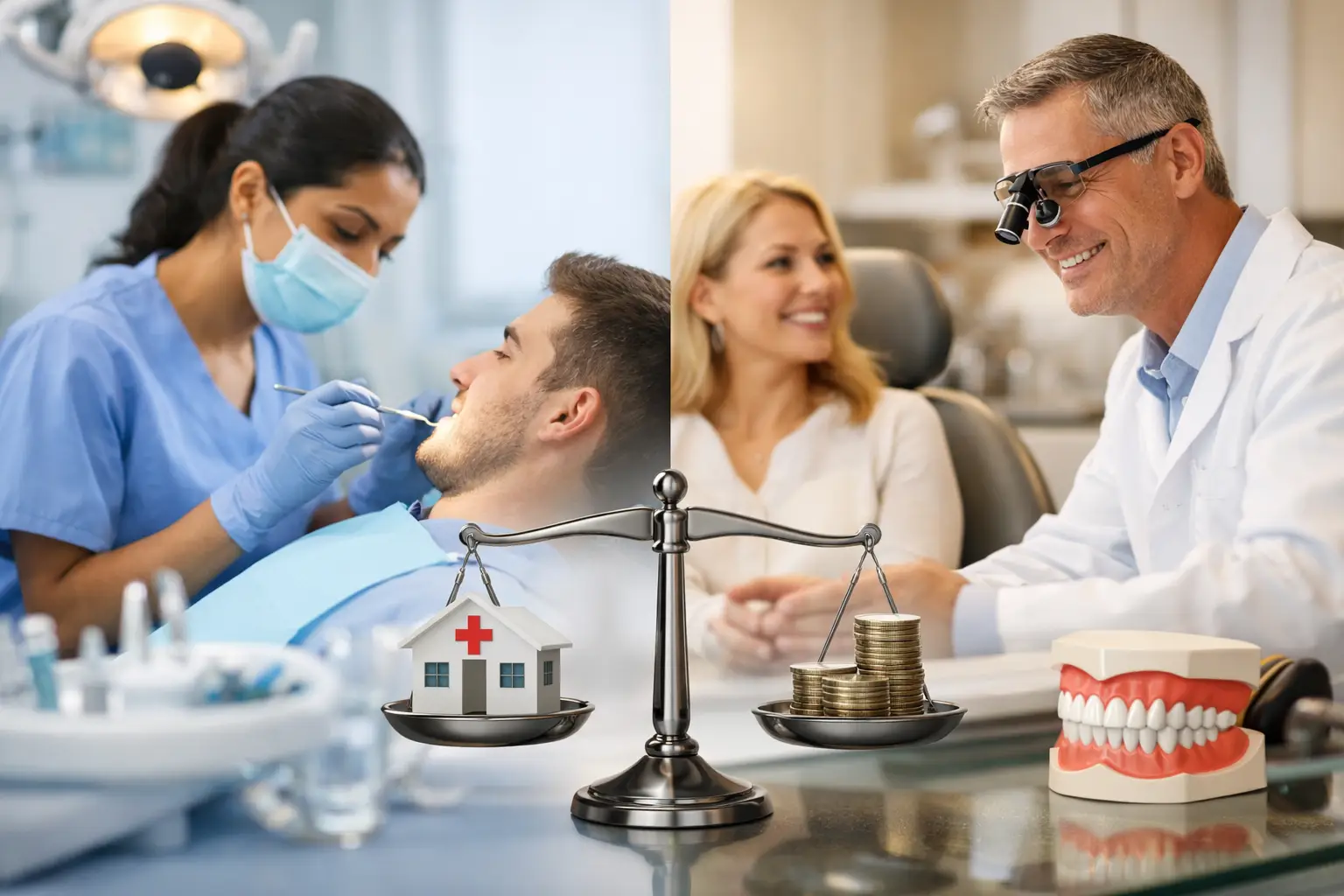
Can You Mix NHS and Private Dental Treatment?
Can you mix NHS and private dental treatment? Learn when it’s allowed, what you can combine, and how charges work for dental care.
A patient may come in for an NHS examination, then ask about whitening, a white filling on a back tooth, or a longer-lasting restoration that is not usually covered in the same way under NHS care. At that point, a very sensible question follows - can you mix NHS and private dental treatment? In many cases, yes, but the answer depends on the treatment itself, how it is planned, and whether the fees and options are explained clearly from the outset.
Can you mix NHS and private dental treatment in one practice?
Yes, you can often receive both NHS and private dental treatment at the same practice. Many established practices provide both, which gives patients greater flexibility. You might choose NHS care for routine examinations, preventive treatment and clinically necessary work, then decide to pay privately for treatment that is more cosmetic, more advanced, or simply outside the NHS offer.
That said, NHS and private treatment are not interchangeable within a single course of treatment. A dentist cannot usually provide part of one clinically necessary treatment under the NHS and then ask you to pay privately for the rest of that same treatment purely as an upgrade. The distinction needs to be transparent, fair and properly documented.
This is where good communication matters. A well-run practice should explain what is available on the NHS, what is only available privately, and what the likely costs are before any treatment begins. Patients should never feel rushed into a decision or left unclear about what they are paying for.
How the NHS and private distinction usually works
NHS dentistry is designed to provide treatment that is clinically necessary to keep your mouth healthy. That includes routine check-ups, examinations, diagnoses, preventive advice, fillings, extractions and other treatment needed for oral health. Charges are set within NHS bands.
Private dentistry sits alongside that. It can include treatments that are cosmetic, elective or involve different materials, techniques or appointment time than the NHS arrangement allows. Whitening is a common example. Clear aligners, implants and some aesthetic options also usually fall into the private category.
The key point is that the decision is not simply about whether a treatment sounds better or more modern. It comes down to what is clinically necessary, what the NHS contract covers, and whether there is a legitimate private option that is separate from the NHS part of your care.
When mixing NHS and private treatment makes sense
In real life, many patients want a practical balance. They may be perfectly happy to have their regular examinations and everyday maintenance managed under the NHS, but prefer private care for a treatment that is more elective or appearance-led.
For example, someone might attend for routine NHS care and later choose private whitening before a wedding. Another patient may have an NHS assessment and then decide to replace a missing tooth with a private implant, because implants are not generally available under the NHS except in limited circumstances. A patient could also discuss private clear aligner treatment while continuing with regular general care.
This can work well because it allows people to maintain essential dental health affordably while choosing private treatment only where they feel it adds value. For many families and working adults, that balance feels sensible rather than excessive.
What you usually cannot do
Where patients sometimes become confused is around upgrades. If a tooth needs treatment that is available under the NHS, there are rules about whether you can mix and match NHS and private elements. You cannot usually take one necessary treatment and split it in a way that blurs the charging structure.
A common example is a filling. If a filling is clinically necessary and available under NHS care, the dentist should explain the NHS option. If there is also a clearly different private alternative, that may be offered separately, but the choice must be genuine and properly explained. It should never feel as though the NHS option is being discouraged unfairly or that the private option is being presented as the only reasonable route.
Similarly, a full course of NHS treatment should not be turned into part-NHS, part-private simply for convenience. There needs to be a clear separation between what is being provided under each arrangement.
Can you mix NHS and private dental treatment for cosmetic work?
This is one of the most common reasons people ask the question. In general, yes - cosmetic work is often where private treatment sits most clearly alongside NHS care. If your oral health is being maintained under the NHS, you may still choose private treatment for whitening, aligners or other aesthetic improvements.
That does not mean every cosmetic concern is entirely separate from dental health. Sometimes appearance and function overlap. A crown, denture or bridge may improve the look of your smile while also restoring chewing ability or protecting a weakened tooth. In those cases, your dentist should explain whether there is an NHS route, a private route, or both.
This is where personalised advice matters. Two patients with apparently similar concerns may be offered different options depending on their dental history, clinical needs and long-term goals.
What to ask before agreeing to treatment
The best protection against confusion is to ask direct questions early. A reputable dental team will welcome that. You should feel comfortable asking whether the recommended treatment is available on the NHS, whether a private option is being offered as an alternative, what the cost difference is, and why one option may suit you better than another.
It is also reasonable to ask whether choosing a private treatment affects your NHS registration or your ability to continue routine care at the practice. In many cases it does not, but policies can vary depending on the practice and the nature of the treatment.
A written treatment plan is especially helpful. It gives you clarity on what will be done, what it will cost, and whether the treatment is NHS, private or part of a separate private plan. That transparency is a sign of ethical care.
Why some patients choose a mixed approach
For many people in Edinburgh, dental decisions are not just about cost. They are about trust, timing and confidence in the outcome. A mixed approach can allow patients to keep routine care manageable while choosing private treatment for something more specific, whether that is convenience, aesthetics or a longer-term restorative solution.
There are also practical considerations. Private appointments may allow for a wider choice of treatment materials, more flexibility in scheduling, or access to options not generally offered under NHS arrangements. For a nervous patient, extra time and a calmer pace can make a real difference to the experience.
At the same time, NHS care remains an essential and valuable route for maintaining oral health. Choosing some private treatment does not mean rejecting NHS dentistry. Often, it simply reflects the fact that different parts of dental care serve different needs.
A note on fairness and informed consent
Patients should never feel they need a law degree to understand their dental options. The rules around NHS and private treatment can be technical, but the explanation should be straightforward. You should know what is necessary, what is optional, what is covered, and what you are paying for.
This matters particularly when treatment feels urgent. If you have toothache, a broken tooth or a lost filling, it is easy to focus only on getting the problem sorted quickly. Even then, you are entitled to a clear explanation of whether the proposed care is under the NHS or private, and why.
An experienced practice will approach that conversation carefully. The aim should be to help you make an informed decision in a safe, ethical and relaxed environment, not to push you towards the most expensive option.
At 4 Great Stuart Street, this question comes up often because patients want clarity, not sales language. The honest answer is that mixing NHS and private dental treatment is often possible, but it should always be handled openly, with proper treatment planning and fees explained in advance.
If you are unsure which route makes sense for you, the most useful starting point is a conversation with your dentist about your priorities - health, appearance, budget and timescale. Good dentistry is not about fitting everyone into the same category. It is about giving you clear options and helping you choose with confidence.