Bridge or Partial Denture: Which Is Right?
Considering a bridge or partial denture? Understand care, cost and suitability, so you can choose a replacement that suits your smile and day-to-day life.
A missing tooth can change more than your smile. You may notice food catching in the space, speech feeling slightly different, or a reluctance to smile freely in photographs. When deciding between a bridge or partial denture, the right option is rarely about choosing the most advanced treatment. It is about finding a replacement that is comfortable, healthy for your remaining teeth, and appropriate for your everyday life.
Both bridges and partial dentures can restore function and appearance effectively. The best choice depends on where the gap is, the condition of nearby teeth and gums, how many teeth are missing, and what feels manageable for you. A careful examination and an unhurried conversation are the starting point.
Bridge or partial denture: the key difference
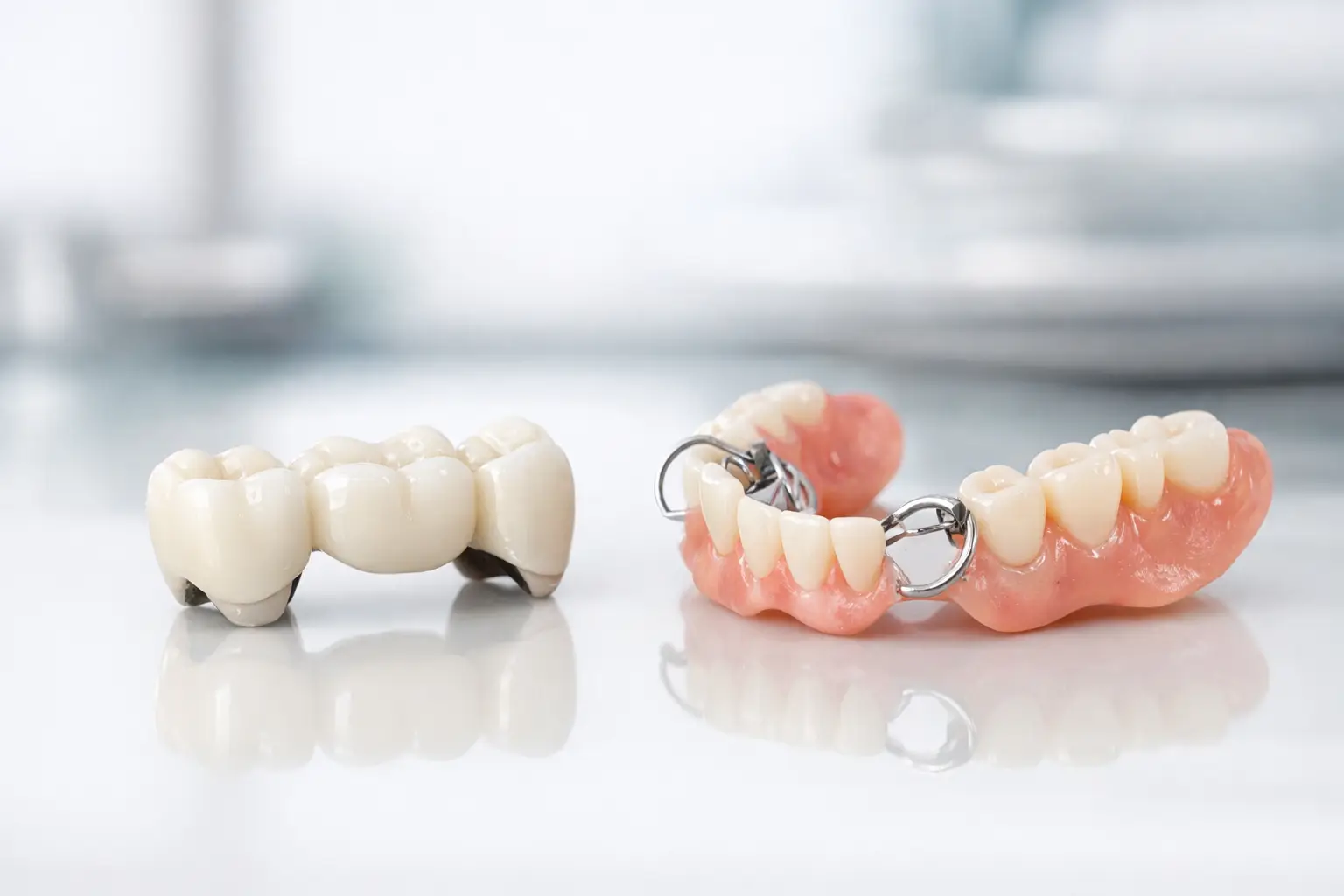
A dental bridge is a fixed replacement for one or more missing teeth. It is held in place by neighbouring teeth, or in some cases attached to an implant. Because it is fixed, you do not remove it for cleaning.
A partial denture is a removable appliance that replaces one or several missing teeth. It is designed to sit comfortably against the gums and may use discreet clasps or carefully shaped components to stay secure around remaining teeth. You take it out to clean it and usually remove it overnight.
Neither option is automatically better. A bridge can feel more like a natural tooth because it stays in place, while a partial denture can be a sensible, conservative solution where several teeth are missing or a fixed bridge is not suitable.
When a bridge may be suitable
A bridge is often considered when there is a single gap, or a small number of adjacent missing teeth, with healthy supporting teeth on either side. It may also be appropriate if those neighbouring teeth already have large fillings or crowns and would benefit from being restored.
For many people, the main attraction is stability. A well-made bridge does not need to be removed and can make chewing and speaking feel more familiar. It is also colour-matched to blend naturally with surrounding teeth, so it can be a particularly appealing option for a visible gap.
There are different designs. A conventional bridge uses crowns on the teeth next to the gap, while an adhesive bridge is bonded to the back of a neighbouring tooth and usually requires less alteration. The most appropriate design depends on the location of the tooth and the bite. Back teeth experience greater chewing forces, so they need particularly careful assessment.
When a partial denture may be suitable
A partial denture can be an excellent option when several teeth are missing, especially if the spaces are spread across the mouth. It may also be recommended where the neighbouring teeth are not strong enough to support a bridge, or where preserving as much natural tooth structure as possible is the priority.
Modern partial dentures are not all alike. Acrylic dentures can be a practical and affordable choice, while lightweight metal frameworks can offer strength and a slimmer fit. The appearance, comfort and security of a denture are shaped by its design, the accuracy of the fit and the health of the gums beneath it.
There can be an adjustment period. Your mouth needs time to adapt, and eating softer foods at first can help. If a denture rubs, moves excessively or causes soreness, it should be reviewed rather than tolerated. Small adjustments can make a meaningful difference to comfort.
How daily life differs with each option
The practical difference between a bridge and a partial denture is often most apparent at home. A bridge stays in place, so care involves brushing thoroughly around it and cleaning beneath the replacement tooth with the tools recommended by your dentist. Plaque can collect at the edges of the bridge and along the gumline, making daily cleaning essential.
A partial denture should be removed and cleaned separately each day. The gums, tongue and remaining teeth still need careful brushing, as a denture does not protect against decay or gum disease. It should be handled over a folded towel or a basin partly filled with water, as dentures can break if dropped.
Some patients strongly prefer the certainty of a fixed option. Others value the fact that a denture does not require neighbouring teeth to be shaped for crowns. Personal preference matters, but it should sit alongside clinical advice rather than replace it.
Looking after the teeth that remain
Replacing a missing tooth can help distribute chewing forces more evenly and may reduce the tendency for nearby teeth to drift into the gap. However, any replacement needs ongoing care. A bridge relies on the health of the teeth supporting it. A partial denture relies on healthy gums, a stable fit and strong remaining teeth.
Gum disease, untreated decay, tooth grinding and a changing bite can all affect how long a restoration lasts. Regular examinations allow your dentist to check the supporting teeth, the fit of the appliance and the condition of the tissues around it. This is particularly valuable with dentures, as the shape of the gums and jawbone can change over time.
If you grind your teeth, clench your jaw or have a history of gum problems, mention this during your appointment. These details may influence the treatment recommended and the measures needed to protect it.
Cost, lifespan and value
Cost is understandably part of the decision, but it is helpful to think beyond the initial fee. The price of a bridge or partial denture reflects factors such as the materials used, the number of teeth being replaced, the complexity of the design and any preparatory treatment required.
A partial denture is often less expensive at the outset, particularly where multiple teeth need replacing. A bridge may involve a greater initial investment but can offer the convenience of a fixed restoration. Both may need maintenance, repairs or replacement in the future. A bridge can fail if decay develops beneath a supporting crown, while dentures may need adjusting, relining or remaking as the mouth changes.
The most economical choice is not always the lowest-cost option. It is the one that can be maintained comfortably, protects your oral health and suits your circumstances over the longer term. Your dentist should explain the likely costs and alternatives clearly before treatment begins.
Could an implant be another option?
For some patients, a dental implant may also be worth discussing. An implant supports a replacement tooth without relying on adjacent teeth and can be used to stabilise a bridge or denture in suitable cases. It does involve surgery, sufficient healthy bone and a longer treatment process, so it is not the right route for everyone.
The purpose of discussing implants is not to make a simple decision more complicated. It is to make sure you understand the full range of appropriate options before choosing a treatment. For some people, a partial denture is the most sensible solution now, with the possibility of considering implants later. For others, a bridge or implant-supported restoration offers the stability they want from the outset.
Making a decision you can feel comfortable with
A good treatment plan should not feel rushed. Your dentist will assess the gap, your bite, gum health, the condition of nearby teeth and any previous dental work. They should also ask what matters most to you, whether that is avoiding a removable appliance, keeping treatment conservative, improving appearance or working within a particular budget.
At 4 Great Stuart Street, discussions around replacing missing teeth are approached with the same care as any other long-term dental decision: clearly, respectfully and without pressure. The aim is to help you choose a solution that feels secure not only in the chair, but when you are eating, talking and smiling in the weeks and years ahead.
If you are unsure whether a bridge or partial denture would suit you, a consultation can turn a broad choice into a clear, personal plan. The right replacement should support your confidence while giving your remaining teeth and gums the attention they deserve.