How to Replace a Missing Tooth With Confidence
Learn how to replace a missing tooth with implants, bridges or dentures, and what to consider when choosing an option for your smile and daily life.

A missing tooth can affect more than the appearance of your smile. You may find yourself avoiding certain foods, speaking more cautiously or feeling self-conscious in photographs and conversations. If you are considering how to replace a missing tooth, there is rarely one answer that suits everyone. The right treatment depends on where the gap is, the condition of your remaining teeth and gums, your long-term oral health, and what feels manageable for you.
At 4 Great Stuart Street, we take time to explain the available options clearly and without pressure. Whether the tooth was lost recently, removed because of damage or decay, or has been missing for some time, a careful assessment can help you make a decision with confidence.
Why a missing tooth deserves attention
A gap is not always an emergency, particularly if it is at the back of the mouth and does not affect how you eat. However, it is still worth discussing with your dentist. Adjacent teeth can gradually move or tilt into the space, which may alter your bite and make cleaning more difficult. The tooth opposite the gap may also begin to over-erupt because it no longer meets a tooth when you close your mouth.
For a front tooth, the immediate concern is often appearance and confidence. For a back tooth, chewing efficiency and bite balance may be more significant. In either case, replacing the tooth can help protect the function of your mouth as well as the look of your smile.
That said, treatment is not automatically necessary in every situation. A dentist may advise monitoring a gap where replacement would offer little practical benefit, or where other dental health priorities need to be addressed first. Safe, ethical care means considering what is genuinely right for you, rather than recommending the most extensive treatment by default.
Options to replace a missing tooth
The main ways to replace a missing tooth are a dental implant, a bridge or a denture. Each has particular advantages, limitations and maintenance needs.
Dental implants
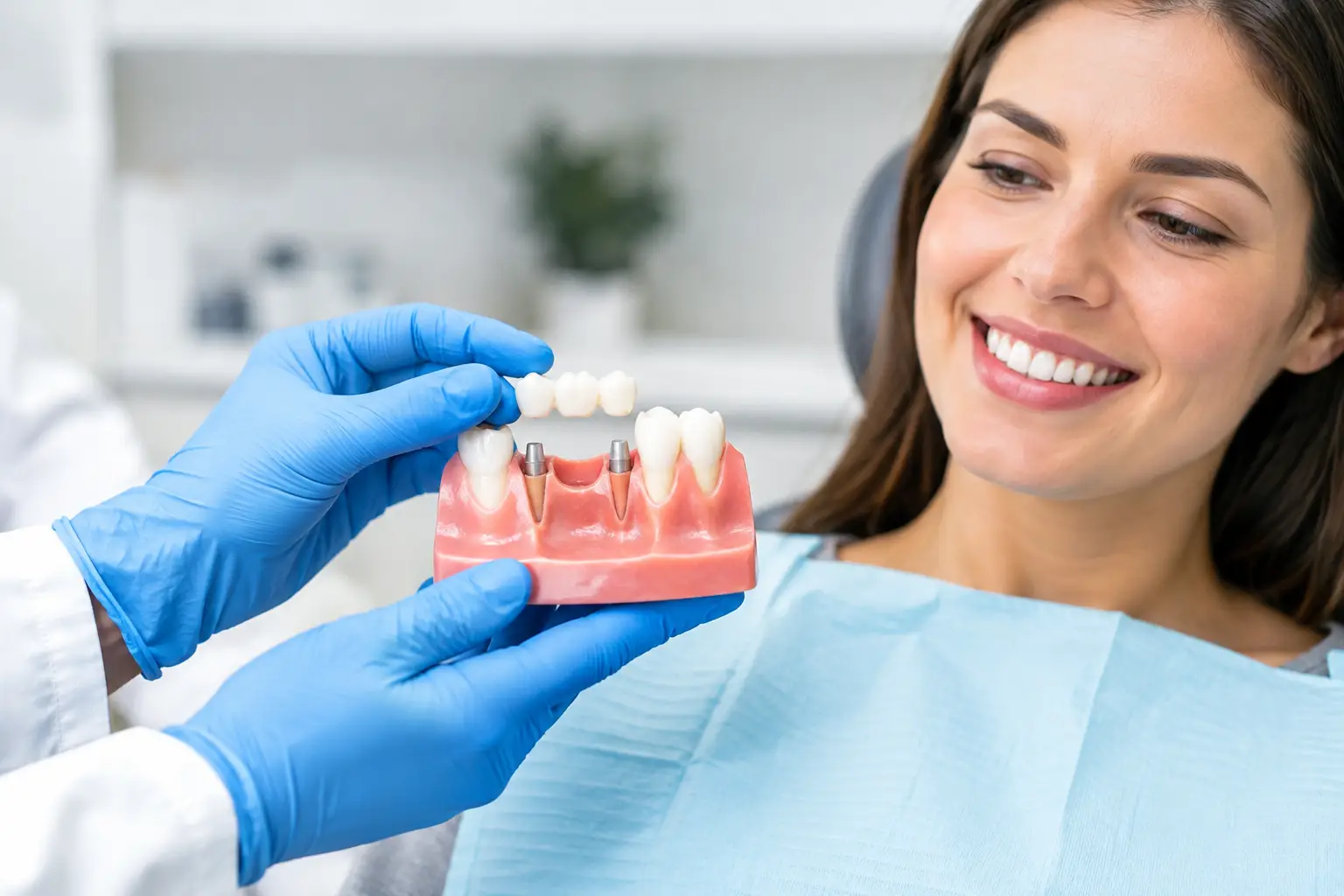
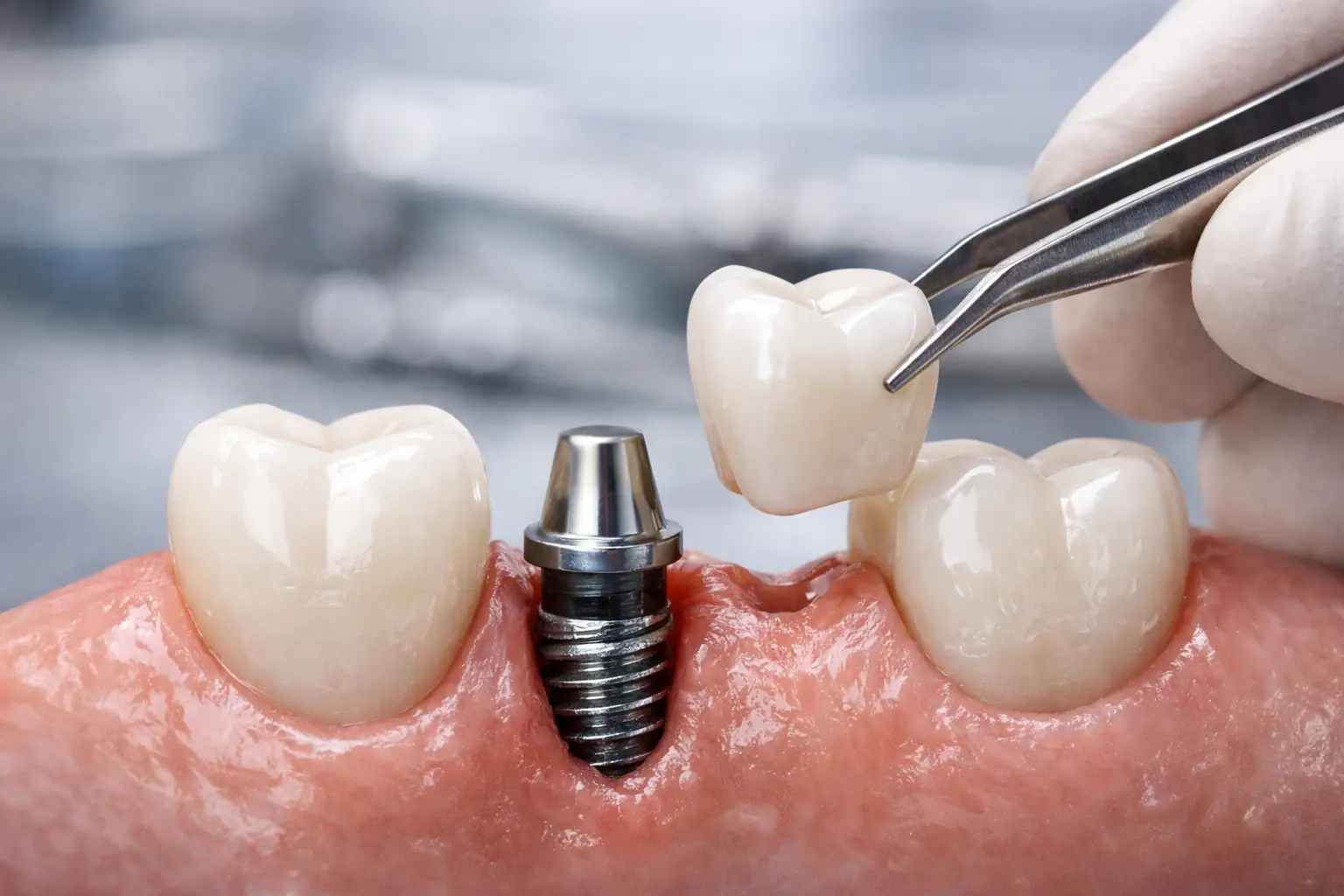
A dental implant replaces the root of a missing tooth with a small titanium fixture placed in the jawbone. Once it has healed and integrated with the bone, it can support a crown that is designed to look and function like a natural tooth.
Implants are often an appealing option because they do not rely on neighbouring teeth for support. They can feel secure when eating and speaking, and they help to stimulate the jawbone in the area of the missing tooth. With attentive cleaning and regular dental care, an implant restoration can be a durable long-term solution.
However, implant treatment is a process rather than a quick fix. It requires healthy enough gums and sufficient bone, although bone grafting may sometimes be considered where bone volume has reduced. Healing time, general health, smoking status and conditions affecting bone healing all need to be reviewed. The treatment can involve a higher initial investment than other options, but for many patients it offers a stable and conservative way to restore a single missing tooth.
Dental bridges
A bridge fills the gap by attaching a replacement tooth to one or both neighbouring teeth. A conventional bridge is usually supported by crowns placed over adjacent teeth, while an adhesive bridge is bonded discreetly to the back of a neighbouring tooth and can be especially useful for some front-tooth gaps.
A bridge is fixed in place, so it is not removed for cleaning. It may be a suitable choice when the teeth beside the gap already need crowns, or when an implant is not appropriate. Treatment is generally completed more quickly than an implant, and many patients appreciate the secure, natural-looking result.
The trade-off is that a conventional bridge usually requires shaping the supporting teeth. An adhesive bridge can preserve more natural tooth structure, but it is not suitable for every position or bite and may be more likely to come loose over time. Your dentist will assess how much space is available, the strength of the supporting teeth and the forces placed on the bridge when you bite.
Partial dentures
A partial denture is a removable appliance made to replace one or several missing teeth. It may be constructed from acrylic, metal or flexible materials, depending on the design and the needs of your mouth.
Dentures can be a practical, cost-conscious option, particularly where several teeth are missing or where fixed treatment is not advisable. They can restore appearance and help with speech and chewing. Modern dentures can be carefully designed to sit comfortably and blend with your natural teeth.
Because they are removable, dentures need daily cleaning and should be taken out at night unless your dentist advises otherwise. There can be a period of adjustment, especially when eating or speaking, and the fit may need to be reviewed as the shape of the gums and jaw changes over time. A well-made denture can be very effective, but it is important to have realistic expectations about how it will feel compared with a natural tooth or fixed restoration.
Choosing the right way to replace a missing tooth
The best option is usually the one that balances your dental health, comfort, expectations and budget. A thorough consultation should include an examination of your teeth and gums, a review of your medical history and, where needed, X-rays or other imaging. This allows the dentist to assess the bone beneath the gap, the health of neighbouring teeth and the way your teeth meet together.
It can help to think about what matters most to you. You may prefer a fixed option that stays in place, want to avoid preparing neighbouring teeth, or need a solution that can be completed within a particular timeframe. If you have felt anxious about dental treatment in the past, it is equally important to say so. A calm discussion of each stage can make treatment feel far more manageable.
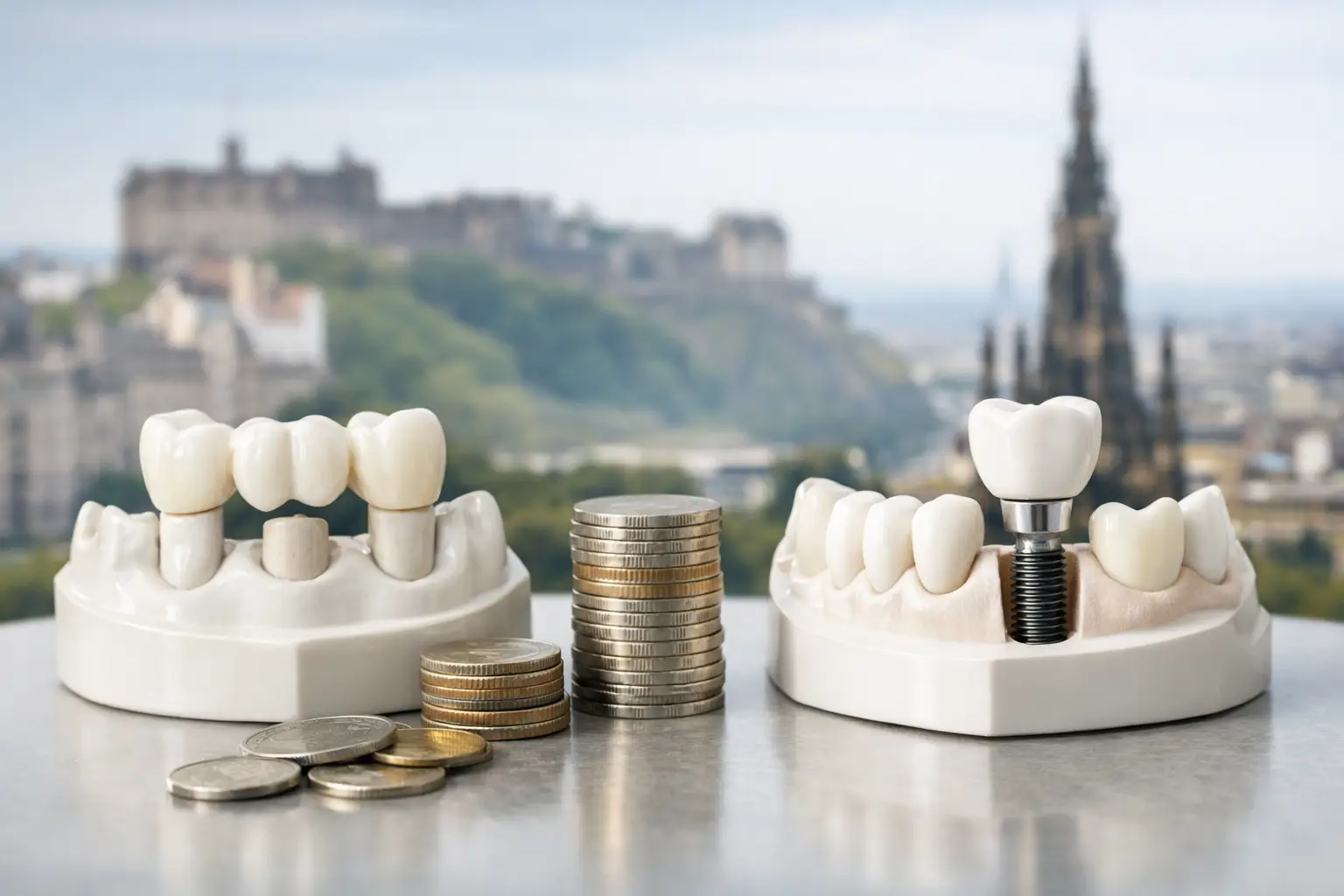
Cost is understandably part of the decision. The most suitable treatment is not necessarily the most expensive one. Ask for a clear treatment plan that explains what is included, any likely future maintenance and alternative options where appropriate. This gives you the information to decide at your own pace.
What to expect from treatment
Before replacement begins, the area around the missing tooth must be healthy. If the tooth has only recently been removed, the gum may need time to heal. In some circumstances, a temporary replacement can be considered while a longer-term solution is planned.
For a bridge, this may involve preparing the supporting tooth or teeth, taking impressions or digital scans, and fitting the completed bridge at a later appointment. For a denture, impressions and try-in appointments help ensure the final appliance fits and looks right. Implant treatment involves planning, placement of the implant, a healing period and then fitting the final crown. The exact timetable varies between patients.
Good aftercare is central to every option. Bridges need careful cleaning underneath the replacement tooth, dentures need cleaning outside the mouth, and implants need the same committed brushing and interdental cleaning as natural teeth. Regular check-ups and hygiene appointments allow small concerns to be identified early.
Looking after your smile while you decide
If a tooth has been lost recently, keep the area clean and attend any follow-up appointments recommended by your dentist. Avoid using the gap to bite very hard foods, especially if the surrounding teeth are already weakened. If you have pain, swelling, a loose restoration or a tooth that has been knocked out, seek dental advice promptly rather than waiting for a routine visit.
A missing tooth does not have to dictate how freely you eat, smile or speak. With a considered assessment and a treatment plan shaped around your needs, you can choose a replacement that supports both your confidence and your long-term dental health.