A Practical Guide to Denture Care at Home
Follow this guide to denture care for everyday cleaning, storage and comfort, plus clear advice on when an Edinburgh dentist should check your dentures.
A denture that feels clean, secure and comfortable can make everyday life feel much simpler - from enjoying a meal with friends to speaking without self-consciousness. This guide to denture care explains how to look after full or partial dentures at home, protect the health of your mouth, and recognise when a professional adjustment is needed.
Dentures are carefully made appliances, but they are not maintenance-free. Plaque, food debris and staining can build up on them just as they can on natural teeth. Meanwhile, the gums and supporting tissues beneath a denture continue to change over time. A few steady habits will help your denture stay fresher and last longer, while helping you avoid irritation, odour and avoidable repairs.
Your daily guide to denture care
The most useful routine is simple: rinse your denture after eating, clean it properly at least once a day, and clean your mouth as well. Rinsing removes loose food particles, particularly from the fitting surface that rests against the gums. It is helpful after meals, but it does not replace brushing.
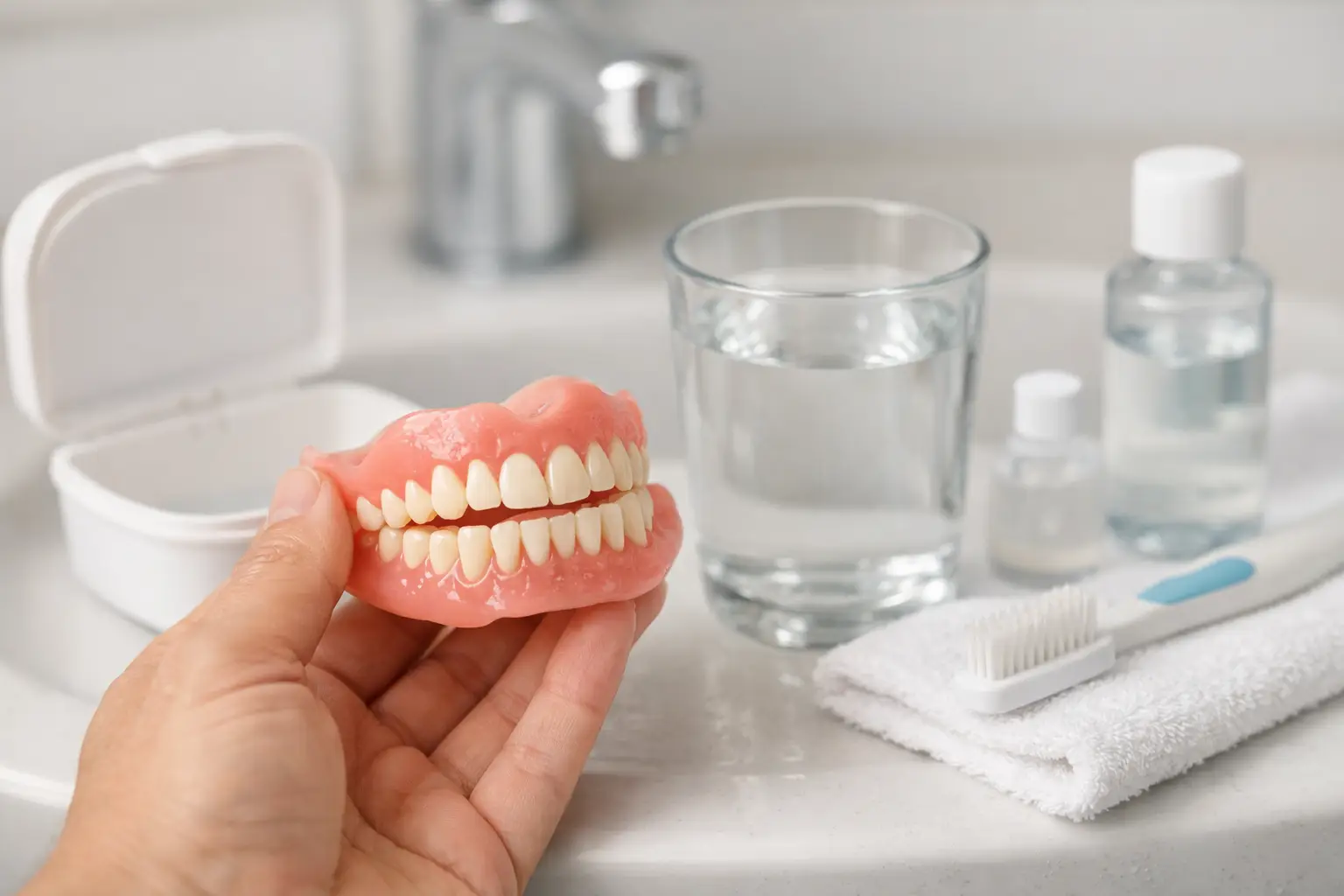
Take the denture out over a folded towel or a basin partly filled with water. Dentures can crack if dropped onto a hard bathroom surface, even when they appear sturdy. Hold them securely and use a soft denture brush or a soft toothbrush reserved for this purpose. Clean all surfaces, including the grooves, clasps on a partial denture, and the surface that sits against your gums.
Use a denture-cleaning product recommended for dentures, or mild liquid soap if advised by your dentist. Ordinary toothpaste is usually too abrasive for denture materials. Over time, it can create fine scratches where plaque and stains settle more easily. Do not use bleach, household cleaners or very hot water. Hot water may distort the shape of the denture, so it no longer fits as intended.
After cleaning, rinse thoroughly before putting the denture back in. If you use a denture-cleaning tablet, follow the product instructions carefully. Some solutions are not suitable for dentures with metal clasps, so check the label or ask your dental team if you are unsure.
Clean your mouth, not only your denture
Removing a denture does not mean there is nothing left to clean. Brush your gums, tongue and palate gently with a soft toothbrush. This removes bacteria and stimulates the tissues. If you have a partial denture, clean every remaining tooth twice daily with fluoride toothpaste, paying particular attention to the areas around clasps and the gumline.
A partial denture can sometimes trap food around the teeth that support it. This makes regular brushing and cleaning between the teeth especially valuable. Your dentist or hygienist can show you which interdental brushes or other aids are suitable for the spaces in your mouth.
Should you remove dentures at night?
For many people, taking dentures out before sleep gives the gums and mouth a chance to rest. It also allows the denture to be cleaned and stored safely. Leaving dentures in all the time can increase the risk of sore tissues and fungal infections such as denture stomatitis, which may appear as redness under the denture.
There are exceptions. If you have had teeth removed and been given an immediate denture, your dentist may ask you to wear it overnight at first. This helps manage swelling and supports healing in the earliest stage. Follow the specific advice you have been given rather than a general rule.
When a denture is out of your mouth, keep it moist so it does not dry out or lose its shape. Place it in clean, cool water or in an appropriate denture-soaking solution, depending on its materials. Keep the container somewhere safe and out of reach of children and pets. Never leave dentures wrapped in tissue on a bedside table - they are easily mistaken for rubbish and accidentally discarded.
Eating and speaking with confidence
A new denture needs an adjustment period. Your tongue, cheeks and facial muscles are learning how to work with a different shape in your mouth. Reading aloud for a few minutes can help you become used to speaking, and any slight change in speech usually settles with practice.
At mealtimes, begin with softer foods cut into small pieces. Chew slowly and use both sides of the mouth where possible. With a full denture, biting directly into firm foods such as apples or crusty rolls can dislodge it. Cutting food first is often more comfortable. Sticky foods can also be challenging, while very hard foods may place undue pressure on the denture or supporting teeth.
This does not mean a restricted diet is inevitable. Most people become more confident over time, although the best approach depends on the type and fit of the denture. Implant-supported dentures may provide more stability than conventional removable dentures, for example, but they still need careful cleaning and professional monitoring.
What about denture adhesive?
A denture adhesive may help some people feel more secure, particularly while adapting to a new denture or where the shape of the jaw offers less natural retention. Used correctly and sparingly, it can be a useful aid. It should not, however, be used to compensate for a loose, damaged or painful denture.
If you find yourself relying on increasing amounts of adhesive, or your denture suddenly starts moving when it previously felt stable, arrange a review. The fit may have changed, and an adjustment, reline or replacement may be the better answer. Remove adhesive from both the denture and your mouth each day before applying fresh product.
When dentures need professional attention
Dentures do not last forever. The materials can wear, teeth can become smoother, and the gums and bone beneath them gradually change. A denture that once fitted well may begin to rub, click, slip or affect your bite. These are not inconveniences to simply tolerate.
Arrange a dental appointment if you notice persistent soreness, ulcers lasting more than two weeks, bleeding gums, a burning feeling, cracked corners of the mouth, bad breath that does not improve with cleaning, or changes in how your denture fits. A loose denture can cause friction and make eating difficult, while a poorly fitting partial denture may place stress on the remaining teeth.
Do not attempt to repair a cracked or broken denture yourself. Household glue is not safe for use in the mouth and can make a proper repair more difficult. Keep all pieces, avoid wearing the denture if it has sharp edges, and contact your dentist. In some cases a repair is possible; in others, the denture may need to be remade or relined to restore a safe fit.
Regular dental examinations remain worthwhile even if you have no natural teeth. Your dentist checks the soft tissues of your mouth, reviews the fit and function of the denture, and can identify changes that may not yet be causing symptoms. If you wear a partial denture, these appointments are also essential for protecting your remaining teeth and gums.
Keeping dentures clean when travelling
A small denture case, a brush and your usual cleaning product make travelling easier. Carry the denture case in hand luggage if you are flying, rather than packing it in a checked bag. For short journeys, rinse and store the denture as you normally would. Avoid wrapping it in a napkin during meals, particularly in cafés or restaurants, as this is one of the most common ways dentures are lost.
If you are away for more than a few days, keep to your normal cleaning routine rather than relying on a quick rinse. Familiar routines are often the best protection against discomfort at an inconvenient time.
Comfortable dentures should allow you to smile, eat and speak with assurance, not leave you planning around pain or embarrassment. If your denture no longer feels like a natural part of your day, a calm review with an experienced dental team can provide a practical way forward.