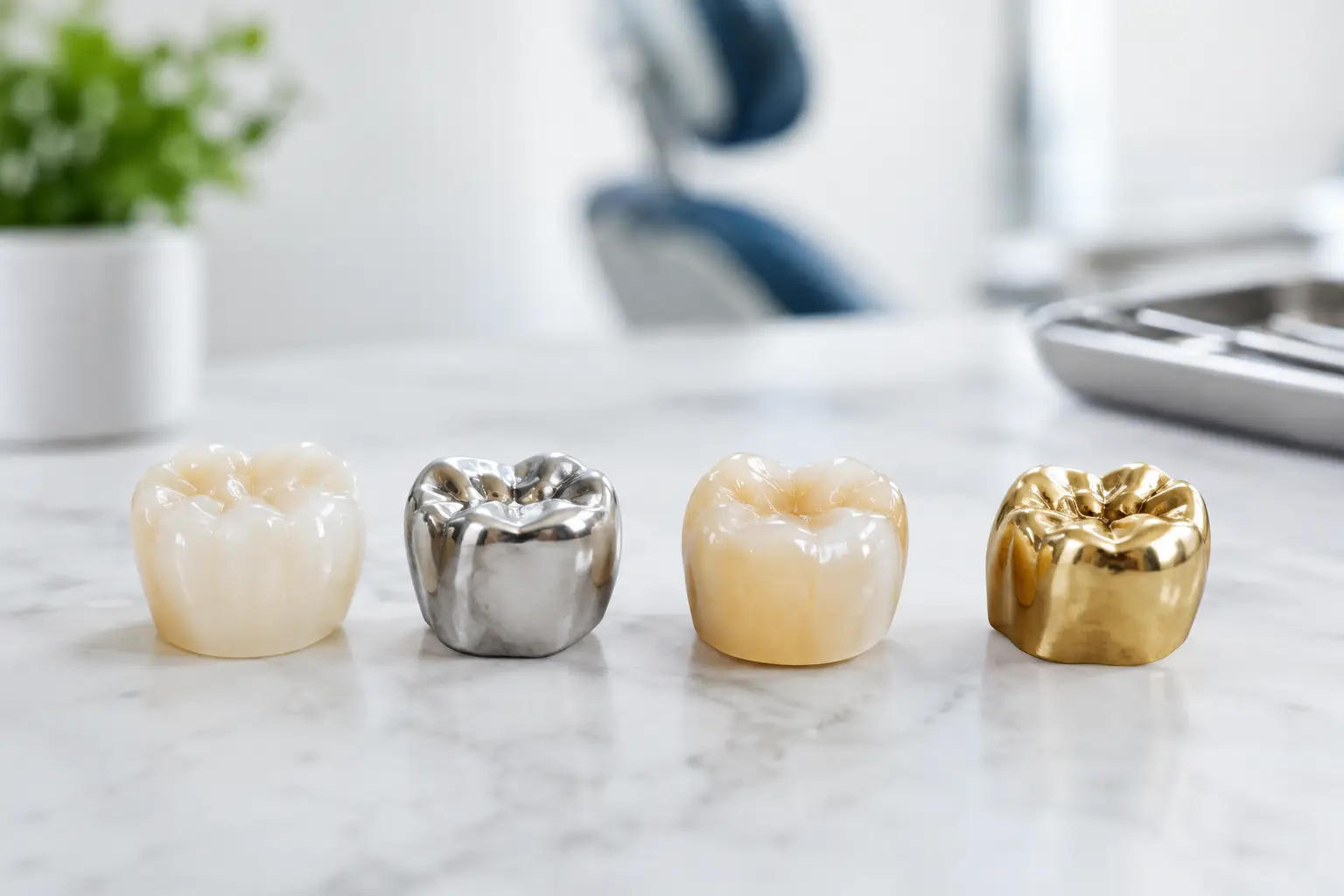
Dental Crown or Filling - Which Do You Need?
Not sure whether you need a dental crown or filling? Learn the key differences, when each is used, and how dentists decide what is best.
A tooth rarely breaks or wears down at a convenient moment. More often, it starts with a crack you can feel with your tongue, a filling that no longer seems secure, or a bite that suddenly feels wrong. When that happens, one of the most common questions we hear is whether a dental crown or filling is the better option.
The right answer depends on how much healthy tooth remains, where the damage sits, and what will give you a reliable result for the long term. A smaller area of decay or minor damage can often be repaired with a filling. A tooth that is weakened, heavily restored or fractured may need the extra protection of a crown. The decision is not about choosing the more involved treatment for the sake of it. It is about preserving the tooth in the safest and most sensible way.
Dental crown or filling - what is the difference?
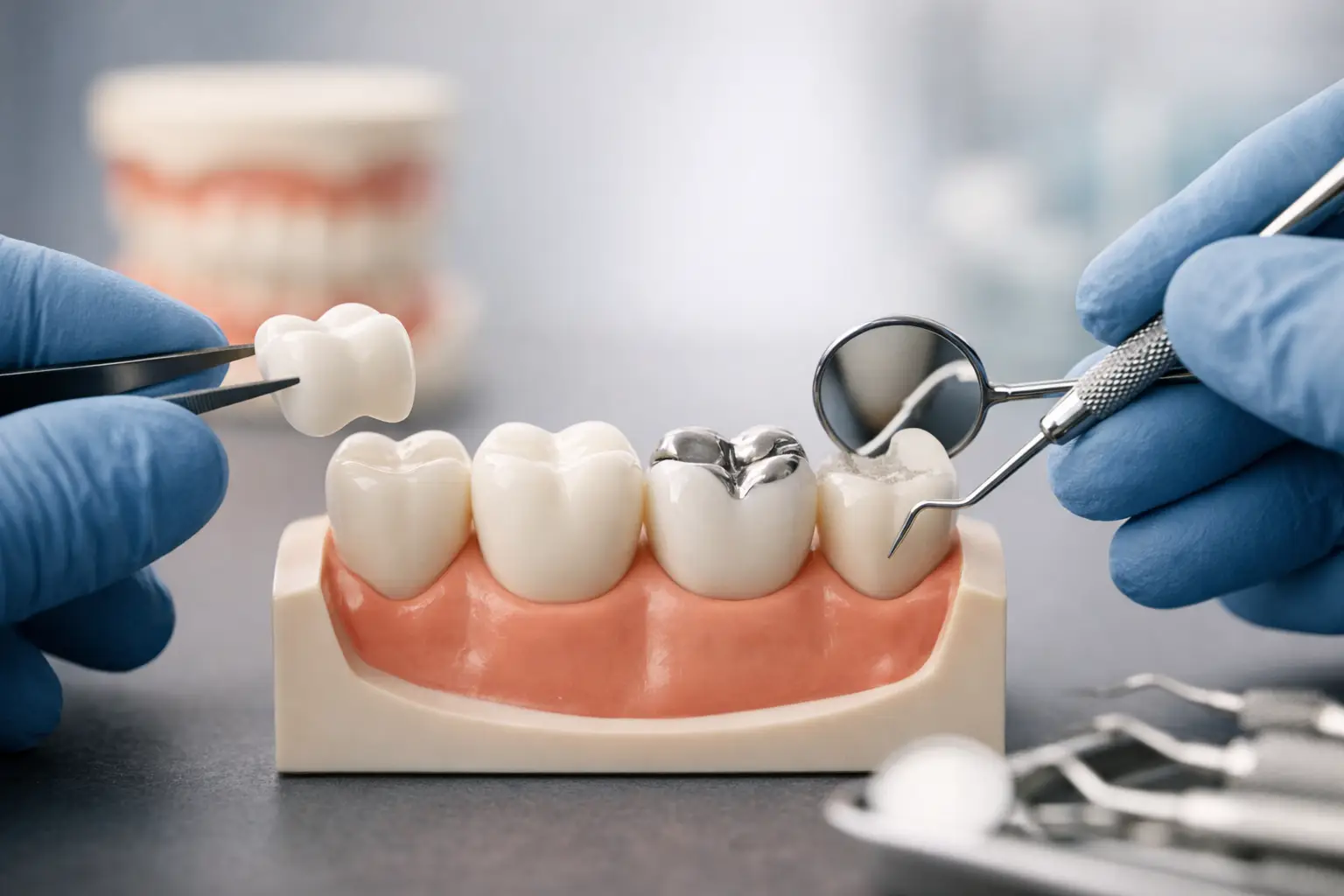
A filling repairs a localised area of damage. Once decay or old filling material is removed, the space is filled and shaped so the tooth can function normally again. Fillings are a more conservative treatment because less tooth structure needs to be covered.
A crown is different. Rather than repairing one small section, a crown covers the whole visible part of the tooth, rather like a carefully made cap. It is used when the tooth is no longer strong enough to cope well with everyday biting forces on its own. That might be because of extensive decay, a large broken area, repeated previous fillings or wear over time.
In simple terms, if the tooth is still structurally sound, a filling may be enough. If the tooth is compromised and at risk of further fracture, a crown often offers better protection.
When a filling is usually the better choice
Fillings are commonly used when decay is caught early to moderate, or when a small piece of tooth has chipped away. They can also replace older fillings that have worn out or leaked around the edges.
For many patients, a filling is the preferred option because it is straightforward and preserves more of the natural tooth. Modern tooth-coloured materials can also blend in very well, especially on teeth that show when you smile.
A filling is often suitable when the damage is limited and the remaining tooth is strong enough to support normal biting. If the cavity is small to medium in size, and there are no significant cracks undermining the tooth, a filling can be an excellent long-term repair.
That said, there are limits. Very large fillings in back teeth can sometimes act as a short-term fix on a tooth that is already weakened. In those cases, the filling may look simpler at first, but it may not be the most durable solution.
When a crown is the safer long-term option
A crown is generally advised when a tooth needs more than a patch. If a substantial part of the tooth is missing, if a cusp has fractured, or if the tooth has had root canal treatment, a crown may help prevent further breakage.
Back teeth take considerable pressure when you chew. If one of those teeth has a very large filling already, replacing it with another large filling may not offer enough support. A crown can hold the tooth together and reduce the risk of a more serious fracture later on.
Crowns are also often recommended for teeth that have become brittle with age or repeated treatment. In these situations, the issue is not only what can be repaired today, but what is most likely to keep the tooth stable over the next several years.
This is where judgement matters. A careful dentist will not suggest a crown for every damaged tooth. Equally, placing a filling in a tooth that really needs full coverage can lead to repeated failure, discomfort and more treatment down the line.
How dentists decide between a dental crown or filling
The choice between a dental crown or filling is based on clinical examination rather than guesswork. Your dentist will look at the size of the damaged area, the strength of the remaining tooth, your bite, and whether there are signs of cracks or previous repair work failing.
X-rays may be needed to show decay between the teeth or underneath an old filling. Sometimes the real picture only becomes clear once the old filling or decay has been removed. A tooth that appeared repairable with a filling can occasionally turn out to be too compromised once the weakened structure is exposed.
Bite forces also matter. Someone who clenches or grinds their teeth may put much more pressure on a restored tooth. In that case, a crown may be the more predictable option. The location of the tooth matters too. Front teeth and back teeth do different jobs, and treatment is tailored accordingly.
Patient priorities are part of the conversation as well. Some people want the most conservative option if it is clinically sound. Others prefer the treatment that is likely to offer greater durability even if it is more involved. A good treatment plan takes both the clinical picture and the person into account.
Cost, time and longevity
For many patients, practical questions are just as important as clinical ones. A filling is usually less expensive than a crown and can often be completed in a single appointment. That makes it an attractive option when the tooth is suitable for it.
A crown usually involves more planning and precision. The tooth must be prepared, impressions or scans are taken, and the final crown is then fitted. Because it is a more extensive restoration, the cost is higher than a filling.
Longevity is where the balance shifts. A well-placed filling can last for many years, but larger fillings in heavily used teeth can be more vulnerable to wear, leakage or fracture. Crowns often last well because they protect the remaining tooth structure more comprehensively. Even so, no restoration lasts forever. Both fillings and crowns depend on regular care, sensible biting habits and good oral hygiene.
The least expensive treatment today is not always the least expensive over time. If a large filling repeatedly fails and the tooth fractures further, the eventual treatment can become more complex than if it had been crowned earlier. That is why honest advice matters.
What the treatment feels like
Many people are less worried about which restoration they need than about whether the procedure will be uncomfortable. In most cases, both fillings and crowns are routine treatments carried out with local anaesthetic to keep the area numb.
A filling appointment is generally shorter. Once the tooth is cleaned and prepared, the material is placed, shaped and polished. You may feel pressure or vibration during treatment, but it should not be painful.
A crown takes more time and usually more than one stage. The tooth is shaped carefully, and a temporary crown may be fitted while the final one is made. When the permanent crown is fitted, your dentist checks the appearance and bite closely before securing it in place.
Patients who are nervous often find that understanding the process beforehand makes the experience much easier. In a calm, well-established practice, treatment should feel measured rather than rushed.
Can a filling become a crown later?
Yes, and this is common. Dentistry is not always a once-and-for-all decision made in perfect conditions. Sometimes a filling is the right treatment now, with the understanding that a crown may be needed later if the tooth weakens or the restoration becomes too large.
That does not mean the filling was the wrong choice. Teeth change over time. New cracks can develop, old restorations can wear, and biting forces can take their toll. What matters is reviewing the tooth regularly and acting before a manageable problem becomes an urgent one.
In some cases, a dentist may advise a filling as an interim solution if the prognosis is uncertain. In others, they may be clear that a crown is the more responsible recommendation from the outset. The best care is careful, transparent and tailored - not one-size-fits-all.
The best option is the one that protects your tooth
If you are deciding between a dental crown or filling, the question is not which treatment sounds simpler. It is which one gives your tooth the best chance of staying comfortable, functional and intact.
A small, well-contained area of decay may only need a filling. A heavily restored or cracked tooth may need the support of a crown. Neither is automatically better. The right choice depends on the condition of the tooth and the standard of care you want for the future.
At 4 Great Stuart Street, that conversation is always grounded in what is safe, ethical and sensible for the individual patient. If a tooth can be treated conservatively, that matters. If it needs stronger protection, that matters too. The most reassuring plan is usually the one that is honest about both the short term and the long term.
If you are unsure about a damaged tooth, it is often best to have it assessed before discomfort worsens or the tooth breaks further. A clear diagnosis can turn a worrying question into a manageable next step.