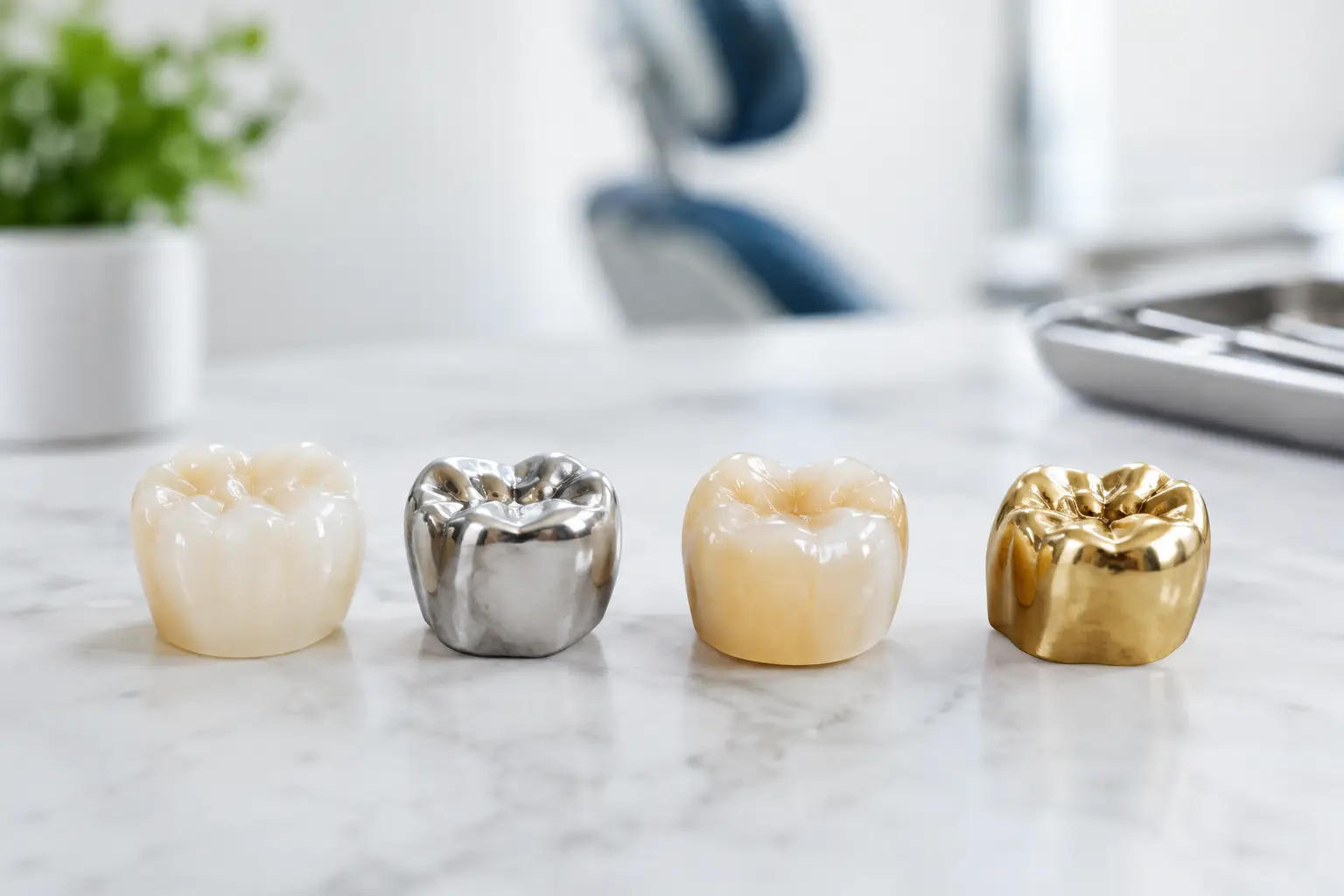
Composite Versus Amalgam Fillings Compared
Considering composite versus amalgam fillings? Understand appearance, strength, cost and suitability so you can choose confidently with your dentist today.
A filling is often needed at a moment when you are already concerned about a tooth - perhaps after a check-up has found early decay, or when an old filling has started to fail. The choice between composite versus amalgam fillings can seem straightforward, but the best option depends on the tooth, the size of the repair, your bite and what matters most to you.
Both materials have a long place in modern dentistry. A careful examination allows your dentist to recommend a filling that protects the remaining tooth structure and is appropriate for your circumstances, rather than simply selecting the most familiar material.
Composite versus amalgam fillings: the main difference
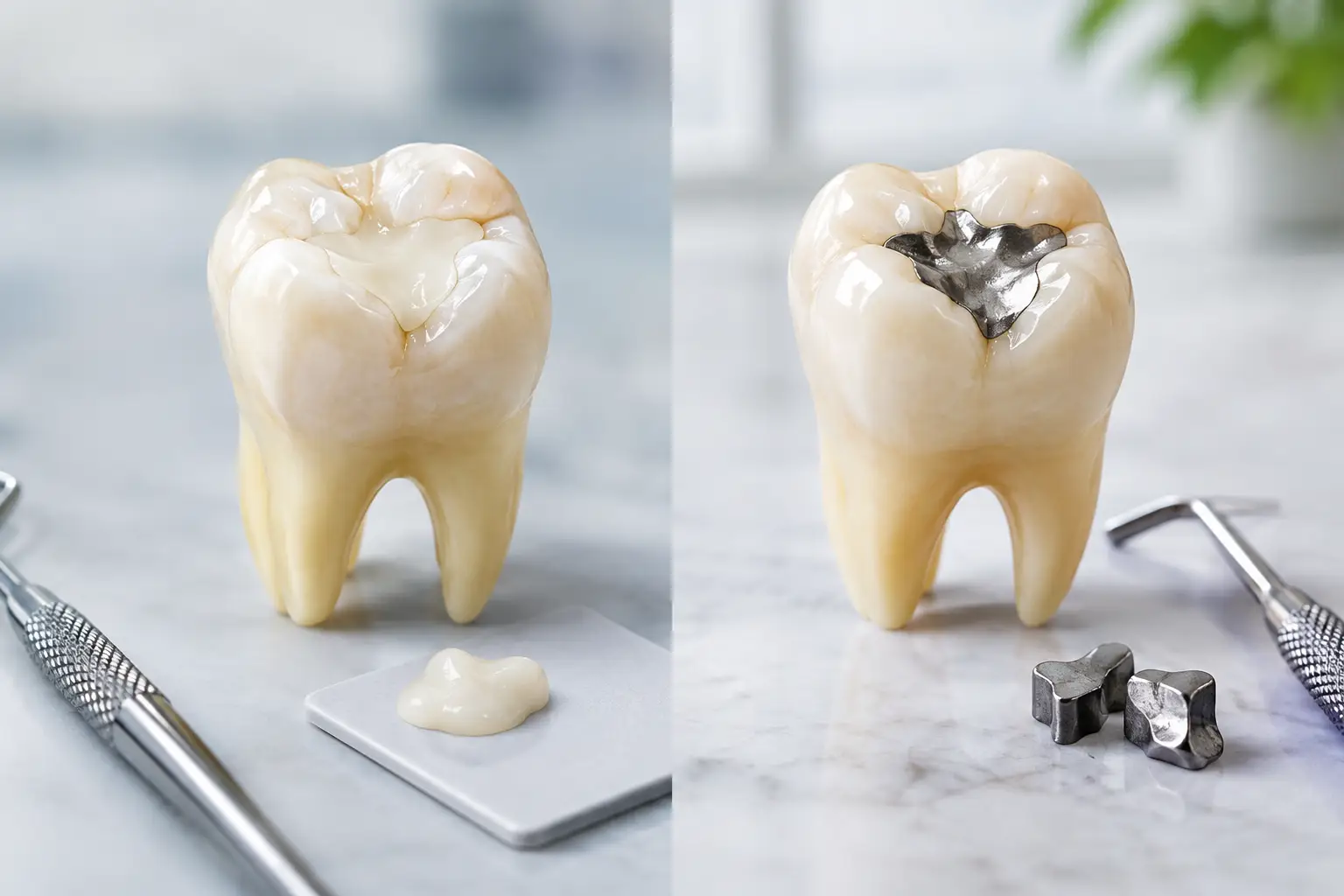
Composite is a tooth-coloured resin material. It is placed in layers, shaped to the tooth and hardened with a special curing light. Because it can be matched closely to the natural shade of your teeth, it is often chosen for visible areas such as front teeth, as well as many back teeth.
Amalgam is a silver-coloured metal filling material that has been used in dentistry for many decades. It is particularly recognisable in back teeth, where its colour is less noticeable. It is valued for its durability in suitable situations and its ability to tolerate a demanding bite.
Neither is automatically the right answer for every cavity. A small repair on a visible tooth is a very different clinical situation from a large cavity in a back molar that takes heavy chewing forces.
Appearance and the amount of tooth removed
For many patients, appearance is the clearest difference. Composite blends with the surrounding enamel, making it a discreet choice where a metal filling would be noticeable. This can be especially reassuring if a front tooth needs repair following decay, a small chip or an older, discoloured filling.
Composite may also allow the dentist to preserve more healthy tooth tissue in some cases. The material bonds to the tooth, so it does not always require the same type of shaping needed to retain a traditional amalgam filling. Conserving sound tooth structure is usually beneficial, but it is only one part of the decision.
Amalgam does not match the tooth colour and can darken in appearance over time. For some people, that is not a concern in a lower or rear tooth. For others, it is enough to make a tooth-coloured option their clear preference.
Strength, longevity and where the filling sits
Amalgam has a long record of service in large fillings in back teeth. It is a strong material once set and can be a practical option when the tooth is difficult to keep completely dry during treatment. Moisture control matters because composite needs a clean, dry surface to bond effectively.
Modern composite fillings can also perform very well in back teeth when they are carefully placed and the tooth is suitable. They are not simply cosmetic fillings. However, a large composite restoration on a heavily loaded molar may have a different outlook from a smaller filling in a low-stress area.
The condition of the tooth is crucial. If decay or fracture has left too little strong tooth remaining, a filling of either type may not be the most protective solution. Your dentist may instead discuss a crown or another restoration designed to support the tooth more fully.
No filling lasts forever. Its lifespan is affected by the size and location of the restoration, biting forces, diet, oral hygiene, teeth grinding and whether decay develops around the edge of the filling. Regular examinations help identify small changes before they become a more extensive problem.
What about teeth grinding?
If you clench or grind your teeth, fillings are exposed to greater stress. A night guard may be recommended to protect your teeth and restorations, particularly where there is evidence of wear, cracking or repeated filling failure. This is relevant whether you choose composite or amalgam.
Treatment time and the experience in the chair
Composite fillings are technique-sensitive. The tooth needs to be isolated, prepared carefully and built up in stages. For this reason, they can take longer to place than an amalgam filling, especially if the cavity is larger or lies between two teeth.
Amalgam is generally placed and shaped in one procedure, although it takes time to reach its full strength. Your dentist will explain when it is sensible to avoid chewing on that side after treatment.
The experience should be comfortable with appropriate local anaesthetic, whichever material is used. If you feel anxious about dental treatment, it is worth saying so before the appointment. A calm pace, clear explanations and time to ask questions can make a significant difference.
Safety and current considerations around amalgam
Amalgam contains mercury combined with other metals to form a stable filling material. It has been extensively studied and remains an accepted treatment option in appropriate circumstances, subject to current professional guidance and individual clinical considerations.
There are situations where amalgam may not be advised, including for some children, pregnant or breastfeeding patients, and people with particular medical considerations. Regulations and guidance can also influence which materials are routinely used. Your dentist will take account of your medical history and discuss a suitable alternative where necessary.
An existing amalgam filling does not usually need to be replaced simply because it is silver-coloured. If it is intact, functional and the surrounding tooth is healthy, removing it can mean taking away additional tooth tissue. Replacement is generally considered when there is decay, a crack, leakage, recurrent sensitivity, breakdown at the edges or a clear aesthetic reason that has been properly discussed.
Cost and NHS or private treatment
Costs can differ between composite and amalgam because the materials, treatment time and clinical complexity are not always the same. The position of the tooth also matters. A small filling is not comparable with rebuilding much of a broken back tooth.
For NHS dentistry, the material offered is based on clinical need and the relevant arrangements for treatment. Private care may provide a wider choice of tooth-coloured materials or approaches where the priority is appearance. The right conversation is not only about price. It should cover what is clinically appropriate, how long the restoration is expected to serve and what you would like the finished tooth to look like.
At 4 Great Stuart Street, we believe patients should understand their options before treatment begins. A recommendation should feel clear and unpressured, with the opportunity to discuss any concerns about comfort, appearance or long-term maintenance.
How your dentist decides what is suitable
Your dentist will look beyond the hole in the tooth. They will consider the size and depth of decay, whether the tooth has cracked, how close the cavity is to the nerve, the condition of neighbouring fillings and how your teeth meet when you bite.
They may also ask about sensitivity, previous dental work and your preferences. A visible upper premolar, for example, may lead naturally towards composite. A large restoration in a back tooth with limited remaining structure may require a more detailed discussion about the most durable way to protect it.
Radiographs can help show decay between teeth or beneath an old filling, where the full extent is not visible during an examination. This information helps avoid making a decision based on appearance alone.
Looking after a new filling
A filling needs the same daily care as the rest of your teeth. Brush twice a day using fluoride toothpaste and clean between your teeth regularly, especially where fillings meet neighbouring teeth. Limiting frequent sugary snacks and drinks reduces the risk of new decay around the restoration.
Contact your dentist if a filling feels high when you bite, becomes rough, causes persistent sensitivity, or if you notice pain when chewing. A small adjustment can sometimes prevent ongoing discomfort or excessive pressure on the tooth.
The most helpful choice is the one that respects both the health of the tooth and your own priorities. Ask what your dentist would recommend for that specific tooth, why they recommend it and what alternatives are realistic. A well-considered filling is a small repair with an important purpose: helping you keep your natural tooth comfortable and functional for as long as possible.