Best Ways to Replace Teeth Explained
Learn the best ways to replace teeth, from dentures and bridges to implants, with clear advice on comfort, cost, and long-term care.
Losing a tooth rarely feels like a small matter. Even when it is not visible in your smile, a gap can affect how you eat, speak and feel day to day. If you are weighing up the best ways to replace teeth, the right option is not always the newest or most expensive treatment. It is the one that suits your mouth, your health, your budget and how you want your teeth to feel in daily life.
For some patients, a simple removable denture is the most practical answer. For others, a bridge or implant offers more stability and a more natural bite. The key is understanding the differences clearly, without pressure, so you can make a confident decision.
The best ways to replace teeth depend on the gap
A single missing tooth calls for a different approach from several missing teeth, and both differ again from replacing a full arch. Where the tooth was positioned matters too. A back tooth does much of the hard work in chewing, while a front tooth has more impact on appearance and speech.
Your dentist will usually look at the condition of the surrounding teeth, the health of your gums, the density of your jawbone and whether you want a fixed or removable solution. This is why two people with what seems like the same problem can be advised very differently.
Dental implants
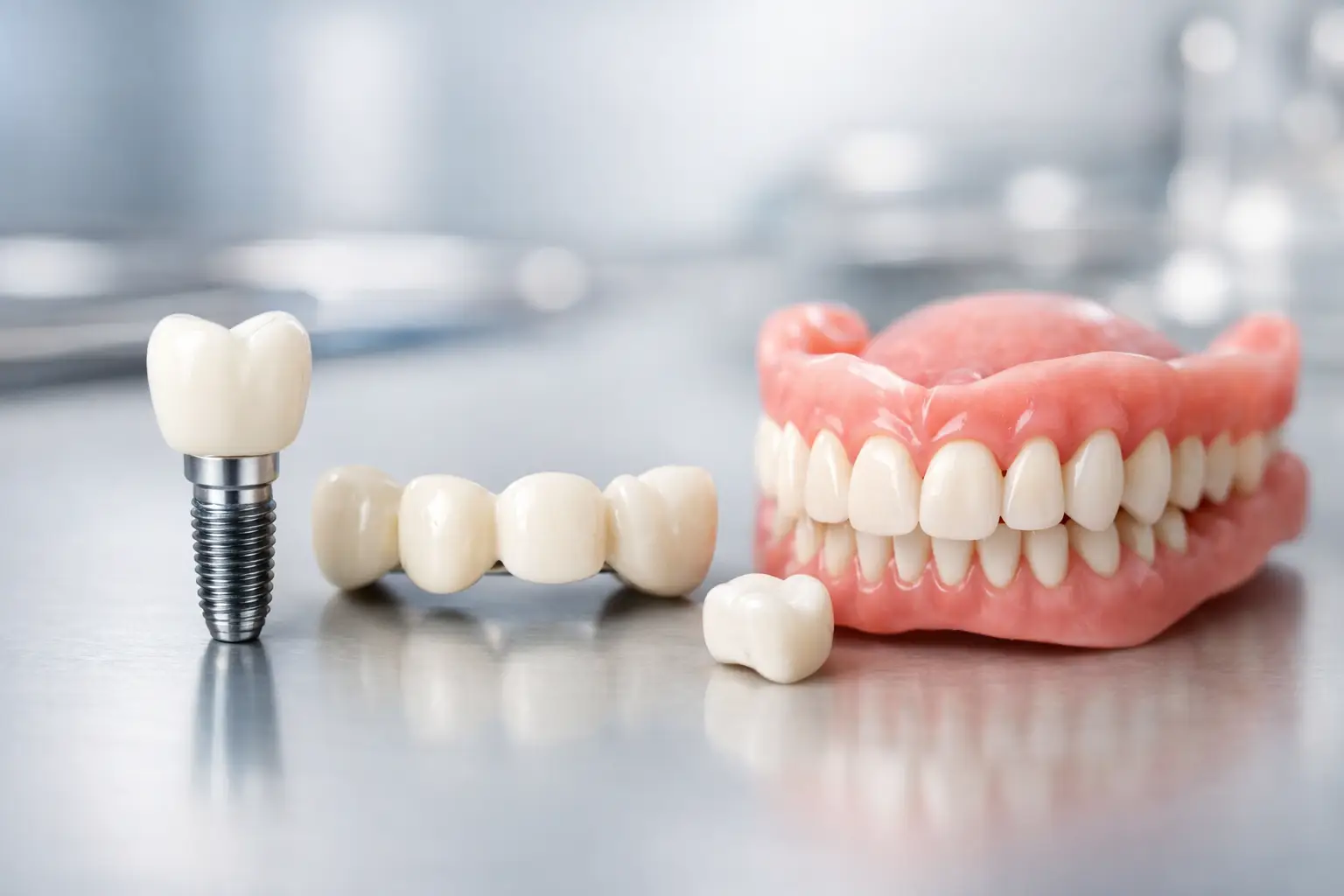
A dental implant is a small titanium post placed in the jaw to act like an artificial tooth root. Once healed, it can support a crown, bridge or denture. For many patients, implants are considered one of the best ways to replace teeth because they are secure, long-lasting and do not rely on neighbouring teeth for support.
An implant with a crown is often the closest replacement to a natural tooth in both appearance and function. It stays in place, allows you to chew with confidence and can help maintain bone in the jaw. That last point matters more than many people realise. After a tooth is lost, the bone in that area can gradually shrink over time.
That said, implants are not right for everyone. They require enough healthy bone, good oral hygiene and a healing period that can take several months. They also tend to involve a higher initial cost than other options. If you smoke heavily, have uncontrolled gum disease or certain medical conditions, treatment may need extra planning or may not be advisable.
Bridges
A bridge fills the gap by attaching an artificial tooth to the teeth on either side. In many cases, it offers an excellent middle ground between a denture and an implant. It is fixed in place, feels more secure than a removable option and can produce a very natural-looking result.
Bridges are often well suited when the neighbouring teeth already need crowns or have large fillings, as those teeth may benefit from extra protection anyway. Treatment is usually quicker than implant work, and there is no surgery involved.
The trade-off is that a traditional bridge may require healthy adjacent teeth to be prepared. That is not necessarily a problem, but it does mean the treatment affects more than the gap alone. Bridges also do not replace the root in the jaw, so they do not help preserve bone in quite the same way as implants.
Dentures
Dentures remain one of the most common and effective ways to replace missing teeth. Modern dentures can look far more natural than many people expect, and they can restore function very well, especially when designed carefully and adjusted properly.
A partial denture replaces several missing teeth while fitting around the remaining natural ones. A full denture replaces all teeth in the upper or lower jaw. Dentures are usually the most affordable route when multiple teeth are missing, and they can often be made without surgery or lengthy treatment.
For some patients, dentures are the right long-term choice. For others, they are a practical interim solution before more permanent treatment. The main challenge is that removable dentures can move slightly, particularly lower dentures, and some people need time to adjust to eating and speaking comfortably. Fit can also change over the years as the gums and bone alter shape.
Implant-retained dentures
If you like the broader tooth replacement that a denture provides but want more security, an implant-retained denture may be worth considering. This uses implants to help hold the denture in place, reducing movement and often improving confidence with chewing and speech.
This option is especially helpful for patients who struggle with loose lower dentures. It can offer much of the stability people want without requiring a separate implant for every missing tooth. It is still a more involved and costly treatment than a conventional denture, but for the right patient it can make a marked difference to comfort.
Which option feels most natural?
When patients ask what feels most like having their own teeth back, implants usually come closest. Because they are fixed and supported in the jaw, they tend to provide the most natural biting experience.
A bridge can also feel very natural, particularly for a single missing tooth. Dentures can look excellent, but the sensation is different because they sit on the gums rather than being anchored like natural roots.
Still, comfort is not only about engineering. It is also about fit, bite balance and careful planning. A well-made denture can serve one patient beautifully, while another may find an implant worth the extra investment because they want more firmness and confidence.
The best ways to replace teeth on a budget
Cost is a real part of the decision, and it should be discussed openly. The best ways to replace teeth are not always the ones with the highest fee. A treatment is only a good investment if it is suitable, maintainable and likely to serve you well over time.
Dentures are often the most budget-friendly option, especially when several teeth need replacing. Bridges usually sit in the middle. Implants often have the highest initial cost, but they may last very well with proper care and can avoid affecting neighbouring teeth.
It is also sensible to think beyond the first appointment. Ask about maintenance, repairs, hygiene appointments and how long a solution is expected to last. Lower upfront cost does not always mean lower long-term cost, and the reverse is true as well.
Other factors that matter more than people expect
Appearance matters, but it should not be the only priority. Your bite, speech and gum health all influence the right choice. If you grind your teeth, for example, that can affect whether a bridge or implant crown needs extra protection. If you have had gum disease, that must be stable before any long-term restoration is planned.
Timing can matter too. Some patients want the gap filled quickly for work or social reasons. Others are happy to phase treatment over time. There are also situations where a temporary option is the safest step while the mouth heals.
Anxious patients often assume more advanced treatment will be overwhelming. In reality, careful explanation and a calm setting usually make the biggest difference. The best treatment plan should feel manageable, not daunting.
How to choose confidently
The most useful consultation is one that compares your options properly rather than steering you straight towards one answer. You should understand what each treatment involves, how it will look, how it will feel, what it will cost and what compromises come with it.
At an established practice such as 4 Great Stuart Street, that conversation should be clear and pressure-free. Some people want the longest-lasting fixed option available. Others want the simplest route back to comfortable eating. Neither approach is wrong.
A good decision usually comes down to four questions. Do you want something fixed or removable? Are the neighbouring teeth healthy? Is implant treatment suitable for your bone and general health? And what level of upkeep feels realistic for you?
If you can answer those honestly, the right path often becomes much clearer.
Replacing teeth is not only about filling a space. It is about restoring ease, confidence and function in a way that fits your life. The best option is the one you can trust to feel comfortable, look natural and support your oral health for years to come.