How to Clean Clear Aligners Safely Each Day
Practical advice on how to clean clear aligners each day, prevent odours and staining, and protect your oral health throughout your orthodontic treatment.
Clear aligners are designed to be discreet, but they are not self-cleaning. Wearing trays for most of the day means they are regularly exposed to saliva, plaque and food residue. Knowing how to clean clear aligners properly helps them stay transparent, comfortable and fresh while supporting the health of your teeth and gums.
A clean aligner should be part of the same routine as brushing and cleaning between your teeth. It takes only a few minutes, but it can make a noticeable difference to the appearance of your trays and the confidence you feel wearing them.
Why cleaning your aligners matters
Clear aligners sit closely against the teeth, creating a warm and enclosed environment. If bacteria or plaque are left on the trays, they can be held against the tooth surfaces for many hours. This may contribute to unpleasant smells, staining and a higher risk of tooth decay or gum irritation, particularly if your brushing routine is inconsistent.
The trays themselves can also become cloudy. This is not always a sign that treatment has gone wrong, but a build-up of dried saliva, plaque or residue from drinks can make clear aligners far less discreet. Regular cleaning protects the smooth finish of the plastic and makes each new set of aligners easier to wear with confidence.
How to clean clear aligners: a simple daily routine
Take your aligners out before eating or drinking anything other than plain water. This is one of the most effective ways to prevent staining and food becoming trapped inside the trays. Hot drinks are best avoided while wearing aligners too, as heat can affect the shape of the plastic.
Each time you remove them, rinse the aligners under cool or lukewarm running water. This stops saliva from drying on the surface and makes the deeper clean easier later. Do not use hot water, even if the trays seem difficult to clean. High temperatures can distort the aligner, which may affect how accurately it fits.
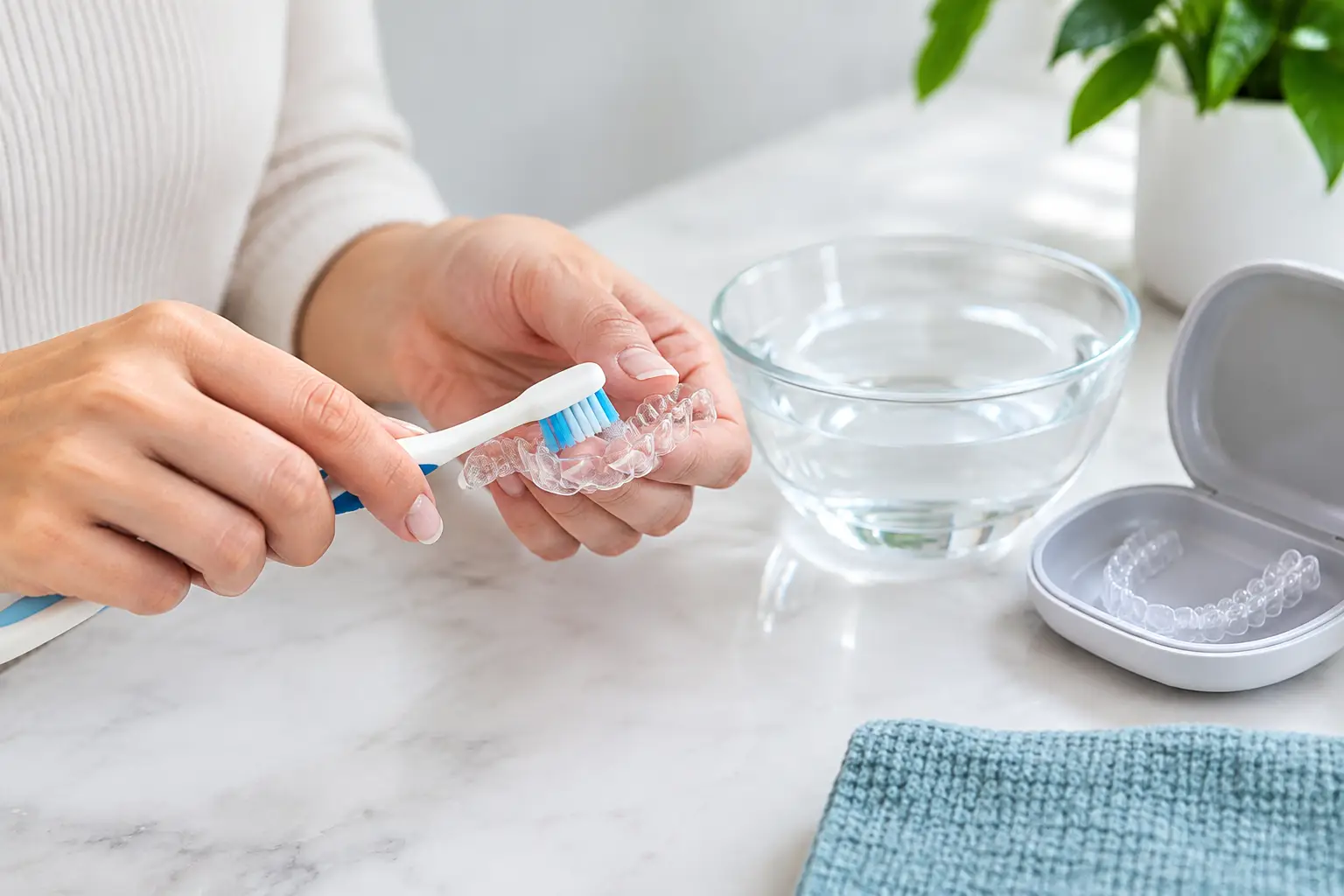
At least once a day, clean the aligners gently with a soft toothbrush reserved for this purpose and a small amount of clear, mild liquid soap. Brush the inside and outside surfaces using light pressure, then rinse thoroughly. A dedicated soft brush is useful because toothpaste can be too abrasive for aligner plastic and may leave tiny scratches that make the trays look dull.
Before putting your aligners back in, brush your teeth carefully and clean between them as advised by your dentist or hygienist. Returning trays to unbrushed teeth after a meal can trap sugars and bacteria against the enamel. If you are away from home and cannot brush immediately, rinse your mouth thoroughly with water and clean your teeth as soon as you can.
What to use - and what to avoid
For most patients, cool water, a soft toothbrush and a suitable clear soap are enough for everyday care. Aligner cleaning crystals or tablets can also be useful from time to time, especially if you notice a film or lingering odour. Always follow the product instructions and rinse the trays well before wearing them.
Some common cleaning methods are best avoided because they can damage, stain or roughen the aligners. Do not use bleach, household cleaning products, mouthwash containing strong dyes, or denture cleaner unless your dental professional has specifically recommended it. These products may be too harsh for the plastic.
Avoid toothpaste as a routine aligner cleaner. Many toothpastes contain abrasive particles intended to polish tooth enamel. They can create fine surface scratches in clear plastic, allowing plaque and pigments to cling more easily. Coloured soap may also leave a tint behind, so choose a clear, fragrance-light option where possible.
It is equally sensible to avoid using boiling water, putting aligners in a dishwasher, or leaving them to soak in very hot water. A tray that has altered shape may no longer move the teeth as planned, even if the change is difficult to see.
Keeping aligners clean when you are out
Workdays, meals out and travel are often when good aligner habits are most easily forgotten. Carry a protective aligner case with you rather than wrapping the trays in a tissue. Tissues are easily thrown away by mistake, and aligners can collect bacteria or become damaged if left loose in a pocket or bag.
If you eat while out, remove the aligners, place them in their case and rinse them when you have access to a washroom. Ideally, brush your teeth before reinserting them. A small travel toothbrush, toothpaste and interdental brushes can make this straightforward without disrupting your day.
If brushing is genuinely not possible for a short period, water is your best temporary option. Rinse your mouth, rinse the aligners and wait until you can clean your teeth properly. This should not become the usual routine, but it is preferable to putting unclean trays straight back over food debris.
Managing staining and odours
Tea, coffee, red wine, curry and smoking can all affect the appearance of aligners. The simplest prevention is to remove them before consuming anything other than water. Drinking a sugary or acidic drink through the trays may also increase the chance of enamel damage, as the liquid can sit against the teeth for longer.
If the aligners start to smell, first check that they are being rinsed whenever removed and gently brushed every day. Odour often indicates that plaque has been allowed to build up. A soak in an aligner-cleaning solution may help, but persistent odour can also be a prompt to review brushing, interdental cleaning and the condition of the case.
Some light cloudiness can occur over the course of a set of trays, particularly where aligners are worn for one or two weeks before changing. However, brown staining, rough patches, cracks or a tray that no longer fits comfortably should be discussed with your dental team. Do not try to reshape an aligner at home.
Your oral hygiene matters just as much
Cleaning the trays alone is only half the picture. Clear aligner treatment relies on consistently healthy teeth and gums. Brush twice daily with fluoride toothpaste, clean between the teeth each day and attend hygiene appointments or dental examinations as recommended.
For patients prone to dry mouth, plaque may accumulate more quickly on both teeth and aligners. Sipping water regularly can help, and your dental team can advise if medication, mouth breathing or another cause is contributing. If your gums bleed, feel sore or look swollen, do not simply wait for the next aligner change. Early advice can prevent a small problem becoming more difficult to manage.
When to ask your dentist for advice
Contact your dental practice if an aligner is cracked, lost, warped or no longer seating fully over the teeth. Keep your previous set of aligners in their labelled packet unless you have been advised otherwise. In some circumstances, your dentist may ask you to wear the previous tray temporarily while a replacement is arranged.
You should also seek advice if you develop persistent bad breath, gum discomfort, tooth sensitivity or white marks on the teeth during treatment. These symptoms do not necessarily mean that clear aligners are the cause, but they deserve a professional assessment.
At 4 Great Stuart Street, clear aligner care is approached as part of your wider dental health, not simply a cosmetic treatment. Regular review appointments allow your dentist to check that your teeth are moving as planned and that your gums remain healthy throughout.
Can I clean clear aligners with soap every day?
Yes, a small amount of mild, clear liquid soap and a soft toothbrush is generally suitable for daily cleaning, provided you rinse the trays thoroughly afterwards. Avoid strongly coloured, harsh or heavily perfumed products.
Can I wear aligners while drinking tea or coffee?
It is best to remove them. Tea and coffee can stain the plastic, and hot drinks may alter its shape. Drinking plain water while wearing aligners is fine.
What if I forget my aligner case?
Place the trays somewhere clean and secure until you can store them properly, but do not wrap them in tissue. Rinse them before putting them back in your mouth and replace the case as soon as possible.
A steady routine is more valuable than complicated products. Rinse your aligners, clean them gently every day and only return them to clean teeth. That small habit helps keep treatment comfortable, discreet and moving in the right direction.