How Private Dental Care Works
Learn how private dental care works, from fees and appointments to treatment choices, continuity and what patients in Edinburgh can expect.

If you have ever looked at treatment options and wondered how private dental care works, you are not alone. For many patients, the question is less about dentistry itself and more about what the experience will actually feel like - how appointments are arranged, what is included, how fees are explained and whether private care is genuinely worth it.
Private dental care is often assumed to mean cosmetic treatment only, or something designed for a small group of patients. In practice, it is usually much simpler than that. It means paying directly for dental care outside NHS funding arrangements, with greater flexibility in appointment times, treatment choices and the materials or techniques your dentist may be able to offer.
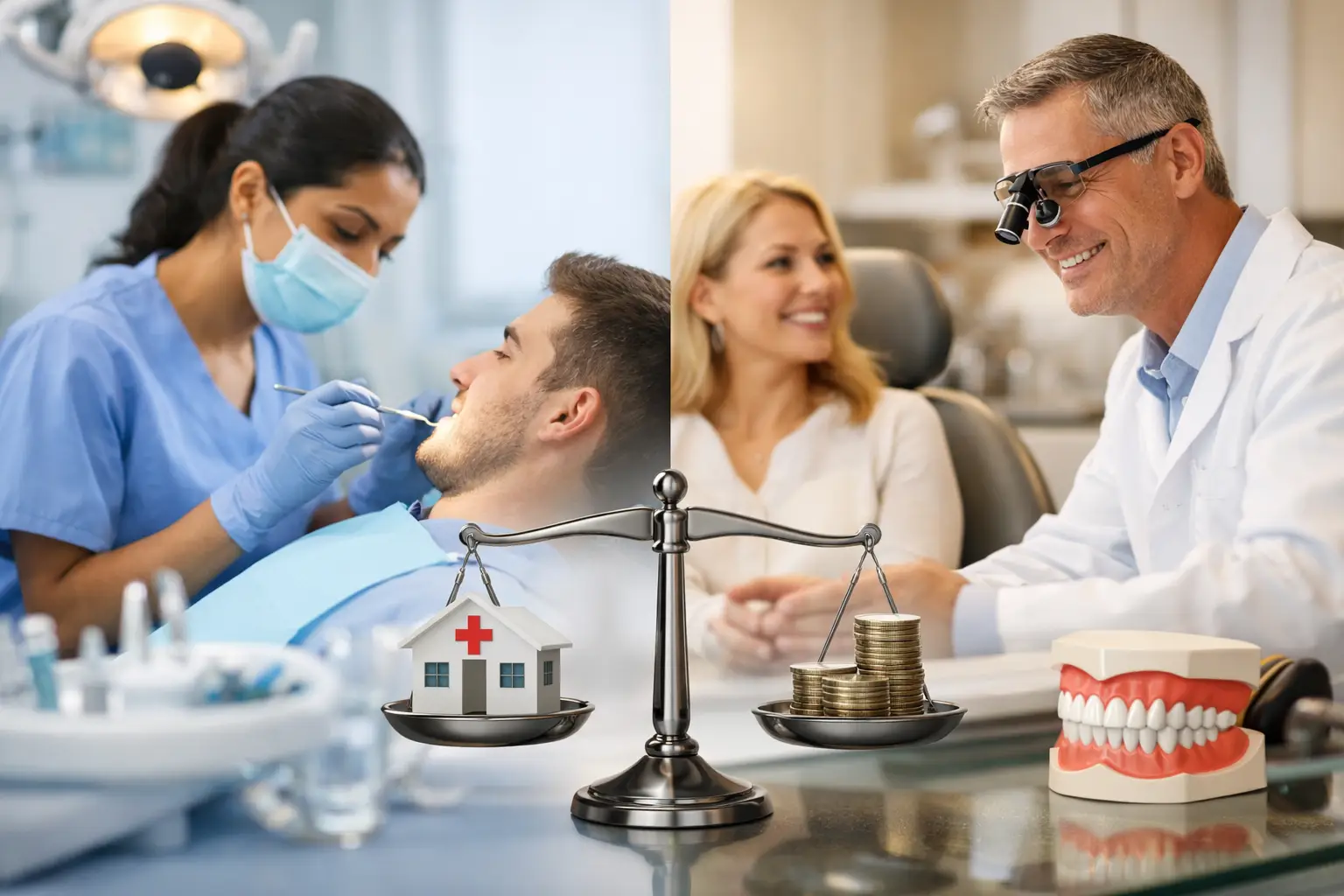
That does not mean private care is always better in every situation. NHS dentistry remains essential and appropriate for many routine needs. The difference is that private care tends to give patients more choice, more time and, in some cases, access to treatments that are not available under NHS provision.
How private dental care works in practice
At a practical level, private dentistry begins in much the same way as any other dental care. You register with a practice or book an appointment, attend for an examination and discuss any concerns you may have. That might be a standard check-up, a painful tooth, broken filling, stained teeth, missing teeth or a longer-term issue such as crowding or worn enamel.
The next step is where private care often feels different. Your dentist will usually have more scope to talk through options in detail, explain likely outcomes and tailor a plan around your priorities. Some patients want the most cost-effective way to stay healthy. Others are looking for a longer-lasting restoration, a more natural appearance or a treatment timetable that fits around work and family life.
In a well-run private practice, there should be no pressure attached to that conversation. The point is not to oversell treatment. It is to help you understand what is possible, what is necessary and what is optional.
Fees, estimates and what you pay for
One of the clearest differences in private care is the fee structure. Instead of set NHS patient charges, private treatment is priced by the practice. That can make patients anxious at first, particularly if they are worried about open-ended costs.
In reality, a reputable practice should be clear from the start. Routine appointments such as examinations, hygiene visits and emergency assessments are usually charged at a stated rate. If you need further treatment, you should be given a written estimate before work begins.
What you are paying for is not simply the appointment slot. Private fees reflect clinical time, equipment, materials, laboratory work where needed and the level of planning involved. For treatments such as crowns, dentures, implants or clear aligners, there is often a significant amount happening behind the scenes.
This is also where the value question becomes more personal. A private filling, crown or denture may cost more upfront, but some patients choose private care because they want more choice over appearance, durability or appointment timing. Others prefer the continuity of seeing the same dentist over many years, especially if they are nervous or have complex dental needs.
What treatments are available privately?
Private dentistry covers both everyday care and more advanced treatment. Routine check-ups, scale and polish appointments, fillings, extractions and preventive advice all sit comfortably within private practice. So do urgent appointments when something suddenly becomes painful or breaks.
Private care also tends to widen the menu of options. If a tooth is badly damaged, for example, your dentist may discuss different types of restoration depending on function, appearance and cost. If you have missing teeth, the conversation may include dentures, bridges or implants rather than a single standard route.
This is often why people move between NHS and private care at different points in life. Someone may remain with NHS dentistry for regular maintenance, then choose private treatment for whitening, aligners, implants or a more complex restorative case. Another patient may prefer to keep all care under one roof if they value consistency and a more personalised schedule.
How private dental care works for ongoing care
Private dentistry is not only about one-off treatment. For many patients, it is built around prevention and continuity. You attend regular examinations and hygiene appointments, your dentist monitors changes over time and smaller issues can often be dealt with before they become larger ones.
That continuity matters more than many people realise. A dentist who knows your history is better placed to notice subtle changes in your gums, bite, enamel wear or older dental work. For anxious patients, seeing a familiar team in a calm setting can also make a substantial difference.
Some practices offer payment plans such as Denplan or similar arrangements to spread the cost of routine care. These can make budgeting easier and encourage regular attendance rather than waiting until something becomes uncomfortable. They are not the right fit for everyone, but for families or patients who prefer predictability, they can be very helpful.
The appointment experience
When patients ask how private dental care works, they are often asking another question underneath it: will I feel looked after? That part matters.
A good private experience should feel organised, respectful and unhurried. Appointments may be easier to schedule around work or school. Explanations should be clear and free of jargon. If treatment is needed over several visits, you should know what the sequence looks like and why.
For nervous patients, private care can be especially reassuring because there is often more time to go at a manageable pace. That might mean pausing when needed, explaining each step in advance or planning treatment gradually rather than trying to do too much in one sitting. The clinical standard matters, of course, but so does feeling safe in the chair.
In Edinburgh, where many patients are balancing professional commitments, family life and long commutes across the city, convenience is not a small benefit. Being able to access dependable appointments and same-day help in an emergency can be one of the strongest reasons to choose private care.
Is private dental care worth it?
The honest answer is that it depends on what you need and what you value. If your priority is basic routine treatment at the lowest possible patient cost, NHS dentistry may remain the best fit. If, however, you want greater flexibility, more treatment choice, additional cosmetic options or a long-term relationship with a practice that offers a calmer and more tailored experience, private care can be a very sensible decision.
It can also be worth it when timing matters. Waiting with a damaged tooth, recurring pain or a denture problem can affect eating, sleep and confidence very quickly. In those moments, access and responsiveness matter just as much as price.
The strongest private practices are careful not to present every issue as urgent or every patient as a candidate for complex treatment. Ethical dentistry means recommending what is appropriate, not simply what is available. That balance of honesty and skill is often what patients are really paying for.
How to choose a private dentist
If you are considering private care, look beyond a treatment list. Pay attention to whether the practice explains fees clearly, offers realistic options and takes time to understand your concerns. A stable team, a good local reputation and a calm, well-managed environment often tell you more than glossy promises.
It is also worth asking yourself what sort of support you want. Some patients are looking for help with a single issue such as whitening or a broken crown. Others want a dentist they can stay with for years, through routine check-ups, family care and more involved treatment if it becomes necessary later on.
Practices such as 4 Great Stuart Street are often chosen for precisely that reason. Patients want somewhere established and discreet, where care feels consistent, professional and personal rather than rushed or transactional.
Private dental care works best when it feels straightforward. You understand the costs, you know your options, and you feel confident that the advice you are receiving is based on your health and your circumstances. If a practice can offer that with clarity and kindness, the decision becomes much easier.
The right dental care is not the most expensive option or the most elaborate one. It is the one that helps you stay healthy, comfortable and confident, with support you can trust over time.