A Guide to Clear Aligner Treatment
A practical guide to clear aligner treatment, from suitability and costs to daily wear, results and aftercare for patients in Edinburgh.
If you have been thinking about straighter teeth but feel uneasy about fixed braces, this guide to clear aligner treatment is a sensible place to start. For many adults, the appeal is obvious - a more discreet way to improve alignment without drawing attention at work, socially, or in family life. What matters just as much, though, is knowing when aligners are suitable, what the process involves, and where the limits are.
Clear aligners can be an excellent option for the right case. They can also be the wrong choice if a problem is more complex or if daily wear is likely to be inconsistent. A good treatment plan starts with honesty, careful assessment, and a clear understanding of what you want to change.
What clear aligner treatment is
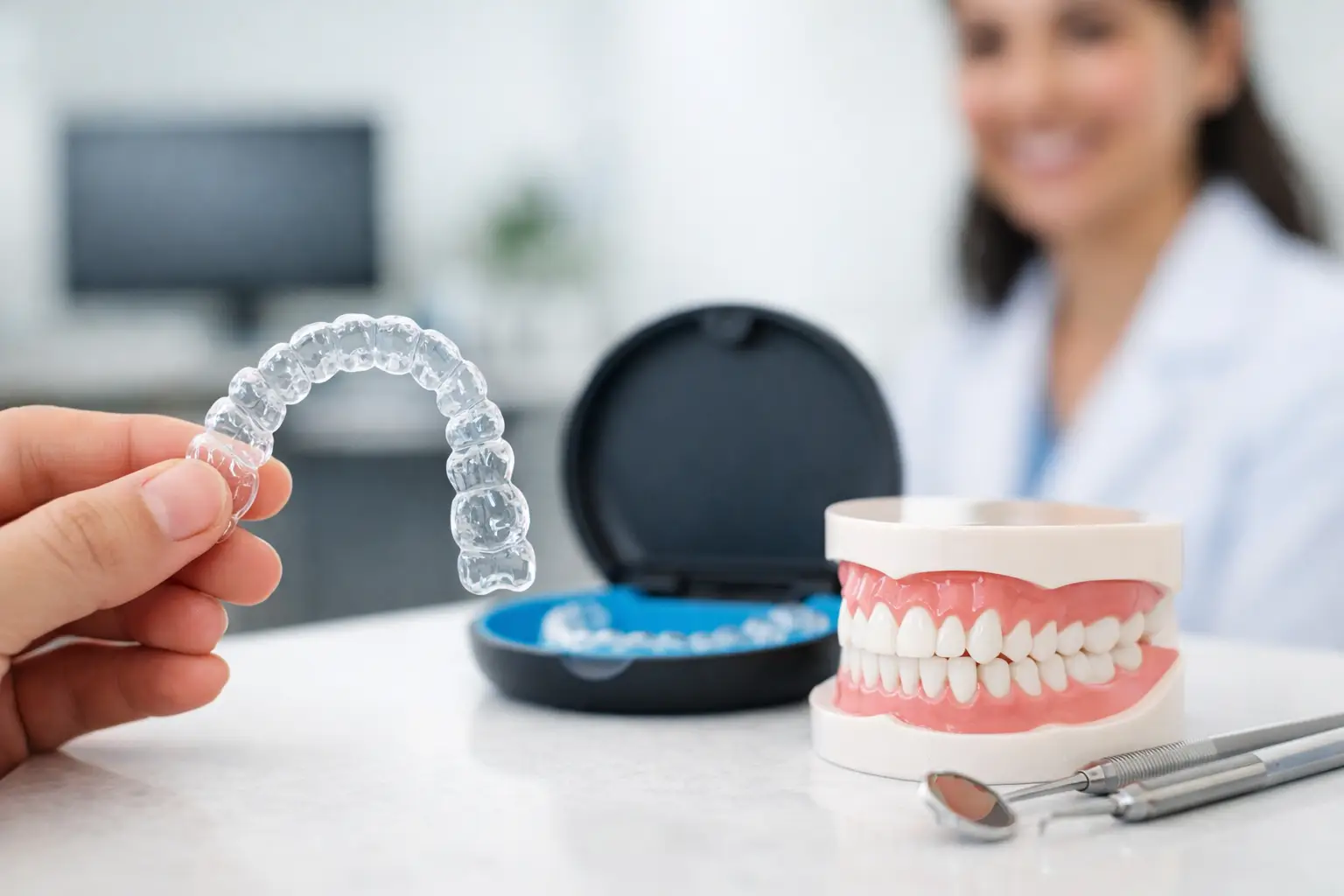
Clear aligners are a series of custom-made transparent trays designed to move teeth gradually. Each set is worn for a prescribed period before progressing to the next, with every aligner making small, controlled changes in tooth position.
Unlike fixed braces, aligners are removable. That makes them easier to manage for meals, brushing, and special occasions, but it also means treatment depends heavily on patient cooperation. If they are not worn for the recommended number of hours each day, progress can slow or become less predictable.
For many adults, the attraction is not only appearance but convenience. There are no brackets or wires, and appointments are often straightforward reviews to monitor movement and make sure everything is progressing as planned.
Who this guide to clear aligner treatment is really for
Clear aligners are often well suited to adults with mild to moderate crowding, spacing, or relapse after earlier orthodontic treatment. They can also help with some bite concerns, although that depends on the specific problem, the health of the teeth and gums, and how much movement is required.
They are especially popular with patients who want a discreet option for professional or personal reasons. If you spend your day in meetings, work with the public, or simply prefer treatment that is less noticeable, aligners can feel like a more comfortable fit.
That said, they are not automatically the best option for every smile. Teeth that need more complex movement may respond better to fixed orthodontics. If gum disease, untreated decay, or broken teeth are present, those issues usually need to be stabilised first. A calm, thorough assessment matters more than choosing the most fashionable treatment.
The first consultation
Your first appointment should focus on suitability, not pressure. A dentist will usually examine your teeth and gums, discuss your concerns, assess your bite, and consider whether aligners are likely to achieve the result you want safely.
This is also the time to talk about practicalities. If you know you are forgetful, travel frequently, or snack often through the day, say so. Aligners work best when they fit around your routine in a realistic way. A treatment that looks good on paper but does not suit your lifestyle can become frustrating.
If you are a nervous patient, a measured consultation can be particularly reassuring. Clear aligner treatment is planned in stages, and understanding those stages often helps people feel more in control.
How treatment is planned
Once suitability has been confirmed, records are taken. These may include photographs, scans or impressions, and sometimes X-rays. From these records, the movements of the teeth are mapped out and a series of aligners is produced.
Planning is one of the most important parts of treatment. Teeth do not always move in exactly the same way from one person to another, so there is a balance between digital planning and clinical judgement. A reputable practice will explain what is achievable, how long it may take, and whether refinements are likely to be needed.
This is worth stressing because clear aligner treatment is rarely about perfection in a single step. Sometimes the initial series gets most of the way there and extra aligners are needed to refine the final result. That is normal, and patients should know about that possibility from the outset.
Wearing aligners day to day
Most patients are advised to wear their aligners for 20 to 22 hours a day, removing them only for eating, drinking anything other than water, and cleaning. That level of wear is what keeps treatment moving.
Daily life with aligners is usually manageable after the first week or two. You may notice temporary pressure when changing to a new set, and speech can feel slightly different at first, though most people adapt quickly. Good habits make a real difference - keeping a travel toothbrush with you, storing aligners properly when removed, and returning them promptly after meals.
Discipline matters. If you leave them out for long lunches, evening drinks, or busy days at work, the trays may stop fitting as intended. When that happens, treatment can become slower and less comfortable.
What clear aligners can and cannot do
One of the most useful parts of any guide to clear aligner treatment is understanding the trade-offs. Aligners can be highly effective for many common alignment concerns, but they are not magic. The best results come when the goals are realistic and the treatment is selected for the right reasons.
They are often very good for closing small spaces, improving mild crowding, and correcting teeth that have shifted after not wearing retainers. They may also help with certain bite discrepancies. Where things become more case-dependent is with significant rotations, major bite changes, or complex tooth movements that need very precise control.
That does not mean complex cases cannot ever be treated with aligners. Some can. It simply means careful planning and honest advice are essential. A conservative recommendation is usually a sign of good clinical judgement, not a lack of ambition.
Cost, timing and value
Patients naturally want to know how long treatment will take and what it will cost. The truthful answer is that it depends on the complexity of the case, the number of aligners required, and whether refinement stages are needed.
Milder cases may take a matter of months, while more involved treatment can take considerably longer. Cost should be discussed clearly before treatment begins, along with what is included in the fee. That may cover records, review appointments, a set number of aligners, and retainers at the end, but details vary.
Value is not only about the headline price. It is about proper assessment, continuity of care, and support if something needs adjusting along the way. In an established practice such as 4 Great Stuart Street, that continuity can be especially reassuring for patients who want treatment delivered in a safe, ethical and relaxed environment.
Looking after your teeth during treatment
Straightening teeth does not replace dental care - it makes good dental care even more important. Because aligners sit closely over the teeth, plaque and food debris need to be removed thoroughly before trays are put back in.
That means brushing carefully, cleaning between the teeth, and keeping up with routine check-ups and hygiene visits. If aligners are worn over unclean teeth, the risk of decay and gum irritation can rise. Patients who already have a strong oral hygiene routine often find the process very straightforward.
Cleaning the aligners themselves matters too. They should be rinsed and cleaned as advised, rather than left to dry out with residue on them. A clear tray stays clearer with regular care.
Life after aligners
When active treatment ends, retention begins. This is the part patients are most likely to underestimate. Teeth have a natural tendency to drift, which means retainers are not optional if you want to keep your result.
Your dentist will advise how and when to wear them, and that advice should be followed closely. Some people are surprised that retention is long term, but this is true of orthodontic treatment generally, whether teeth were moved with aligners or braces.
The encouraging part is that once you have completed treatment, maintaining the result is usually far easier than achieving it in the first place.
Questions worth asking before you start
Before committing, ask what result is realistically achievable, how long treatment is likely to take, what happens if refinements are needed, and what retainers will be required afterwards. It is also sensible to ask whether any dental work should be completed before aligners begin.
A good consultation should leave you feeling informed, not hurried. You should understand both the benefits and the commitments involved. That balanced approach tends to lead to better decisions and better outcomes.
Clear aligner treatment can be a very effective way to improve your smile, but the best experiences usually begin with the simplest mindset: choose a plan that suits your teeth, your routine, and your expectations, and give yourself the support to see it through properly.