Best Options for Crooked Teeth in Edinburgh
Considering the best options for crooked teeth? Learn how clear aligners, braces and restorative care can improve comfort, confidence and oral health well.
A tooth that sits forward in photographs, a bite that feels awkward when eating, or teeth that are simply harder to clean can all prompt the same question: what are the best options for crooked teeth? The right answer is personal. It depends on the position of your teeth, how your jaws meet, the health of your gums and teeth, and what you hope treatment will change.
For some people, discreet clear aligners are an excellent fit. For others, fixed braces offer greater control, while carefully planned restorative treatment may be more appropriate where teeth are worn, damaged or missing. A considered assessment is the safest place to start, particularly if you have not seen a dentist for some time or feel nervous about treatment.
Why crooked teeth are about more than appearance
It is entirely reasonable to want a more even smile. However, alignment can also affect everyday oral health. Teeth that overlap or twist may create areas that are difficult to reach with a toothbrush or interdental cleaning aids. Over time, plaque can build up more easily, increasing the risk of decay and gum inflammation.
A misaligned bite can sometimes place excess pressure on particular teeth. This may contribute to uneven wear, chipping, or discomfort when biting. Not every crooked tooth needs treatment, and not every bite difference causes problems. The aim is not to pursue perfection, but to understand whether treatment could make cleaning, function or confidence better for you.
Before moving teeth, a dentist will usually check for active decay, gum disease, failing fillings and signs of tooth wear. Orthodontic treatment works best from a stable, healthy foundation.
Best options for crooked teeth: choosing the right approach
Clear aligners
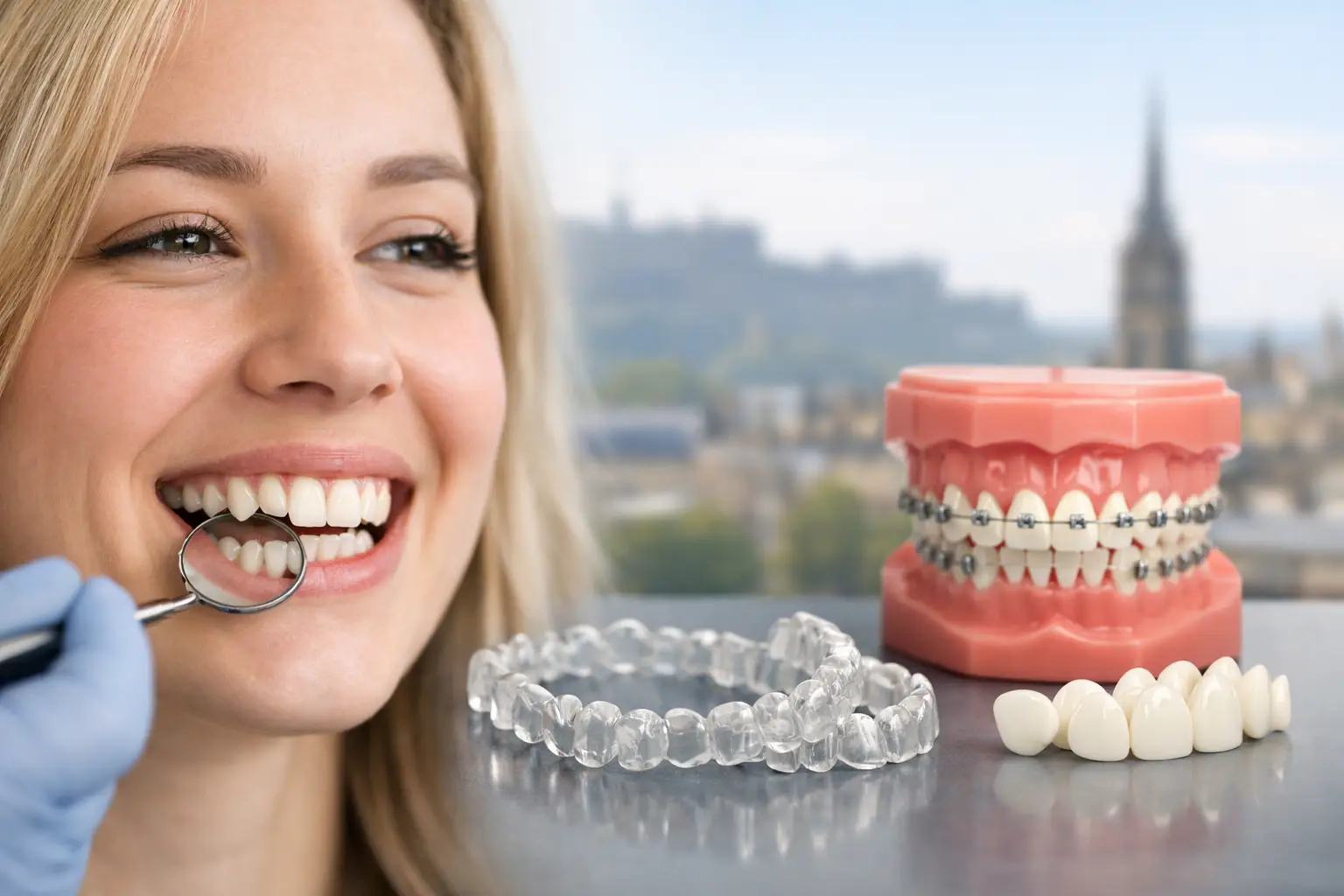
Clear aligners are transparent, removable trays made to move teeth gradually through a sequence of planned stages. They are a popular option for adults who would prefer a discreet treatment that fits around professional and social life.
The trays are normally worn for most of the day and night, removed for meals and for brushing and flossing. This can make oral hygiene simpler than with fixed appliances, provided you wear them as directed and keep the aligners clean. Appointments are used to monitor progress and ensure the teeth are responding as planned.
Clear aligners can be very effective for many mild to moderate alignment concerns, including spacing, crowding and certain bite issues. They do require consistency. If trays are frequently left out, treatment may take longer or produce a less predictable result. More complex movements may also be better managed with fixed braces, or with a combination of techniques.
Fixed braces
Fixed braces use brackets and wires to apply steady, precise forces to the teeth. Modern braces can be smaller and more refined than many people expect, though they remain more visible than clear aligners.
Their main advantage is control. Because the brace stays in place, it can be especially useful where there is significant crowding, rotation or a more complex bite relationship. It does not rely on remembering to put trays back in after meals.
There are practical considerations. Cleaning takes more care, and food can become trapped around brackets and wires. Regular hygiene appointments and good home care are particularly valuable during treatment. Fixed braces may not be the first choice for every adult, but they can be the most suitable choice where predictability and precise tooth movement matter most.
Retainers after orthodontic treatment
Whether you choose aligners or braces, retainers are an essential part of maintaining the result. Teeth can naturally drift throughout life, even after successful orthodontic treatment. A retainer helps hold them in their new positions while the surrounding tissues adapt.
Some retainers are removable and worn at night; others are discreetly bonded behind the front teeth. Your dentist will advise which arrangement suits your case and how often it should be reviewed. Retention is a long-term commitment, not an optional extra at the end of treatment.
Composite bonding and other cosmetic finishing
Sometimes teeth look uneven because of their shape, chipped edges or small gaps rather than their position alone. Composite bonding can carefully add tooth-coloured material to improve proportion or soften an irregular edge. It may also be used after orthodontic treatment to refine the final appearance.
Bonding is conservative, but it is not a substitute for moving teeth where crowding or bite problems are the underlying concern. Adding material to an already prominent tooth can make it appear larger. It can also stain, chip or require maintenance over time. A dentist should discuss the likely lifespan, care requirements and alternatives before treatment begins.
Crowns, veneers and restorative care
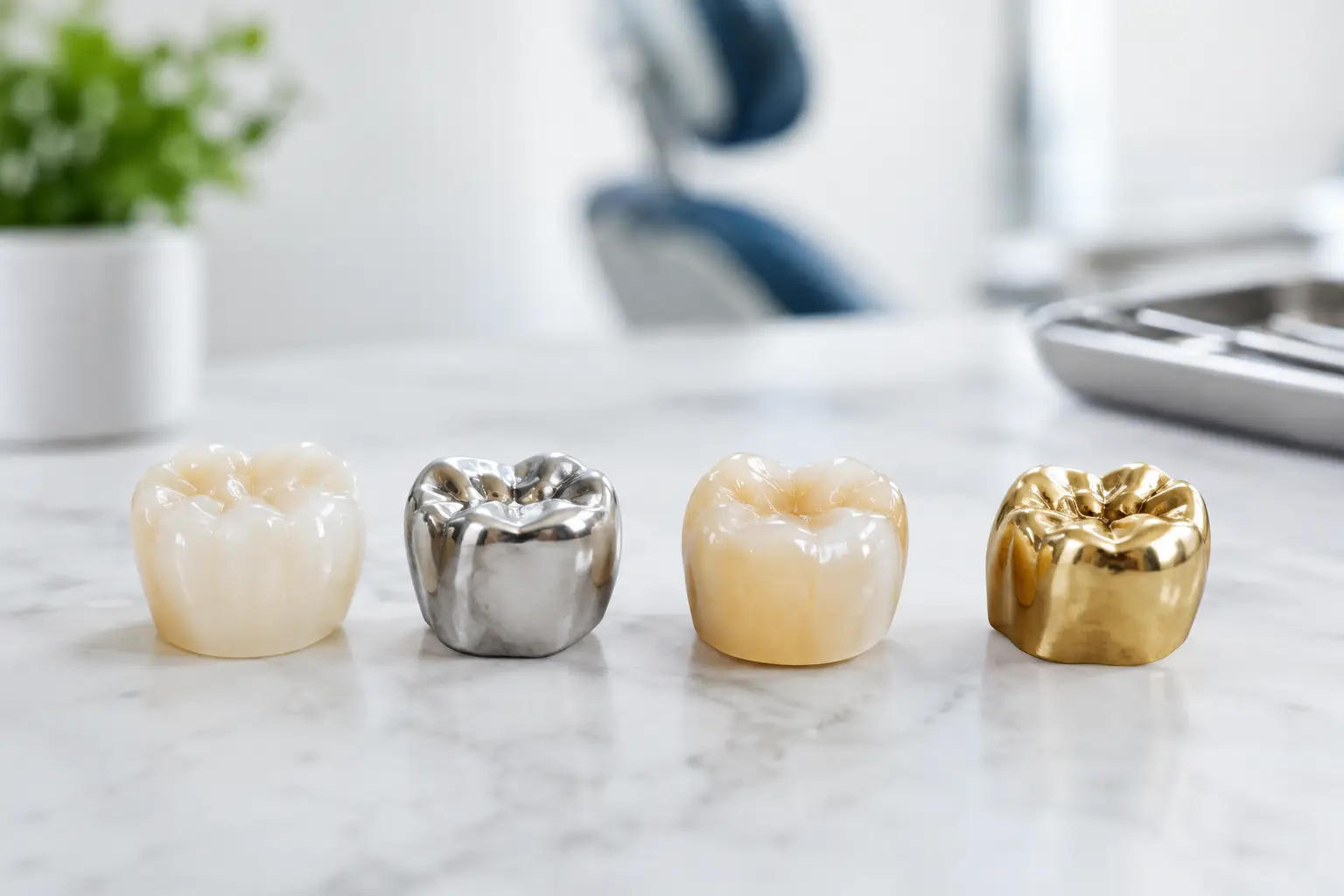
Where a tooth is heavily worn, fractured, discoloured or has a large failing filling, a crown or veneer may form part of a wider treatment plan. These restorations can improve appearance and protect a weakened tooth, but they do not move teeth in the way orthodontic treatment does.
This distinction matters. Preparing a healthy tooth purely to mask a crooked position may not be the most conservative option, particularly when aligners or braces could address the cause. On the other hand, restorative treatment can be appropriate when function, existing damage or previous dental work makes it necessary. The best plan balances appearance with the long-term health of the tooth.
Replacing missing teeth where needed
A gap caused by a missing tooth can allow neighbouring teeth to tilt or drift. Depending on the situation, treatment may involve creating or maintaining the right space before replacing the tooth with an implant, bridge or denture. In other cases, orthodontics may close a space instead.
This is one reason a full assessment is valuable. Straightening the visible front teeth without considering a missing tooth, the bite or the condition of the supporting bone can compromise the final result.
What happens at an alignment consultation?
A good consultation should feel unhurried and clear. Your dentist will listen to what concerns you, examine your teeth and gums, and assess how your bite meets. Photographs, scans or X-rays may be recommended where they are needed to plan safely.
You should be able to discuss the benefits and limitations of each suitable option, the expected timescale, likely maintenance and costs. Ask whether your goals are realistic, what happens if teeth do not move as expected, and how retention will be managed afterwards. If your gums bleed, your teeth feel loose, or you have jaw discomfort, mention this from the outset.
For nervous patients, it can help to say so before the appointment. Treatment decisions do not need to be rushed. A calm explanation, staged care and continuity with a dentist you know can make the process far more manageable.
Looking after your smile during and after treatment
Straight teeth are easier to care for only if everyday habits support them. Brush twice daily with fluoride toothpaste, clean between teeth in the way your dental team recommends, and attend routine examinations and hygiene appointments. If you wear aligners or retainers, keep them clean and store them safely whenever they are out of your mouth.
Avoid using teeth to open packaging, and speak to your dentist if a retainer breaks, a bonded wire feels loose, or your bite starts to feel different. Small problems are often simpler to resolve when dealt with promptly.
At 4 Great Stuart Street, treatment planning is centred on your oral health, comfort and the result you can maintain over time. The most suitable option is not necessarily the quickest or most cosmetic-looking one. It is the one that respects your teeth, fits your life and gives you confidence to smile and care for your oral health for years to come.