When Do Baby Teeth Erupt? A Parent’s Timeline
Wondering when do baby teeth erupt? Learn the usual order, gentle ways to ease teething and when to book a dental visit for your child with confidence.

A first tooth can seem to appear overnight, often after several unsettled days and a great deal of dribbling. If you are wondering when do baby teeth erupt, the short answer is that most babies cut their first tooth at around six months old. However, there is a broad range of normal, and the calendar matters less than your child’s overall health and development.
Some babies have a tooth by four months; others do not show one until after their first birthday. This difference alone is rarely a cause for concern. Knowing the usual pattern can help you feel prepared, while also making it easier to spot when a quick word with a dentist would be reassuring.
When do baby teeth erupt in most children?
Baby teeth, also called primary or milk teeth, usually begin to erupt between six and ten months. By about two-and-a-half to three years of age, most children have their full set of 20 baby teeth.
Teeth often arrive in pairs, although not always at precisely the same time. The two lower front teeth are commonly first, followed by the two upper front teeth. The teeth beside these front teeth tend to come next, then the first molars, canine teeth and finally the second molars at the back.
A typical timeline looks like this:
- Lower central incisors: around 5 to 10 months
- Upper central incisors: around 6 to 12 months
- Side incisors: around 9 to 16 months
- First molars: around 12 to 16 months
- Canines: around 16 to 20 months
- Second molars: around 20 to 30 months
These ages are guides, not deadlines. A child may follow a different order and still have perfectly healthy teeth. Genetics can play a part, so it is common for children to resemble a parent or sibling in the timing of teething.
What teething can feel like for your baby
As a tooth moves through the gum, your child may be more dribbly than usual, want to chew, or seem unsettled around feeds and sleep. Their gums can look slightly red or swollen, and they may rub their face or pull at an ear. This can be uncomfortable, particularly when the larger molars are making their way through.
Teething should cause mild, temporary symptoms. It does not usually cause a high temperature, diarrhoea, vomiting or a baby who seems genuinely unwell. Young children do catch many ordinary viruses, and it is easy to connect a new illness with a tooth that happens to be coming through. If your child has a fever, is unusually sleepy, is not feeding normally or you are worried for any reason, seek advice from your GP, NHS 111 or a pharmacist rather than assuming it is teething.
Gentle ways to help with teething discomfort
A clean teething ring cooled in the fridge can give welcome pressure and relief. It should be chilled rather than frozen, as a very hard frozen ring can hurt delicate gums. Some babies also enjoy chewing a clean, cool flannel while supervised.
For babies who are eating solids, cool soft foods such as yoghurt or puréed fruit may feel soothing. Stay with your child while they eat, and take particular care with foods that could pose a choking risk.
If discomfort is affecting sleep or feeding, speak to a pharmacist about suitable pain relief for your child’s age and weight. Follow the product instructions carefully. Teething gels are not always the best first choice, especially products containing local anaesthetics or ingredients not intended for young babies. A pharmacist can help you choose safely.
Avoid amber necklaces, bracelets and other jewellery marketed for teething. They can create choking or strangulation risks and do not offer a reliable solution. Likewise, do not rub alcohol, aspirin or adult medicines on a baby’s gums.
Looking after the first tooth
The arrival of the first tooth is the right time to begin a simple brushing routine. Tooth decay can affect baby teeth soon after they erupt, particularly when teeth are frequently exposed to sugary food, drinks or medicine. Baby teeth may be temporary, but they are essential for eating, speech, comfort and guiding adult teeth into position.
Brush twice each day using a small, soft toothbrush and fluoride toothpaste containing at least 1,000 parts per million fluoride. For children under three, use only a smear of toothpaste, about the size of a grain of rice. From the age of three, a pea-sized amount is appropriate. Encourage your child to spit out after brushing when they are able, rather than rinsing with water, which washes away the protective fluoride.
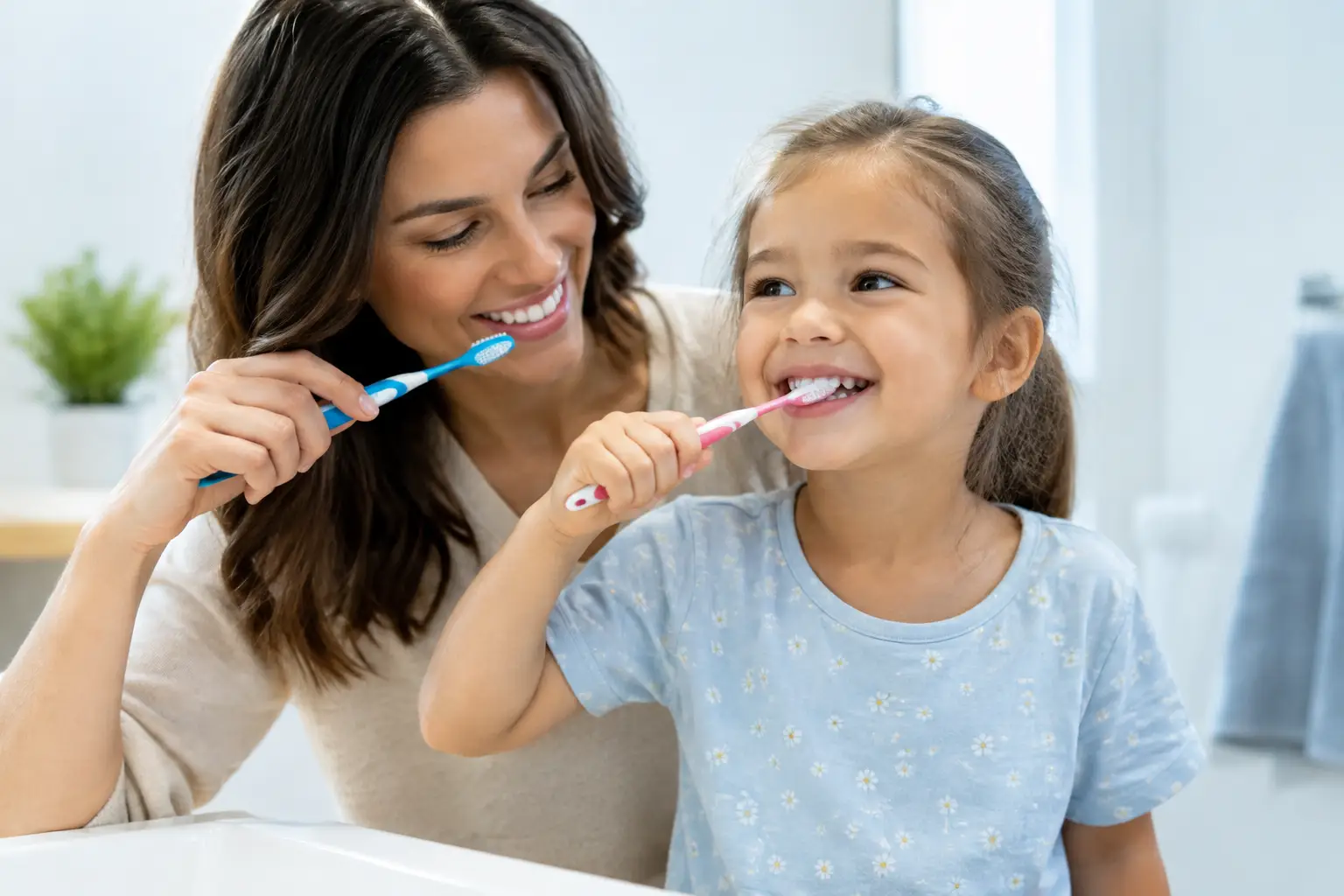
An adult should do the brushing, or carefully supervise it, until at least the age of seven. Children often want independence long before they have the dexterity to clean thoroughly. Letting them have a turn first and then finishing the brushing yourself can make the routine feel positive.
It also helps to offer water or milk between meals and keep sugary foods and drinks to mealtimes. Frequent grazing on sweet snacks, juice, squash or sweetened drinks gives plaque bacteria repeated opportunities to produce acid. Even seemingly healthy options can be sugary, so water is the kindest drink for teeth between meals.
When should your child first see a dentist?
It is sensible to arrange a first dental visit when the first tooth appears, or by your child’s first birthday at the latest. The appointment is usually brief and gentle. It gives the dentist a chance to check that the teeth and gums are developing as expected, discuss brushing and diet, and help your child become familiar with the dental setting.
There is real value in these early, calm visits. A child who sees dentistry as an ordinary part of looking after their health is more likely to feel comfortable attending later on. There is no expectation for a toddler to sit perfectly still or open wide on command. The aim is trust, reassurance and practical support for parents.
At 4 Great Stuart Street, we welcome families and take time to help young patients feel safe in the dental chair. Bringing your child along to a parent’s routine appointment can also make the surroundings feel familiar before their own visit.
When to ask for dental advice sooner
Most variations in tooth timing are harmless, but a dentist can assess your child if no teeth have appeared by around 18 months, particularly if you have other concerns about their growth or development. It is also worth arranging a check if teeth look very discoloured, have unusual shapes, appear to be erupting in an unexpected position, or if you notice persistent swelling of the gums.
Contact a dentist promptly if your child has toothache, a broken tooth, a swollen face or gum, a dental abscess, or an injury to the mouth. Baby teeth can be damaged in falls, and early advice may protect both the tooth and the developing adult tooth beneath it. If a baby tooth is completely knocked out, do not try to put it back in.
The first few years of teething can feel lengthy, particularly during disrupted nights, but the routine soon becomes familiar: comfort when needed, brush twice daily, and keep regular dental visits relaxed. Each small tooth is a useful milestone and a chance to build habits that will serve your child well for years to come.