How to Get Emergency Dental Care Fast
Learn how to get emergency dental care quickly in Edinburgh, what counts as urgent, who to call, and what to do before your appointment.
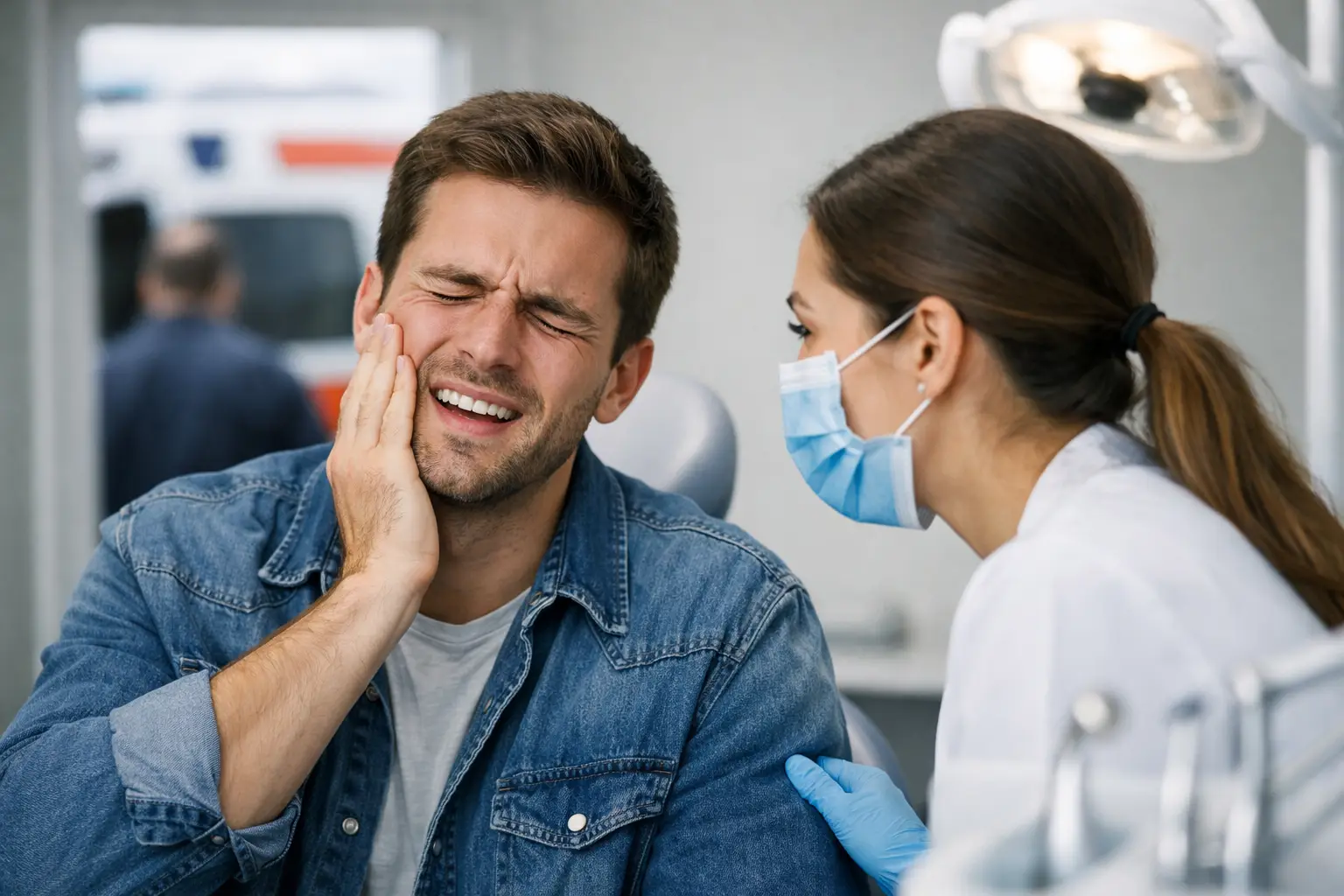
A cracked tooth at 8pm, a swelling that seems to worsen by the hour, or pain strong enough to stop you sleeping can make it very hard to think clearly. In that moment, knowing how to get emergency dental care matters more than anything else. The right next step can ease pain, reduce the risk of further damage and help you get seen safely and quickly.
Dental emergencies are not always dramatic, but they do need prompt judgement. Some problems can wait a day or two with advice and pain relief. Others need same-day attention. The difficulty for most people is not whether something feels serious, but whether it is urgent enough to call straight away.
What counts as a dental emergency?
In simple terms, emergency dental care is for problems that need prompt treatment to relieve significant pain, stop bleeding, manage infection or save a tooth where possible. Severe toothache, facial swelling, a knocked-out tooth, uncontrolled bleeding, a broken tooth causing sharp pain, or a lost crown or filling that leaves the tooth exposed can all fall into this category.
That said, urgency depends on the details. A chipped tooth with no pain may be inconvenient rather than urgent. A broken denture before an important meeting may feel like an emergency, but it is usually not the same as an infection or trauma. If you are unsure, it is always sensible to call a dental practice and explain what has happened. A good team will help you understand whether you need to be seen the same day.
How to get emergency dental care without losing time
The quickest route is usually to phone a dental practice as soon as symptoms start becoming severe or clearly urgent. Do not wait until the end of the day if you have swelling, persistent bleeding or escalating pain. Same-day emergency appointments are often limited, so earlier contact gives you the best chance of being seen promptly.
When you call, be ready to explain the problem clearly. Say when the pain or injury started, whether you have swelling, whether you can eat or sleep, and whether there has been trauma, bleeding or a lost tooth. If you have a temperature, difficulty swallowing or swelling spreading into the face or jaw, mention that immediately. Those details help the team judge urgency and advise you properly.
If you already have a regular dentist, contact them first where possible. Continuity of care is often helpful because the practice may know your history, previous treatment and any relevant medical considerations. If you do not have a regular dentist, look for a local practice that offers emergency appointments and can advise both new and existing patients.
In Edinburgh, many patients want prompt help but also reassurance. That matters, particularly if you are in pain or feel anxious. A calm conversation with a dental team can make the situation feel more manageable and help you avoid unnecessary delays.
What to do before your emergency appointment
While waiting to be seen, the aim is to control symptoms without making the situation worse. Over-the-counter pain relief can help, provided you take it as directed and it is suitable for you medically. A warm saltwater rinse may soothe irritated tissues. If there is swelling on the outside of the face, a cold compress wrapped in cloth can help reduce discomfort.
Try to avoid chewing on the affected side, and avoid very hot, very cold or sugary foods if they trigger pain. If a filling or crown has come away, keep it safe and bring it to the appointment if you can. If a tooth has been knocked out, handle it only by the crown, not the root. If it is dirty, rinse it gently with milk or saline if available. In some cases, getting that tooth assessed very quickly can make a significant difference.
What you should not do is equally important. Do not place aspirin directly on the gum. Do not ignore swelling because the pain has eased. Some infections become less painful as pressure changes, but the problem itself may still be progressing.
When a dental emergency is also a medical emergency
Most urgent dental problems should be handled by a dentist, not a hospital. However, there are exceptions. If you have swelling that affects breathing, swallowing or speaking, heavy bleeding that does not stop, significant facial trauma, or feel seriously unwell with an infection, seek urgent medical help straight away.
This is where common sense and caution matter. A severe dental infection can occasionally become more serious if left untreated. If symptoms are spreading quickly or affecting your airway, do not wait for a routine call-back.
How to get emergency dental care out of hours
Out-of-hours situations are often the most stressful because the usual options may feel less obvious. If your dental practice is closed, check its recorded message or patient information first. Many practices provide instructions for urgent problems outside normal hours.
For less severe issues overnight, pain management and calling first thing in the morning may be appropriate. For more serious concerns, especially swelling, trauma or uncontrolled symptoms, use the urgent advice route available locally. The exact pathway can vary depending on whether you are an NHS or private patient, whether you are registered with a practice, and the nature of the emergency.
This is one reason regular registration with a trusted local dentist can be so valuable. In an emergency, familiarity with a practice often makes access and advice simpler.
NHS or private emergency care - what is the difference?
Patients often ask whether emergency treatment is easier to access privately than through the NHS. The honest answer is that it depends on the practice, the time of day and the nature of the problem. NHS routes are designed to provide clinically necessary urgent care, but appointment availability can be limited. Private emergency appointments may offer greater flexibility or speed in some settings, particularly for new patients.
What matters most is not only getting seen quickly, but getting the right treatment in a safe and ethical way. A rushed temporary fix is not always the best outcome if the underlying problem is not properly assessed. Emergency care should stabilise the issue, relieve pain and set out what needs to happen next.
At an established practice such as 4 Great Stuart Street, the goal is not simply to get patients out of pain for the day. It is to provide careful, appropriate treatment and clear advice about follow-up, so urgent care fits into longer-term oral health rather than becoming a one-off crisis.
What happens at an emergency dental appointment?
Many patients worry they will arrive in pain and be overwhelmed with complicated treatment. In reality, the first priority is usually to assess the source of the problem, make you comfortable and decide what can be done safely at that visit.
You may need an examination and, in some cases, an X-ray. Treatment could involve smoothing a sharp broken edge, placing a temporary or permanent filling, recementing a crown, draining infection where appropriate, prescribing medication if clinically indicated, or planning a further appointment if the tooth needs more involved care such as root canal treatment or extraction.
There are trade-offs sometimes. If the area is badly infected or you are in significant discomfort, the most sensible first step may be to settle the emergency and schedule the definitive treatment soon after. That can feel frustrating if you hoped everything would be finished in one visit, but it is often the safest and most comfortable approach.
If you are nervous, say so
Dental emergencies can feel especially difficult for anxious patients because pain and urgency remove the comfort of planning ahead. If you are nervous, tell the team when you call. A patient-centred practice will take that seriously.
Clear explanations, a calm environment and a measured pace of care can make a real difference. People often assume emergency care will feel rushed or impersonal. It does not have to. The best emergency dentistry combines clinical efficiency with reassurance, because both are part of good care.
How to reduce the chance of another emergency
Not every dental emergency is preventable. Accidents happen, fillings fail, and infections can flare unexpectedly. Even so, regular examinations, hygiene visits and early treatment usually reduce the risk of severe pain or sudden problems.
Small cracks, worn fillings and early decay are far easier to manage before they become urgent. The same is true of gum disease and grinding-related damage. Preventive care may not feel urgent at the time, but it is often what prevents urgent appointments later.
If you are ever unsure how to get emergency dental care, remember this: call early, explain symptoms clearly, and do not minimise swelling, trauma or severe pain. Prompt advice can spare you a great deal of discomfort, and in some cases it can make the difference between saving and losing a tooth.
When something feels wrong, trust that instinct and seek help. Emergency dental care is there to restore calm as much as comfort.